


LED PPAP for Custom LED Components: When Production Approval Is Required

Quick Answer: A Package Tied to a Production Trial Run
A production approval submission is not a test report and not a certificate. It is a set of documents produced from a defined production trial run, gathered behind a single warrant page that the supplier signs to state that the parts will continue to be made by that process.
That structure is what separates it from a sample approval. The samples in the earlier stage prove the design can be built; the submission proves that it has been built by the intended process, at the intended stations, with the intended controls in place.
Read that way, the useful questions for a buyer are which level of submission the project needs, what evidence that level must carry, and what would force the supplier to submit again. Everything else in the document set follows from those three.
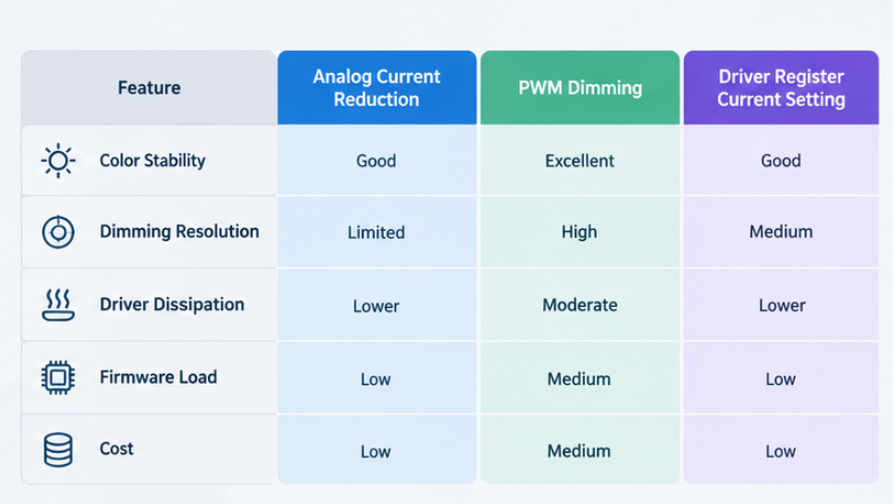
What the Warrant Actually Commits the Supplier To
The warrant page is short and easy to treat as paperwork, which is a mistake. By signing it, the supplier states that the submitted parts come from a production run using the same tooling, process, measurement method and material sources that will be used in series supply.
That statement is what makes the evidence behind it meaningful. A dimensional report has no lasting value on its own; it acquires value when it is attached to a declaration that the process which produced those dimensions is the process that will keep producing them.
It also defines the buyer's remedy. When a later lot differs from the approved baseline, the warrant is the reference that turns the difference into a nonconformity rather than a discussion about tolerance interpretation. This is the same principle that governs the reapproval triggers described in our explanation of sample approval and reapproval triggers.
Which Submission Level Fits the Project
Submission levels exist so that a low-risk part and a high-risk part do not generate the same paperwork. The level is normally negotiated at the start of the project and recorded in the purchase agreement, and it is much harder to change once the supplier has begun work.
| Project situation | Usual level | What the level adds |
|---|---|---|
| Standard part already supplied to the same drawing, with an unchanged process | Warrant and sample only | A declaration with no supporting measurement set |
| Standard part with a new production location or a changed process step | Warrant, samples and limited data | Dimensional and material results for the changed characteristic |
| New custom LED part with new tooling, a new artwork drawing or a new optical stack | Full submission | Complete dimensional, optical, electrical and material evidence, plus the trial-run record |
| Safety-related or high-volume automotive-style usage | Full submission plus process capability evidence | Capability studies and control-plan evidence alongside the measurement set |
The row that most often causes trouble is the third, because a custom display mixes mechanical, optical and electrical characteristics that are not covered by a single measurement method. Agreeing which characteristics belong in the submission, and how each one is measured, is part of the negotiation rather than a detail left to the supplier.
The Production Trial Run Is the Anchor
Every number in the submission has to come from a production trial run, which means a run on the intended equipment at the intended rate rather than a hand-built set of samples. When the samples come from a laboratory bench, the submission describes a process that does not exist yet.
The practical consequence is a schedule one: the trial run has to happen before the submission date can be promised, and the measurement method has to be agreed before the trial run rather than after it. Measuring after the fact with a method the buyer did not approve reintroduces the argument the submission was meant to remove.
The dimensional portion of the evidence is the same work that a first article inspection produces, and the measurement sequence is described in our guide to the first article inspection data set. Where the two activities are planned together, one measurement campaign can serve both, provided the sample source is stated on each record.
For an LED display the optical and electrical characteristics deserve their own place in the package. Element-to-element brightness consistency, colour or wavelength within the stated bin, forward voltage within the approved window and the drive condition used for every reading are the items that a purely dimensional submission leaves out, and they are also the items that decide whether a second build looks like the first.
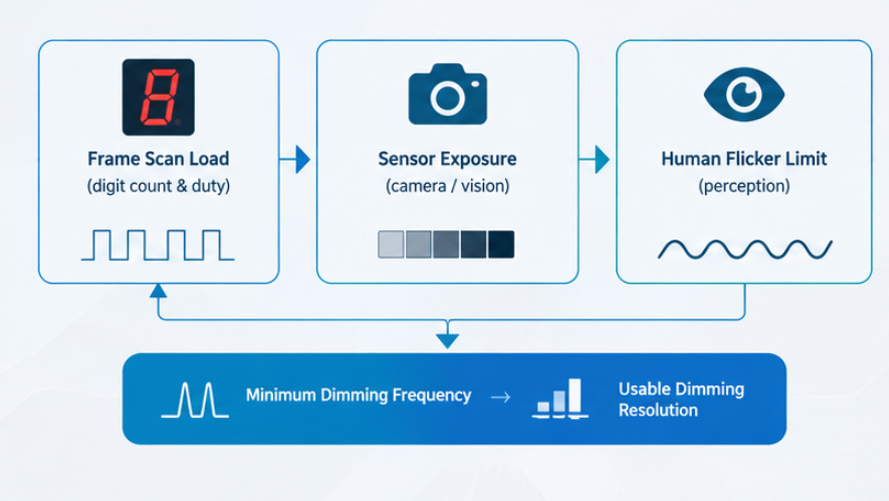
Acceptance, Sign-Off and What Forces a Resubmission
Approval should be a recorded decision against stated criteria, not an absence of objection. The cleanest structure names each characteristic, the tolerance or window that applies, the measurement method, and the disposition rule for a result that falls outside either the tolerance or the stated engineering limit.
Once that baseline exists, resubmission triggers can be written as a list rather than a judgement. A change of production site, a change of material or material source, a change of artwork or optical stack, a change of the measurement fixture or software, and any change that redefines what an approved bin label means should each require a new submission.
The change routes are the same ones a supplier must report proactively, and the categories are covered in our overview of the change notification a supplier must send. Where a project has no notification mechanism in place, the submission level is the only control that remains, which is a fragile arrangement for a long-lived product.
Where Submissions Usually Fail
The first failure is a package built from prototype samples, which produces a complete-looking document set that says nothing about production.
The second is a missing measurement method. Results without a stated method cannot be reproduced, so a later dispute has no common reference, and the buyer discovers this at the moment the evidence is needed most.
The third is an unwritten acceptance rule for results that sit outside tolerance but inside an engineering limit. If the disposition rule is not agreed in advance, the first such result delays the project while it is negotiated, and the same negotiation repeats on the next submission.
The fourth is a package that is complete on process but silent on the plant. Documents look convincing while the process behind them is unexamined, which is why an audit remains a useful complement to the submission rather than a duplicate of it. What such an audit actually examines is set out in our guide to the audit behind the documents.
Frequently Asked Questions
What should OEM buyers require for LED PPAP?
Require a submission level agreed before work starts, evidence generated from a production trial run rather than from prototypes, and a warrant that names the tooling and process the parts were made by. Also require a stated disposition rule for results outside tolerance.
Which documents or evidence matter for LED PPAP?
Dimensional results with the measurement method, material and performance results including the optical and electrical characteristics of the display, the trial-run record, and the signed warrant matter most. Sample retention and the approved drawing complete the set.
How should a supplier and buyer define acceptance for LED PPAP?
Name each characteristic, the window that applies to it, the method used to measure it and the rule for a result outside the window. Recording those four items before the trial run is what turns the submission into a decision rather than a review.
What should be checked before approving LED PPAP?
Check that the samples came from a production run, that every result carries a method and a drive condition, and that the drawing referenced in the package is the current revision. Confirm the warrant names the same site and process the trial run used.
Is a production approval submission required for every custom LED project?
No, because the level should follow the risk of the part and the change involved. A custom display with new tooling and a new artwork normally justifies a full package, while a repeat order to an unchanged drawing may need only a warrant.
Does approval reduce incoming inspection?
It changes what incoming inspection needs to look for rather than removing it, because the approved baseline becomes the reference the incoming check is compared against. The ongoing check is described in our note on incoming inspection after approval.

Conclusion: Agree the Level Before the First Submission
LED PPAP works as a control when the level, the evidence list and the acceptance rule are agreed while the project is still being planned. Agreed late, the same package becomes a document review that settles nothing and delays the build.
The order matters for LED supplier quality, OEM LED procurement and OEM Development & Production Control alike: agree the level, run the trial, measure with the approved method, then sign the warrant against a stated baseline. Each of those steps produces a record that a later dispute can be settled against.
For a custom display project where the process and the drawing both need approval, send the part description, the drawing revision and the intended submission level through the inquiry page so the engineering and quality teams can confirm what the package will carry.
LED Component Obsolescence EOL Planning for Long-Lifecycle OEM Products


