LED First Article Inspection for Custom LED Components: What to Check Before Pilot Production

What First Article Inspection Controls
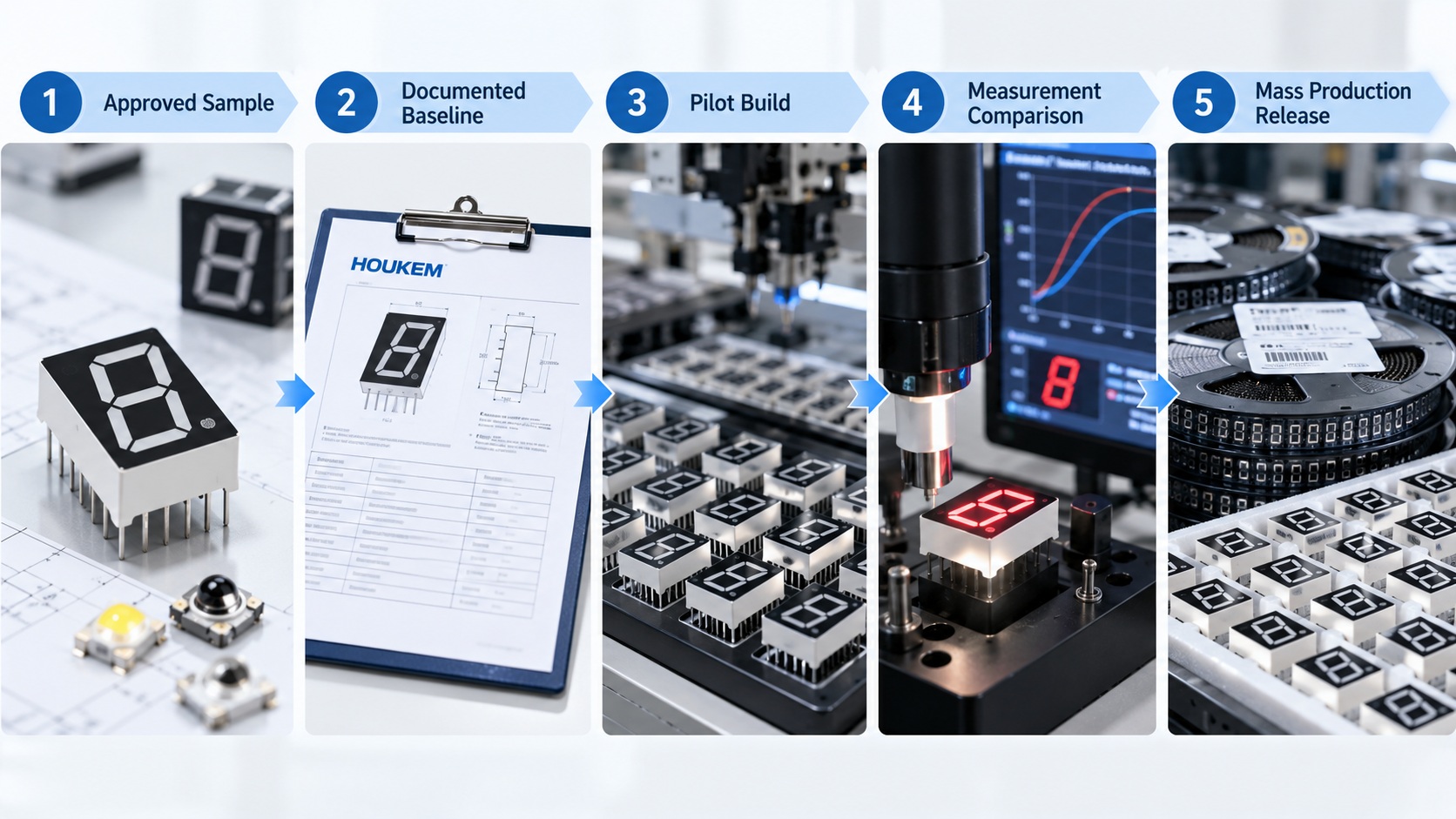
First article inspection is a documented measurement of the first article produced from production tooling, process and fixtures, compared against the approved drawing and specification. It answers a narrow question: is the process capable of producing the approved part, not just one good sample. It is different from sample approval, which decides what the target is, and different from recurring incoming inspection, which samples shipped lots over time. First article inspection is a single gate at the start, and its value comes from being complete, recorded and signed by both parties before volume begins.
What Should OEM Buyers Require for LED First Article Inspection
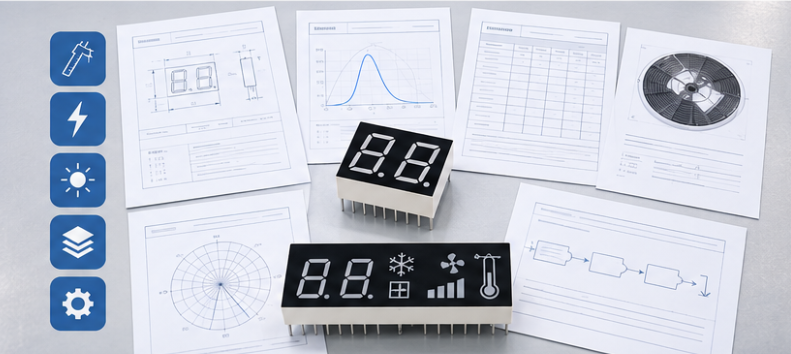
What should OEM buyers require for LED first article inspection? A written requirement in the purchase order or in the LED supplier quality agreement, not an informal request after the first shipment. The requirement should name the characteristics to be reported, the instrument types acceptable for each measurement, the record format, the submission timing relative to the first shipment, and the disposition rule when a characteristic falls outside tolerance. It should also state what triggers a repeat: a change of tooling, a change of production site, a change of sub-tier supplier or a change of the process route. Without that scope written down, OEM LED procurement gains no durable protection: first article inspection becomes a one-off favor that quietly expires at the first supplier change. The table below summarizes the elements worth covering.
| Requirement Element | What It Prevents |
|---|---|
| Named characteristics and tolerances | Arguments later about which values were supposed to be reported |
| Agreed measurement method and instrument class | Results that cannot be compared between supplier and buyer |
| Submission timing before first shipment | Product arriving before the data that justifies it |
| Disposition rule for out-of-tolerance values | Informal deviations that never reach the buyer's record |
| Re-trigger conditions after changes | A stale report being reused for a changed process |
| Retention period for the records | Losing the baseline during a later field investigation |
Which Documents and Evidence Matter for LED First Article Inspection
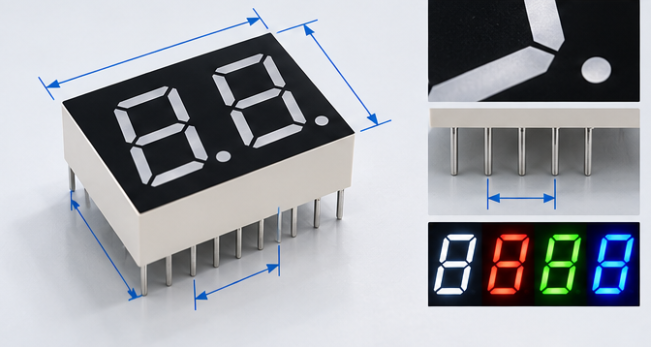
Which documents or evidence matter for LED first article inspection depends on the part, but the useful structure is stable. Start with the dimensional record: the drawing revision used, the critical dimensions measured, the values found and the tolerances allowed. Add the electrical record: forward voltage and current at the specified test condition, and the test condition itself. Add the optical record: wavelength or color coordinates, luminous or radiant output, and segment-to-segment uniformity for display parts. Then add the material and process record: the components and materials actually used, the process route, and any change from the approved baseline. Finally, add the comparison against the retained reference, because a retained golden sample turns a set of numbers into a judgment about consistency. A first article package that omits the test conditions or the drawing revision is not auditable, even if every value inside it looks correct.
How Should a Supplier and Buyer Define Acceptance for LED First Article Inspection
How should a supplier and buyer define acceptance for LED first article inspection? By agreeing the rule before the measurements exist, so the result is not negotiated afterwards. The practical rule has three levels: characteristics within the drawing tolerance pass; characteristics outside tolerance but inside a defined engineering limit need a written deviation accepted by the buyer; and characteristics outside both are rejected with a corrective action before the next build. For display products, the optical and visual criteria deserve particular care, because brightness matching between digits and segment uniformity are often described qualitatively in the drawing and quantitatively in conversation. Writing a numeric limit, an inspection distance and a lighting condition into the specification removes that gap. Where sampling rather than full measurement is agreed, the level should follow the same logic used for recurring checks, and AQL inspection for LED components explains how those levels are normally set.
What Should Be Checked Before Approving LED First Article Inspection
What should be checked before approving LED first article inspection is less about the numbers themselves than about their completeness and their provenance. Confirm that the drawing revision in the report is the revision you approved, that the test conditions match the specification, that every named characteristic appears exactly once, and that any missing measurement has a stated reason. Check that the instrument identifications and calibration dates are present, because an uncalibrated measurement is an opinion. Compare the reported optical values against the retained reference rather than against the nominal print alone, and confirm the physical article is retained or photographed under the same conditions as the reference. Finally, confirm that the report names the process route and the equipment used, so any later change is visible as a change. This discipline is the same one behind general LED quality control practices, applied once at the start rather than continuously. OEM Development & Production Control works best when that single gate is treated as a release condition rather than a formality, because the cost of discovering a tooling or process mismatch after volume has started is almost always higher than the cost of measuring the first article properly.
Frequently Asked Questions
Is first article inspection the same as sample approval?
No, sample approval defines the target and first article inspection verifies that production can hit it. Approving a sample without verifying the first production article leaves the process unproven.
How many parts should be measured?
That depends on the process and the criticality of the characteristic, and it should be agreed in writing before the build. Many programs measure one article fully and add a small sample for characteristics known to vary.
Does a supplier change always require a new report?
A change to tooling, production site, sub-tier supplier or process route should trigger a new submission. Minor changes that cannot affect the named characteristics can be handled by notification instead.
What if a dimension is outside tolerance but the part works?
It still needs a written deviation accepted by the buyer before the product ships. Accepting it informally removes the record that protects both sides later.
How long should the report be kept?
It should be retained for at least as long as the product is supplied, because it is the reference used when a field issue needs tracing. Retention should be written into the quality agreement.

Bringing the Gate Together
A first article inspection only creates value when the requirement, the evidence and the acceptance rule are agreed before tooling release and recorded when the first article is measured. Handled that way, LED first article inspection becomes a short, auditable release condition instead of a dispute waiting to happen at the first shipment. If you are preparing a custom LED display or LED component project and want the drawing, evidence and acceptance criteria confirmed at the quotation and pilot stage, send your requirements to HOUKEM; as an OEM/ODM LED manufacturer the engineering team can support the specification and first article process.
LED Supplier PCN: What OEM Buyers Should Require Before Production Changes