What to Include in an LED Supplier Quality Agreement

Quick Answer: What an LED Supplier Quality Agreement Is For
An LED supplier quality agreement converts commercial expectations into verifiable requirements. It names the baseline that production must match, the evidence the supplier must provide, the criteria that decide acceptance, and the process that applies when something changes or fails.
Treat it as a working document rather than a legal formality. If a clause cannot be checked by an inspector, a test report or a written record, it will not change supplier behaviour.

The Clause Map: What a Usable Agreement Contains
Buyers who start from a clause map instead of a template finish faster. Each clause below answers one question, and together they cover the life of a delivered lot.
| Clause | Question it answers | What the buyer must supply |
|---|---|---|
| Scope and identification | Which parts, drawings and revisions are covered? | Part numbers, drawing revisions and the intended application |
| Specification baseline | What is the approved standard for comparison? | A signed specification, datasheet or approved sample agreed by both sides |
| Inspection and acceptance | How is conformance decided? | Sampling plan, measurement method, acceptance criteria and the authority to reject |
| Change control | What triggers notification and requalification? | A list of notifiable changes and the approval gate before changed material ships |
| Nonconformance and records | What happens when a lot fails? | Containment, corrective action, record retention and the review cadence |
Scope, Parties and Product Identification
Name the legal entities, the manufacturing site and the exact part numbers covered. A common failure is an agreement written against a product family while production is released against a specific drawing revision. When a drawing changes, the agreement should say whether the change is automatically covered or requires re-approval.
Specifications and the Approved Baseline
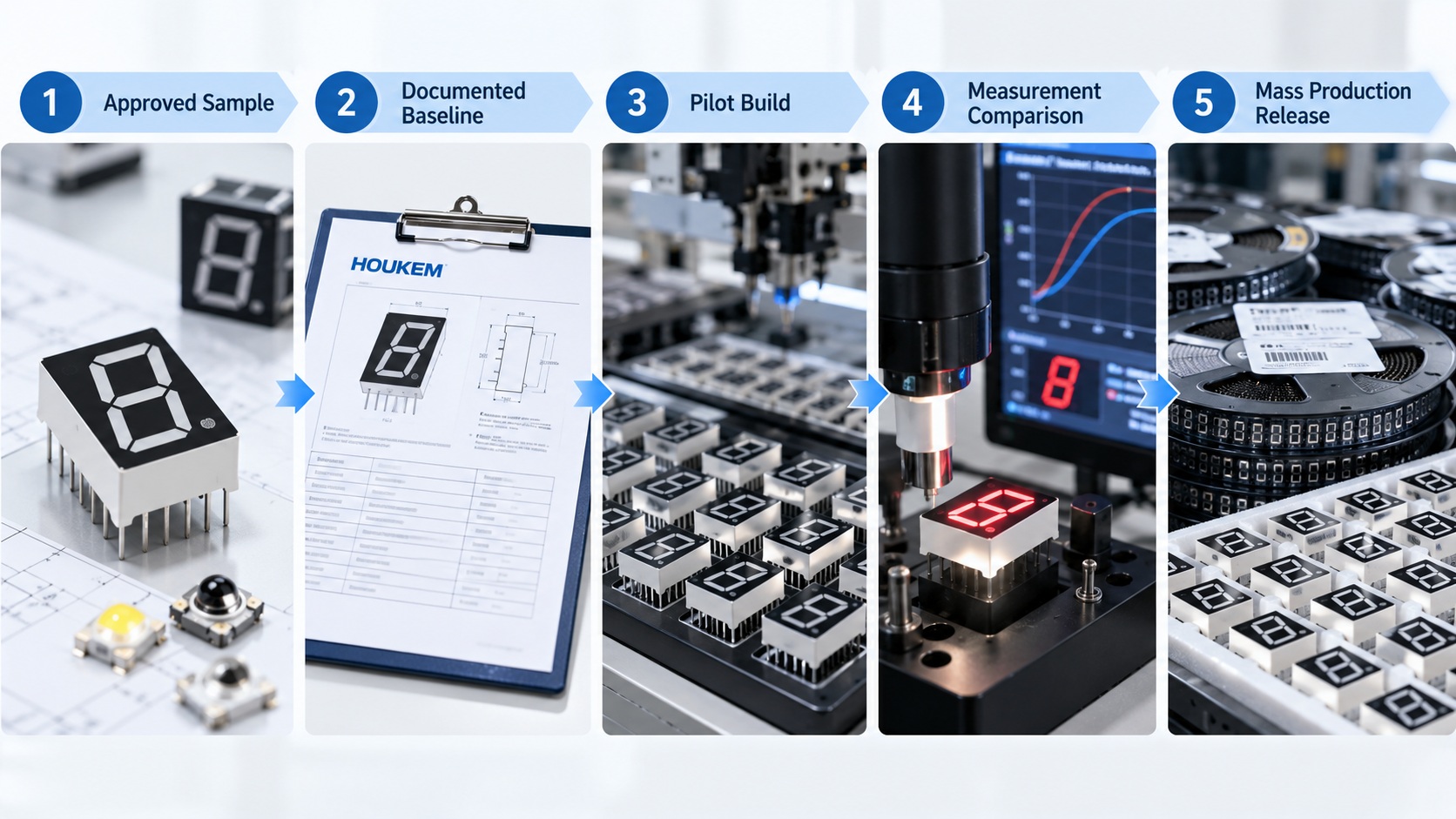
The agreement needs one baseline that both sides accept, and it must state what happens when several documents disagree. A typical hierarchy is the signed specification first, the agreed drawing second, the supplier datasheet third and the approved sample as the physical reference. Write the order down, because it is the first thing an inspector needs when a measurement sits at the edge of a tolerance band.
Inspection, Sampling and Acceptance
State who inspects, at which stage, with which method and against which criterion. For LED components this usually means a documented sampling plan, defined measurement conditions, and a rule for critical characteristics that cannot be sampled. Acceptance criteria should be written so that two different inspectors reach the same conclusion, which is why the measurement method matters as much as the limit itself.
Change Control and Requalification
Define the changes that must be notified before shipment, such as a different die, a different encapsulant, a new production site or a revised process step. Attach the requalification scope to each change type so that neither side has to improvise after the fact. The notification content and timing expectations are the same ones described in our guide to the LED supplier PCN process. Supplier Change & Quality Management is easier to run when the notification list is explicit rather than implied.
Nonconformance, Records and Review
Decide what happens when material fails: who owns containment, how fast a corrective action response is expected, and which records the supplier must retain. Writing the expected response format into the agreement removes most of the argument later, and the structure of a usable response is set out in our article on LED 8D corrective action reports. A short review cadence keeps the agreement alive. Without a scheduled review, the accepted baseline drifts while the contract text stays frozen.
Evidence to Request and How to Read It
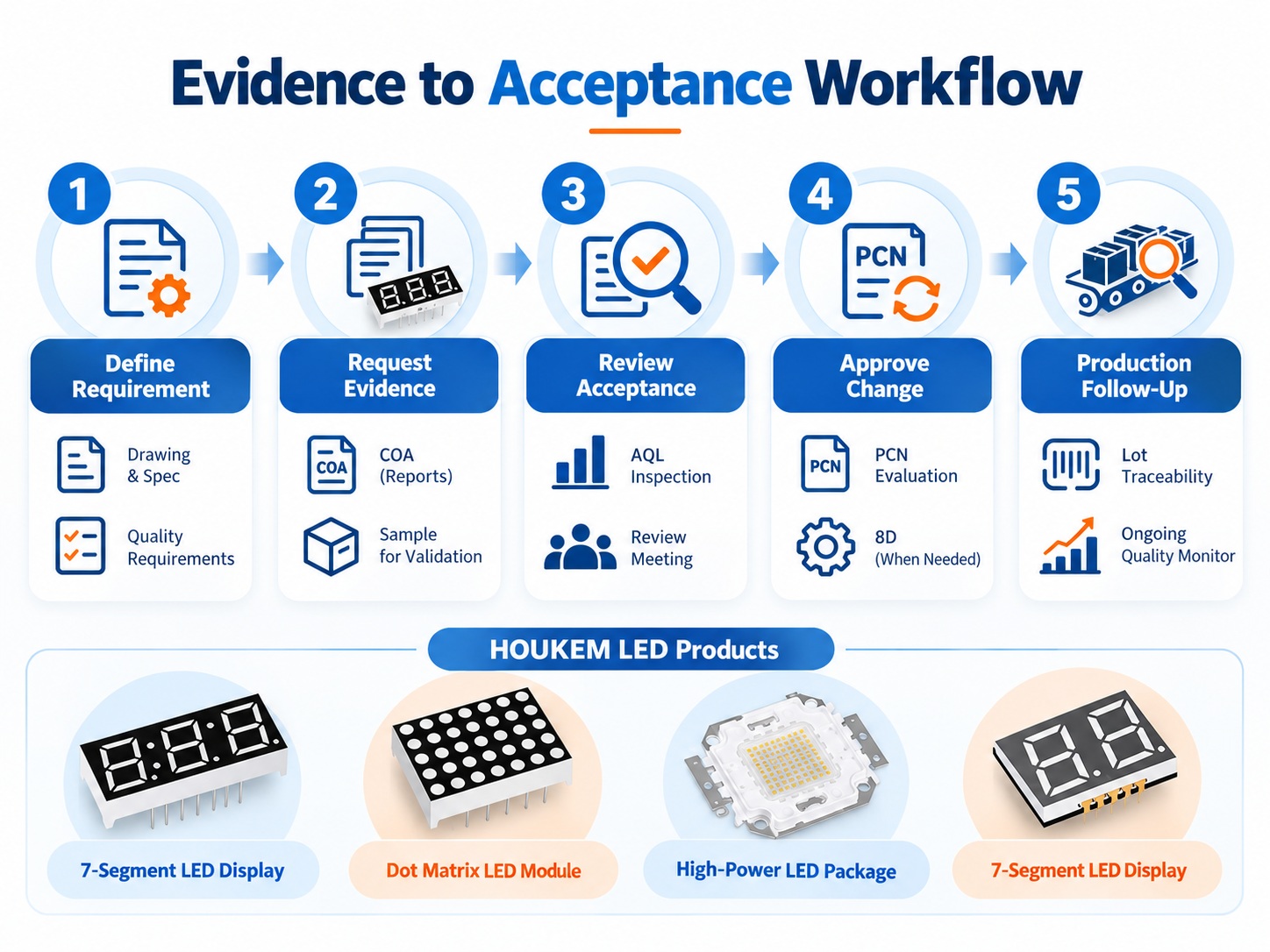
The agreement is only as strong as the evidence it can compel. Before approval, ask for the document set that supports each clause: the signed specification, the compliance evidence relevant to the delivered material, test and inspection records for the released lot, and the change notifications issued during the project.
Lot records deserve their own place on the list, because they are what ties a delivered consignment back to a production date and a material batch. The fields worth requiring are described in our guide to LED lot traceability.
Read every document for scope before you read it for content. A certificate that covers a different product family, a different material or an earlier report revision does not support the current delivery. Our guide to LED compliance documents shows how to check product, material and report scope line by line, and the LED supplier audit checklist covers the wider document set worth collecting at the same time.
Where Agreements Fail in Practice
Three failures account for most disputes. The first is an acceptance criterion that describes an outcome rather than a measurement, so nobody can decide whether the lot passes. The second is a change clause that lists documents instead of events, so a process change never triggers notification. The third is a record clause with no retention period, which means the evidence has already been discarded when a field issue appears eighteen months later.
Each failure has the same remedy: describe the action, the owner and the record. A clause that survives a change of buyer, supplier contact and project year is the one that names all three.
Frequently Asked Questions
What should OEM buyers require for LED supplier quality agreement scope?
The agreement should name the legal entities, the production site, the covered part numbers and the drawing revisions. It should also state how a new revision is added once the project moves on.
Which documents or evidence matter for LED supplier quality agreement review?
Start with the signed specification, the approved sample record and the compliance evidence for the delivered material. Add lot inspection records and change notifications, and check the scope of each document before relying on it.
How should a supplier and buyer define acceptance for LED supplier quality agreement content?
Define acceptance as a measurement plus a method plus a limit, and name the person or role authorised to reject. Written that way, acceptance is repeatable by different inspectors on different shifts.
What should be checked before approving LED supplier quality agreement drafts?
Confirm that every clause can be verified by evidence the supplier already produces or can produce at release. Then confirm that the change and nonconformance clauses name an owner and a response expectation.
Does a quality agreement replace inspection or auditing?
No, it defines what inspection and auditing are measured against. The agreement sets the baseline and the evidence expectations, while inspection and audits verify that both are being met in production.

Conclusion: Making the Agreement Usable in an OEM Process
A void agreement is one that nobody can apply. Keep the clause map explicit, tie each clause to evidence, and review the baseline on a schedule so that approved changes are reflected before the next lot ships. When those three habits are in place, OEM LED procurement stops resolving quality questions by argument.
If you are preparing an LED sourcing project and want the specification, inspection and change-control requirements agreed before tooling, send us your part list and application details through our RFQ and inquiry page and our engineering team can work from the same document set.
LED 8D Corrective Action: What a Useful Supplier Report Should Contain