Custom LED Tooling Ownership: Who Owns the Mold, the Files and the NRE You Paid

This guide sets out what custom LED tooling ownership should control, which evidence an OEM buyer should collect before paying, and how to write acceptance so the answer is still clear when the tooling is five years old.
Quick Answer: What Custom LED Tooling Ownership Decides
Tooling ownership decides three things: who may use the tool, who may move it, and who pays to maintain or replace it. A tooling charge that answers only the first question leaves the other two open to interpretation.
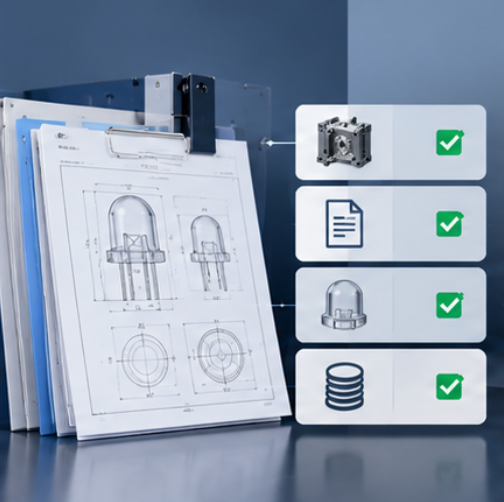
For LED components the tool is rarely a single object. It usually includes a mold or cavity set for the package or light pipe, a test fixture, a program for the binning or colour-sorting routine, and the mechanical drawing revision the cavity was cut to. Ownership has to name each of those items, because they separate in practice even when the invoice treats them as one line.
Read as a contract term, custom LED tooling ownership is where LED supplier quality, the commercial agreement and the engineering change route have to meet. If the drawing revision the tool was cut to does not match the revision in the approval record, the buyer owns a tool that produces a part nobody approved.
What the Tooling Charge Buys and What It Does Not
A tooling charge normally buys the fabrication of the tool plus a first qualification run. It does not automatically buy the right to move the tool, the right to inspect it, or the right to take it to another supplier.
Tooling amortization is a separate commercial decision. Some programs pay the full amount up front and own the asset outright, while others spread the cost across a committed volume. Both are workable, but the ownership clause has to match the payment model, because an amortized tool is usually owned by the supplier until the last amortized unit ships.
An NRE charge is often confused with tooling. NRE pays for engineering effort such as optical design, fixture development or qualification testing, and it does not necessarily create an asset the buyer can take away. Keep the two lines separate in the quotation, and state in writing which one transfers ownership and which one buys a service.
Two commercial boundaries are worth fixing early. MOQ and lead time on custom LED parts are model and project dependent rather than fixed company terms, so the ownership clause should not assume a single company-wide quantity or schedule, and our note on custom LED MOQ, pricing and options explains how those terms are usually structured. The drawing the tool is cut to also has to be the controlled revision, which is why custom LED display drawing approval belongs in the same document set as the tooling clause.
Evidence and Documents to Request Before Paying
Ask for the tool list before the invoice, not after. A usable list names each item, its function, the drawing revision it was built to, and whether it is dedicated to the buyer or shared across projects.
Request the expected life of each tool as well, expressed as a number of shots or cycles rather than a description. A cavity with a stated life becomes a planning input for replacement cost; a cavity with no stated life becomes a surprise at the worst possible moment.
Document control has to be part of the pack. If the supplier holds the only copy of the cavity drawing or the test program, ownership is theoretical, and our guide to LED supplier quality agreements covers the clauses that turn document delivery into an obligation rather than a courtesy.
| Tooling item | What ownership must state | What goes wrong if it is silent |
|---|---|---|
| Mold or cavity set | Owner, location, dedicated or shared, expected shot life | The tool is reused for another customer and wears out on someone else's volume |
| Test fixture | Owner, calibration responsibility, who may use it | Acceptance cannot be repeated once the fixture is rebuilt |
| Optical or light-pipe tool | Owner plus the optical parameters it was cut to | Replacement parts arrive with a different light distribution |
| Binning or test program | Licence to use, right to a copy, version control | Second-source parts cannot be graded to the same limits |
| Drawing revision | Revision identifier on the tool and in the approval record | Approved part and produced part drift apart without a change note |
| Maintenance and replacement | Who inspects, how often, who pays for refurbishment | Refurbishment cost appears as a surprise invoice mid-program |
Where the tool produces a cosmetic or optical feature, ask which measurement proves the feature is inside tolerance and who owns the equipment that performs it. A tool that can only be verified by the supplier who built it is a dependency, not an asset.
Acceptance Criteria: What Sign-Off Should Record
Acceptance should record the part, the tool, the revision and the first-article result in one place. A sign-off that lists only the part number cannot answer which cavity produced the unit in front of you.
Set the sample size and the parameters that must be measured before the tool is released to production. For LED parts those usually include dimensional features, optical output at the specified drive current, colour or bin distribution, and the cosmetic criteria agreed on the drawing.
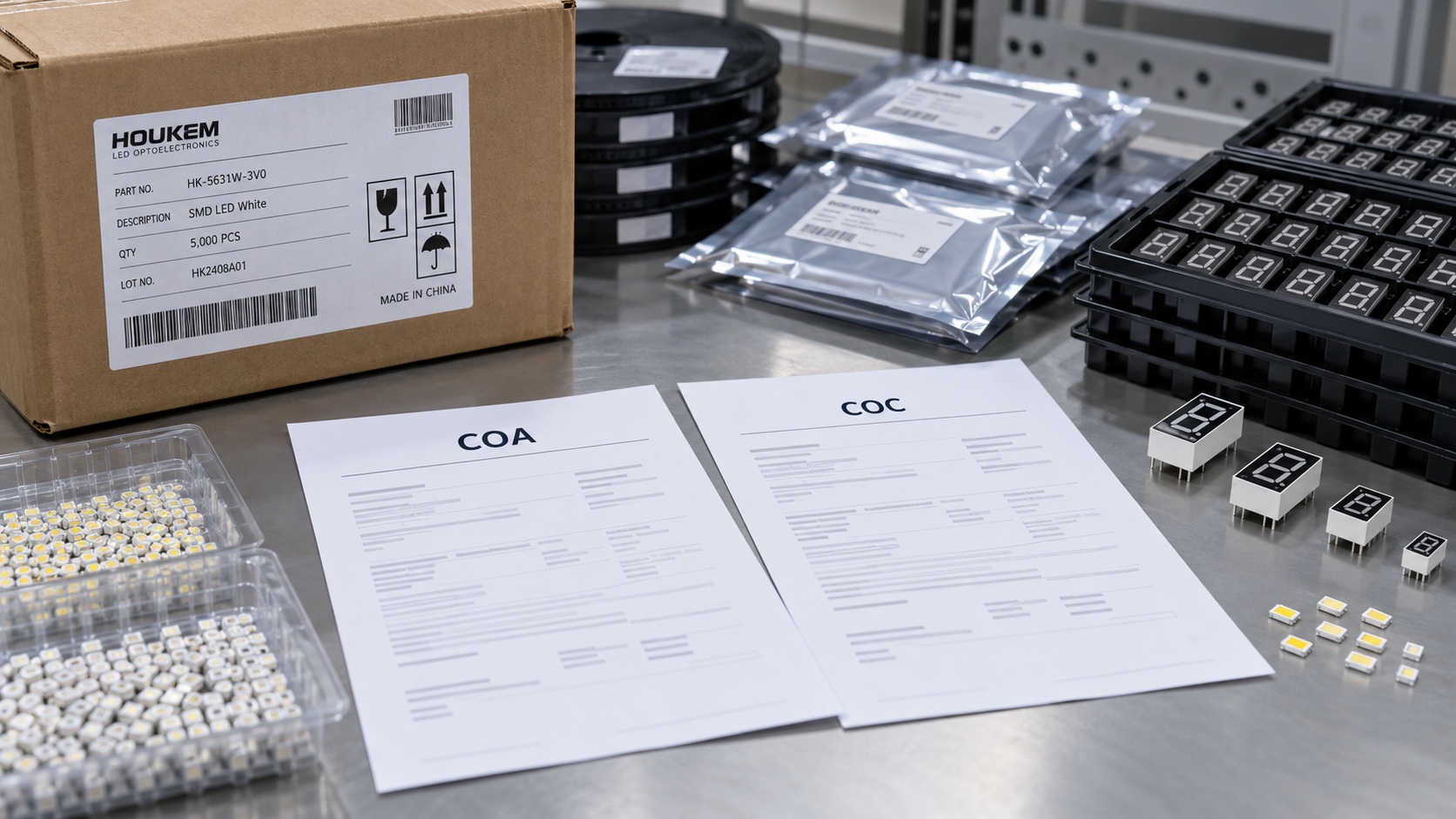
Record who signs, in which function, and what each signature authorises. Purchasing authorises payment, engineering authorises the drawing and quality authorises the acceptance limits, so a single signature covering all three is a control gap that surfaces during an audit rather than during production.
The acceptance record is also the baseline for later disputes. If a replacement cavity is cut in year three, the first-article data from year one is the only evidence that defines what the tool was supposed to produce.
Change, Transfer and Exception Handling
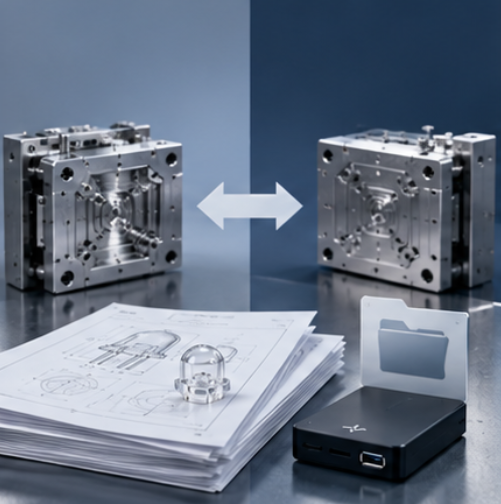
Define the change route before the first engineering change. A cavity can be reworked, a fixture rebuilt or a test program edited without any visible change to the ordering code, and the buyer will not know unless notification is a written obligation.
Transfer is the clause most often tested. If the buyer intends to be able to move the tool, the agreement should state the conditions, the notice period, the condition in which the tool must be returned, and who bears transport and requalification cost. A right to transfer that cannot be exercised in practice is not a right.
Exceptions need the same discipline. A tool accepted with a deviation for one lot is not an approved tool, and the deviation should be closed or converted into a documented rework before volume production begins.
Tooling rarely lives alone. The icon geometry, aperture size and light-pipe layout are usually fixed in the same design window, and the questions in custom segment LED display icons defined before tooling are the ones that prevent a later and much more expensive cavity change.
Buyer Checklist and RFQ Handoff
Before releasing an RFQ, list every item the tooling charge is expected to cover and mark which of them the buyer intends to own.
Before paying, confirm that the tool list, the drawing revision, the expected life, the transfer conditions and the acceptance limits sit in one document set, and that OEM LED procurement and quality are reading the same revision.
Keep the ownership statement short enough to be quoted in a purchase order. A clause that runs to three pages is usually summarized on the way to the supplier's finance team, and the summary is what gets paid against. The clause also belongs in the Commercial Terms & Procurement section of the agreement rather than in an appendix, because that is the section finance and purchasing actually read.

Frequently Asked Questions
What should OEM buyers require for custom LED tooling ownership before paying?
Require an itemized tool list that names the mold, the test fixture, the program and the drawing revision, together with the expected life of each item. Each entry also needs a stated owner and a location, so the record answers who may use and move the tool.
Which documents or evidence matter for custom LED tooling ownership?
The tool list, the controlled drawing revision, the first-article report and the maintenance expectation matter most, because together they define what the tool is and what it must produce. A copy of the cavity drawing and the test program should also sit with the buyer, not only with the supplier.
How should a supplier and buyer define acceptance for custom LED tooling ownership in writing?
Define acceptance as a sample size, a set of measured parameters with limits, and a signed record that identifies the tool and the revision it was cut to. The same record should name which function signs for payment, for the drawing and for the acceptance limits.
What should be checked before approving custom LED tooling ownership on a new project?
Check that the tool list matches the quotation lines, that the drawing revision is the controlled one, and that the transfer and maintenance terms are written rather than assumed. Also confirm that the first article was measured against the limits the approval depends on.
Does an NRE charge give the buyer ownership of the tool?
Not automatically, because NRE usually pays for engineering effort rather than for a physical asset. If the intent is to own the resulting tooling, the transfer has to be stated separately and tied to the specific items it covers.
Conclusion: Ownership Is a Record, Not a Sentence
Custom LED tooling ownership holds up when the tool list, the drawing revision, the acceptance record and the transfer terms are written once and kept together. Left to a single sentence in a quotation, the same clause is read differently by purchasing, engineering and the supplier's finance team.
If you are about to pay tooling for a custom LED display or emitter and want the item list, drawing revision and first-article scope reviewed against your own acceptance terms, send the tooling scope to the HOUKEM team and we will confirm what applies to the part you are sourcing.
LED Approved Vendor List AVL: A Buyer's Evidence and Acceptance Checklist