COA vs COC LED Components: Which Certificate Fits a Shipment

Quick Answer: Two Documents, Two Different Promises
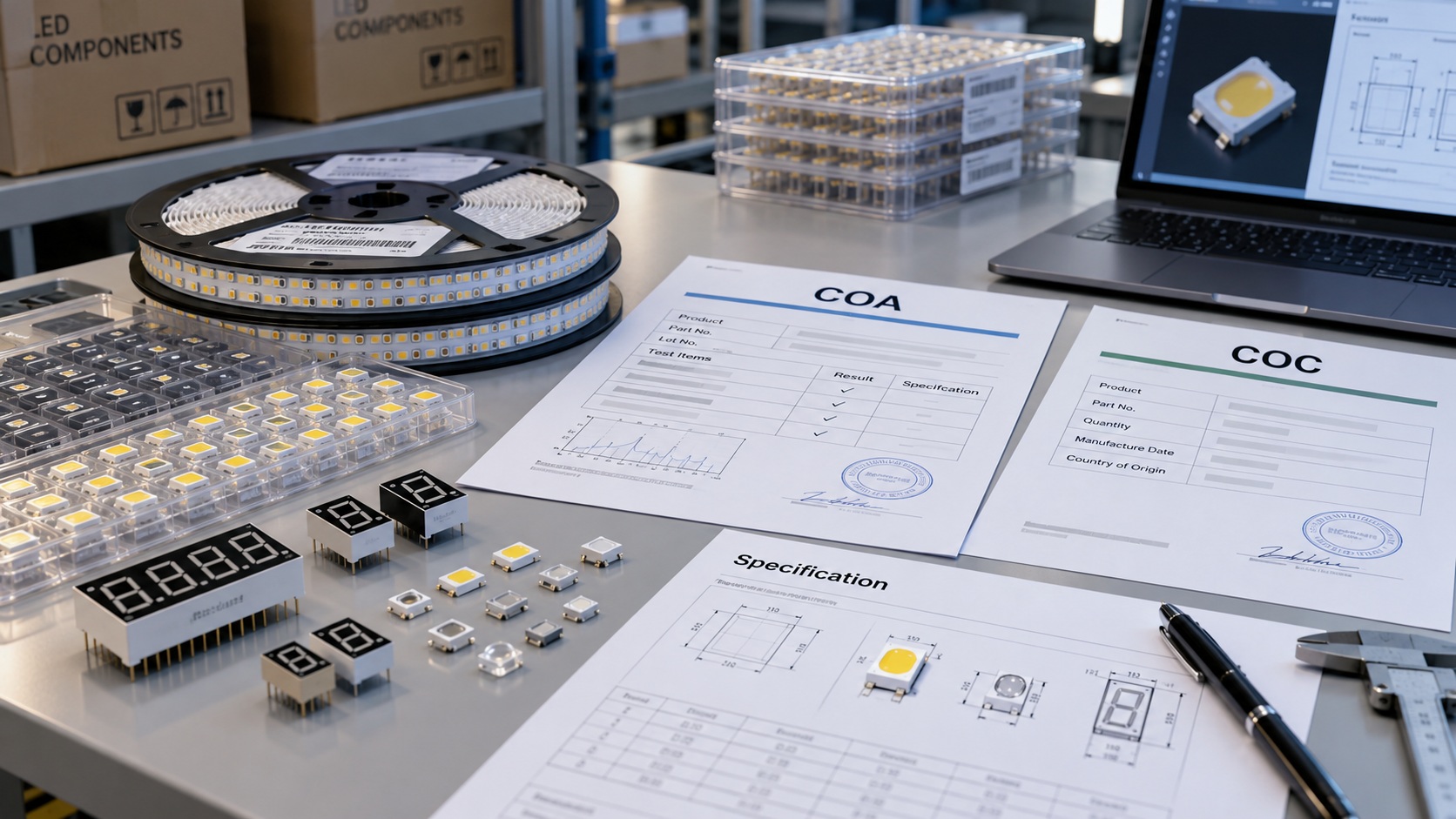
A certificate of analysis carries numbers: the measured value, the specification limit and the test method that produced the reading. A certificate of conformance carries a statement: the goods supplied conform to the referenced drawing, specification or order.
Neither document is stronger than the other in the abstract. What matters is whether the promise matches the risk being managed, because a declaration cannot substitute for a measurement and a one-off measurement cannot cover goods that were never tested.
What a Certificate of Analysis Actually Reports
A certificate of analysis is tied to a test. It should identify the part or material, the lot or batch the sample came from, the characteristic measured, the method used, the result and the specification limit that result is compared against.
Its strength is traceability to a measurement, and its limit is sample scope. A result obtained from a tested sample describes that material and that test, so the wording has to stay inside the scope the report actually covers rather than expanding to a whole product family.
The wider documentation set a buyer may need for compliance purposes is described in our guide to LED compliance documents, where test reports and declarations sit in different evidence layers with different rules for use.
What a Certificate of Conformance Actually States
A certificate of conformance is a declaration signed by the supplier. It usually references the specification, the drawing revision or the purchase order, and it states that the goods shipped against that reference conform to it.
That reference is the whole value of the document. A conformance certificate that names no revision number, no order number and no specification can be applied to almost any shipment, which makes it unusable as receiving evidence.
Because it is a statement rather than a measurement, a conformance certificate is most useful where the specification is already agreed and the supplied items are produced to a stable, controlled process. It replaces a per-shipment test, not a specification.
Comparison: Where Each Certificate Fits
The practical question is rarely which document is better, but which document answers the question the receiving team will actually ask. The table below separates the two by what they record and what they cover.
| Dimension | Certificate of analysis | Certificate of conformance |
|---|---|---|
| What it records | Measured values from a tested sample | A declaration that supplied goods meet the reference |
| Signed by | Testing or quality function that ran the measurement | Supplier quality or authorised signatory |
| Coverage | The tested material, sample and specification | The referenced order, drawing revision or specification |
| Strongest use | New material, new supplier, changed process or a critical characteristic | Repeat shipments to an agreed and unchanged specification |
| Weakness | Does not describe untested production | Does not contain a measurement |
| Fits best when | The buyer must see the number | The buyer must confirm the reference |
Two combinations are common in practice. A first shipment from a new source usually justifies an analysis certificate so a real result is on file. A steady flow of repeat deliveries is usually covered by a conformance certificate, with the analysis certificate reserved for the annual or change-triggered test.
This is where LED supplier quality planning pays off. A buyer who decides the certificate type per risk level, rather than per supplier relationship, avoids both over-documenting routine deliveries and under-documenting the ones that matter.

Verifying a Certificate Before You Accept It
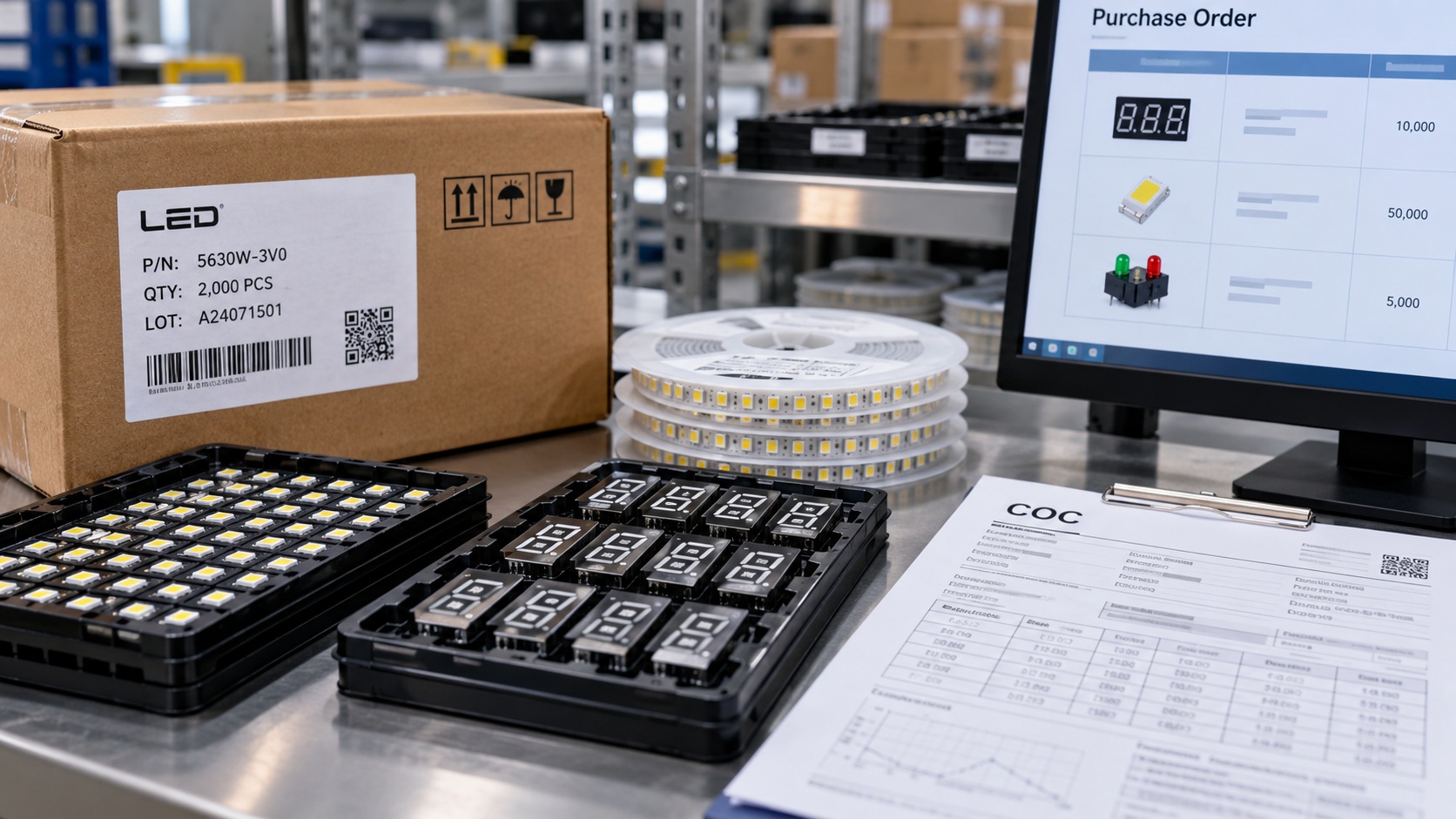
Verification is a short, repeatable sequence, and it fails most often on the simplest step. Match the part number, the lot or batch reference and the quantity on the certificate against what actually arrived before reading anything else.
Then compare the stated limits and results against the specification the buyer agreed to, not against what the supplier habitually quotes. A certificate that references an older revision is a signal that the specification on file and the specification in production have drifted apart.
Finally, confirm the signatory, the date and the document identifier, then file the certificate against the receiving record. Our article on incoming inspection for LED components places this step inside the wider goods-in process, and the certificate check belongs at the point where the lot reference is first available.
If a lot has to be traced back later, the certificate is one of the few documents that links a measurement to a shipment. Our explanation of LED lot traceability shows why the lot reference on the certificate has to survive through the buyer's own storage and assembly.
Writing the Requirement Into the Purchase Order
The decision only holds if it is written down before the order is placed. Name the certificate type, the specification revision it must reference, the characteristics that must appear when an analysis is required, and the signatory the document must carry.
Where the requirement is repetitive, a supplier quality agreement is the better home for it. Our outline of an LED supplier quality agreement covers how documentation duties, change notification and acceptance criteria are recorded so they survive staff changes on both sides.
For OEM LED procurement, the clause is what converts a preference into an enforceable expectation. A buyer who specifies the document type and the reference it must carry has a clear basis for rejecting a shipment that arrives with the wrong paperwork, and the Compliance & Documentation trail stays consistent across projects.
Frequently Asked Questions
How do COA vs COC LED components options compare for OEM designs?
An analysis certificate supplies measured values from a tested sample, while a conformance certificate declares that the shipped goods meet a referenced specification. For a new design, the analysis version gives a designer numbers to work with, and the conformance version confirms that later shipments stayed inside them.
Which COA vs COC LED components choice fits an industrial application?
Industrial applications that depend on a critical optical or electrical characteristic usually start with an analysis certificate so the actual result is documented. Once the process is stable, a conformance certificate usually carries the repeat deliveries with the analysis repeated on a defined trigger.
What trade-offs matter when comparing COA vs COC LED components options?
The main trade-off is between measurement depth and repeat cost, because a per-shipment analysis adds testing effort that a declaration does not. Coverage is the other trade-off, since a declaration applies to the order it references and never to untested stock.
How should engineers validate a COA vs COC LED components decision?
Engineers should confirm that the chosen document references the revision and specification the design actually uses, and that its stated results fall inside the acceptance limits. If the document cannot show that link, the decision is not yet validated.
Can both certificates be required for the same shipment?
Yes, and it is common for a first article or a change-triggered shipment. The two documents answer different questions, so requiring both adds a declaration that the order matched its reference alongside the measurement that proves the characteristic.
Conclusion: Match the Certificate to the Risk
The choice between a certificate of analysis and a certificate of conformance is a scope decision, not a formality. Pick the document whose promise covers the question your receiving team will ask, and write that choice into the order before the goods are built.
Review the requirement whenever the supplier, the material or the process changes, because that is when a declaration stops being sufficient cover. If you want the applicable certificate and documentation scope confirmed for your LED project, send your project requirements to the HOUKEM team and we will confirm what can be provided for the specific product scope.
LED Control Plan: What OEM Buyers Should Require From Production Quality Control