LED Supplier Deviation Approval for Components: When to Accept and When to Reject
Quick Answer: A Deviation Is a Decision, Not a Shipment
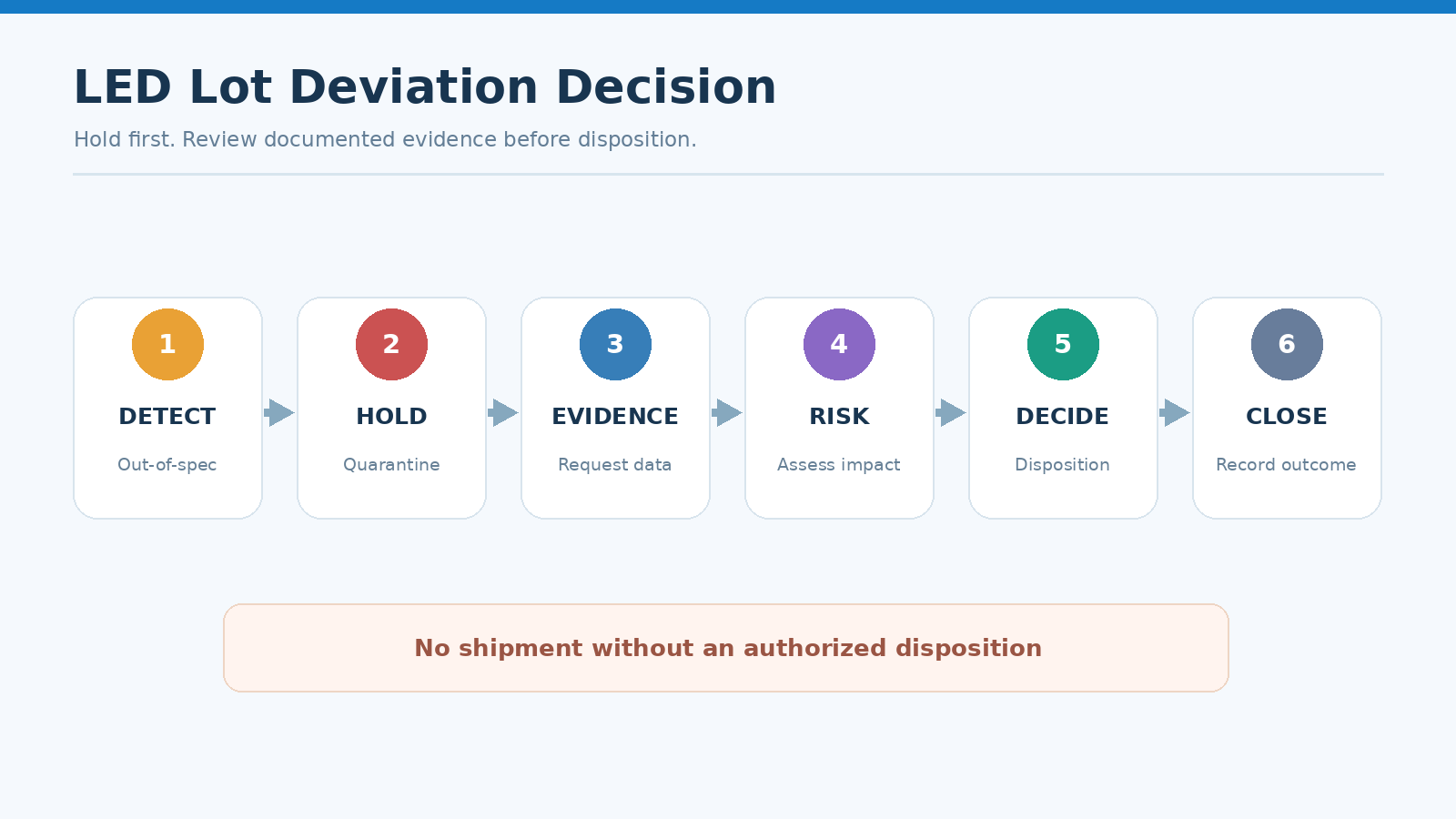
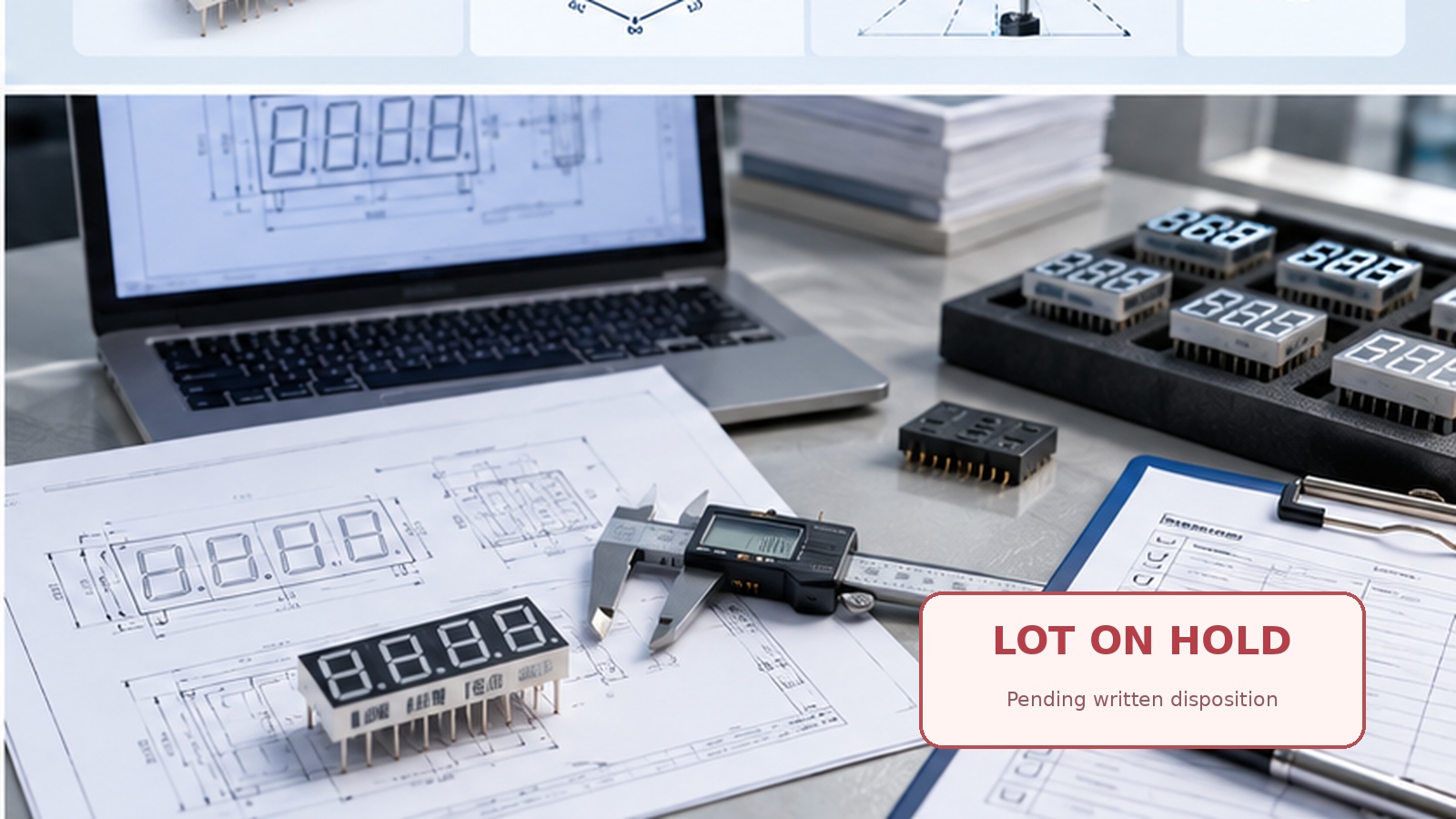
A deviation is a formal request to accept a defined departure from specification for a defined quantity. It is not a substitute for a specification change, and it is not a general permission for the supplier to keep shipping the same way.
That distinction decides the paperwork. A deviation applies to the lots named on it and closes when they are consumed, while a specification change applies to everything produced afterwards. Mixing the two is how an accepted exception becomes a permanent unapproved condition.
Every deviation therefore needs three things before it can be answered: the measured departure, the affected quantity and the reason the departure happened.
Where Deviations Come From
Most deviations trace back to one of four sources. A parameter drifted outside its limit, a substitute material or component was used, a process step changed, or a measurement method differed between supplier and buyer.
The fourth source is the one that is easiest to resolve, because it is a calibration or method question rather than a product question. The first three need a real decision about the parts in hand.
Supplier-originated changes that are meant to be permanent follow a different route, and the difference is set out in our explanation of LED supplier process change notification. A deviation covers a defined batch, while a notification covers a change to the ongoing process.
Evidence to Request Before Signing
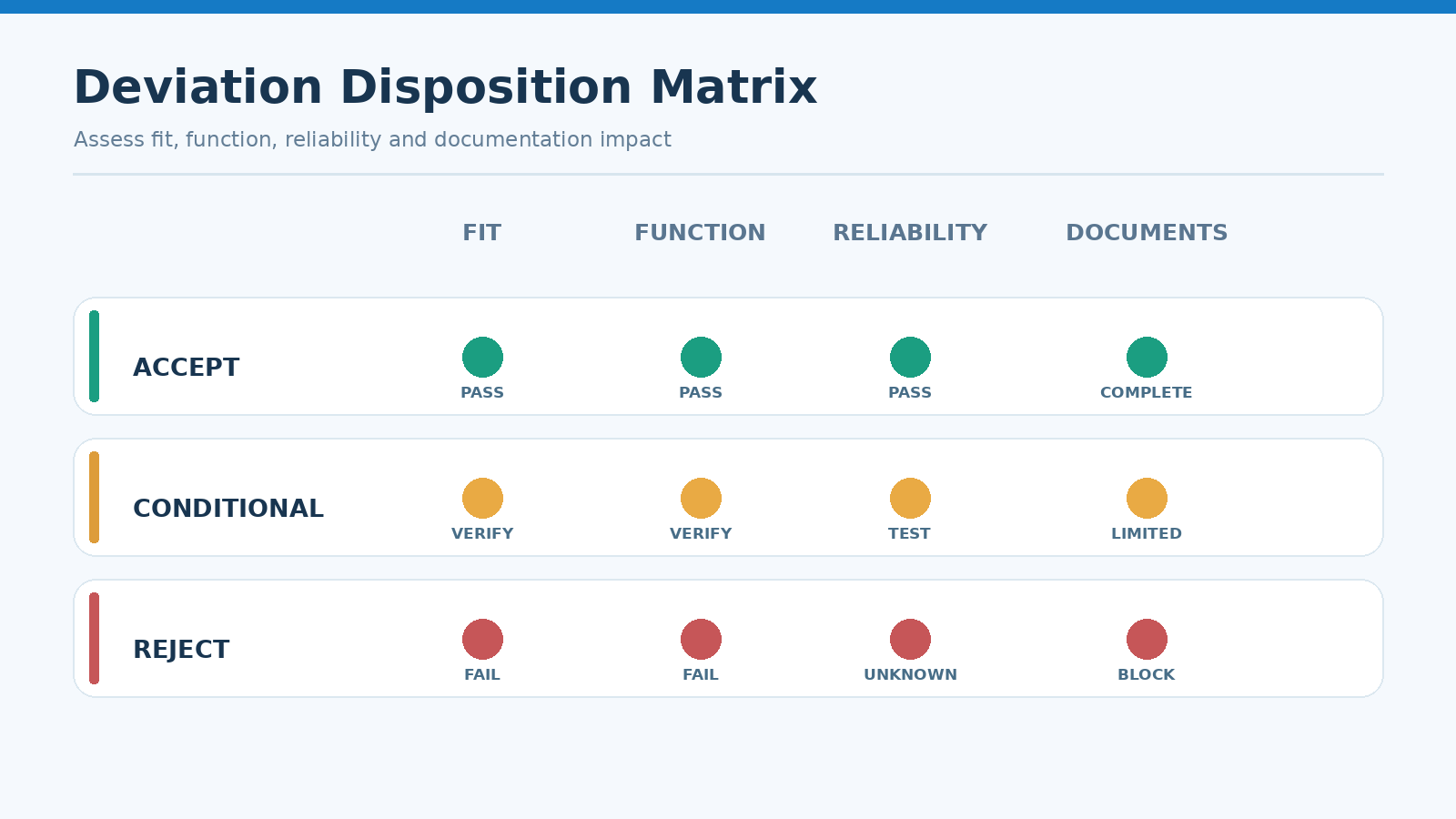
The evidence set is small and fixed, which is what makes a fast decision possible. The buyer should ask for the affected lot identity, the measured value with its method and uncertainty, the specification limit it breached, and the containment already applied.
Two more items complete the picture. The supplier should state the root cause well enough to judge whether the cause has stopped, and should propose a disposition for the parts in hand. Supplier Change & Quality Management depends on this step, because the same evidence set also feeds the quality agreement that governs the relationship, which is described in our article on the LED supplier quality agreement.
Without a measured value there is nothing to evaluate. A deviation described only as a small difference cannot be risk assessed, because the size of the departure is the input the whole decision depends on.
Risk Evaluation: What Actually Changes
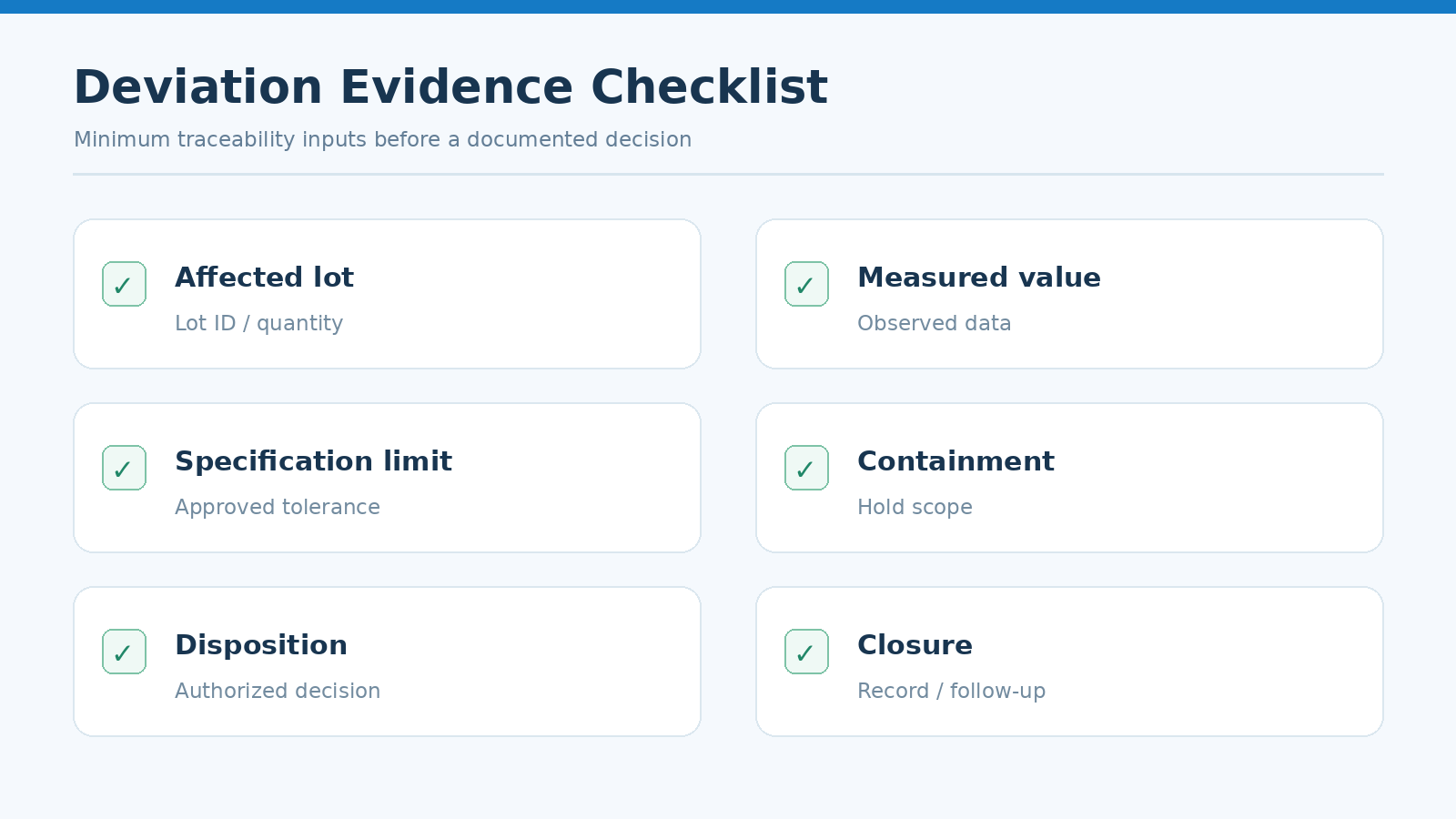
Risk evaluation asks four questions in a fixed order. Does the departure affect fit, does it affect function, does it affect long-term reliability, and does it affect documentation or compliance records.
Function and reliability are the two that most often decide the outcome. A cosmetic departure is usually benign, while a shift in forward voltage or in intensity affects the drive design and the appearance of a finished assembly at the same time.
Reliability deserves separate treatment because it rarely shows up at incoming inspection. A batch that meets its electrical limits on the bench can still carry a latent weakness, which is why lot identity matters when a buyer accepts a reliability-relevant deviation.
Accept, Accept With Conditions, or Reject
There are three outcomes, and the middle one is used far less than it should be. Conditional acceptance lets a buyer take the parts while constraining how and where they may be used.
| Impact area | Accept | Accept with conditions | Reject |
|---|---|---|---|
| Fit | Departure inside the assembly tolerance and independently confirmed | Accept for a named product only, with a re-check at goods-in | Departure outside the assembly tolerance |
| Function | No measurable effect on the driven condition | Accept for a lower-stress application only | Drive current or output cannot be met |
| Reliability | Cause understood and shown not to be latent | Accept for a short-life, non-critical build only | Cause unknown or known to be latent |
| Documentation | Lot fully traceable and the record updated | Accept with the departure recorded against the lot | Lot identity cannot be established |
Conditional acceptance only works when the condition is written down and traceable to the lot. That makes lot identity the enabling control rather than an administrative extra, and the method is described in our guide to LED lot traceability.
Closure and Follow-Up
A deviation should not close when the parts are consumed. It should close when the supplier has shown the cause was removed and the corrective action has been verified, which is what an 8D report is for.
Until that verification happens, the buyer is holding an open risk rather than a finished decision. The closure evidence belongs with the original deviation so that a later failure in the same parameter can be traced to it.
The report format and the review questions that go with it are covered in our article on LED 8D corrective action, and the deviation record should point to it by reference.
Frequently Asked Questions
What should OEM buyers require for LED supplier deviation approval?
A buyer should require the affected lot identity, the measured departure with its method, the specification limit breached and the proposed disposition. A stated root cause and a containment action should accompany them.
Which documents or evidence matter for LED supplier deviation approval?
The measurement report, the deviation form with the lot reference, the containment record and the closure evidence matter most. A corrective action report supports closure once the cause has been removed.
How should a supplier and buyer define acceptance for LED supplier deviation approval?
Acceptance should be defined against four impacts: fit, function, reliability and documentation. A deviation that passes the first two can still be rejected on reliability or traceability grounds.
What should be checked before approving LED supplier deviation approval?
The measured value should be compared with the real assembly tolerance rather than the nominal limit, and the lot identity should be confirmed before any parts move. The cause should also be understood well enough to say whether it has stopped.
Is accepting one deviation a precedent for later lots?
No, because a deviation applies only to the lots named on it and expires when they are consumed. Repeating the same departure on later lots requires a specification change instead, which is what keeps the specification meaningful.
Conclusion: Decide With the Measurement, Close With the Evidence
LED supplier deviation approval becomes manageable once it is treated as a bounded decision. Name the affected lots, evaluate fit, function, reliability and documentation, and record the outcome with its condition.
Handled that way, LED supplier quality gains a traceable record instead of a verbal exception, and OEM LED procurement keeps a specification that still means something. The deviation closes only when the corrective evidence closes with it.
If a supplier has raised a deviation on a component and the disposition is unclear, send the measurement report and the lot reference through the inquiry page so the engineering team can review it against the recorded evidence.
Custom LED Display Drawing Approval: Dimensions, Pinout and Optical Requirements