


LED Moisture Sensitivity Level MSL: Storage, Baking and Reflow Basics

Quick Answer: What the MSL Rating Actually Controls
The rating controls how long an opened package may sit in the factory environment before it must be baked or discarded. It is a statement about the package, not about the die, so two LEDs with the same optical performance can carry completely different handling requirements.
The practical consequence is that the control is time based. The moment the moisture barrier bag is opened, a clock starts, and everything the assembly line does afterwards either keeps the part inside that window or takes it outside it.
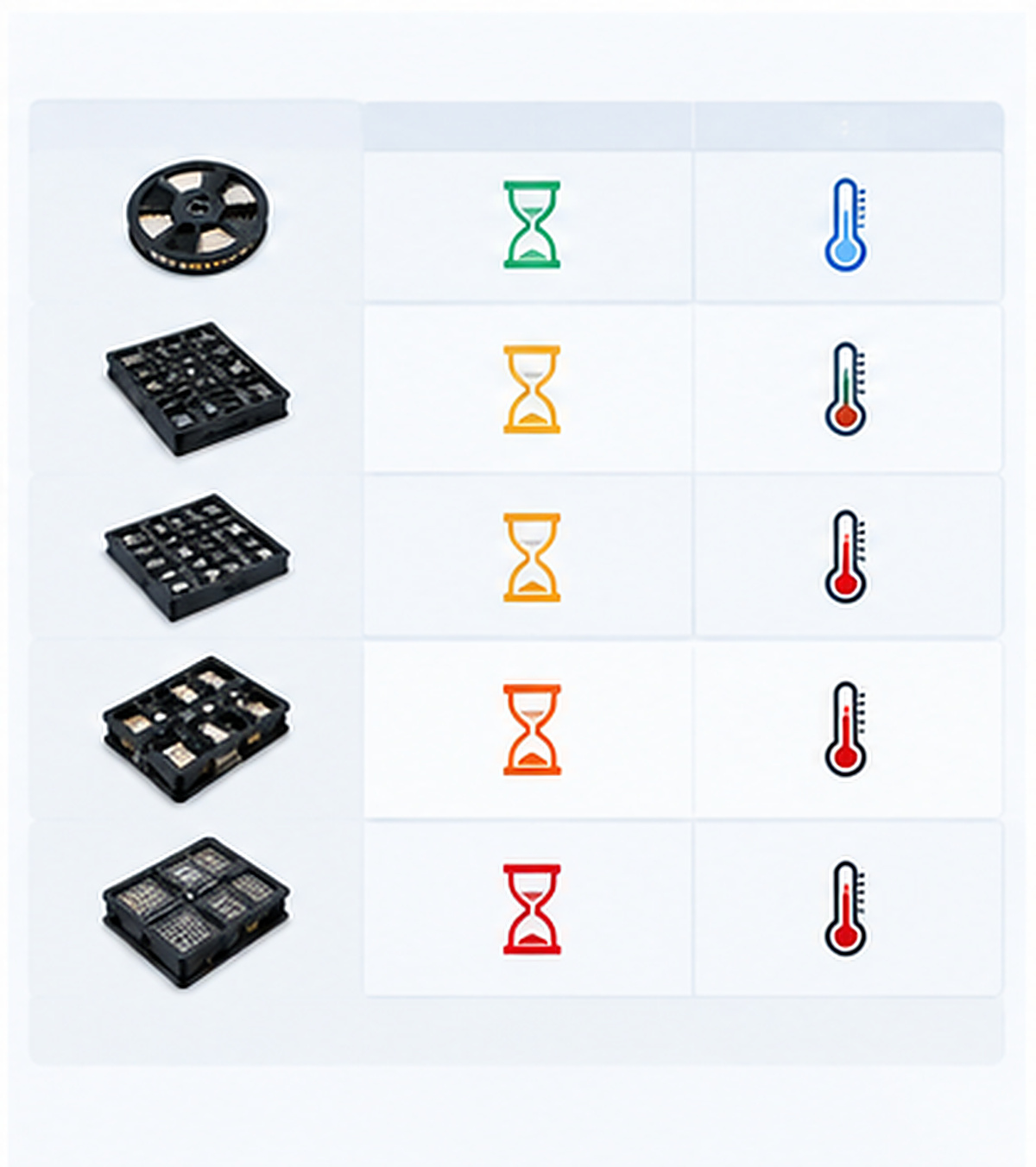
Why Moisture Becomes a Reflow Problem
Plastic encapsulation is not a perfect barrier. Over time it absorbs water vapour from the air, and the amount absorbed depends on the body material, the body thickness and the ambient humidity in the factory.
The popcorn mechanism
During reflow the package is heated far above the boiling point of water, so absorbed moisture turns to vapour faster than it can escape. The pressure builds at the weakest interface, usually between the mould compound and the die pad or the lead frame, and it releases as a crack, a delamination or a lifted bond.
Why it escapes electrical test
A damaged part can still measure correctly at room temperature, because the failure is mechanical rather than electrical at that moment. The defect shows up later as a shifted optical output, an intermittent open or a moisture path that degrades over the life of the product.
This is why the moisture rules sit in the same reliability category as LED thermal management: both describe a packaged part interacting with heat, and both are controlled by process discipline rather than by inspection alone.
The MSL Ladder and Floor Life
The industry moisture-sensitivity standard assigns each package a level, and each level carries a maximum floor life at a stated ambient condition. The values below are the commonly published ladder; the package datasheet and the current revision of the applicable standard always govern.
| Level | Typical floor life after bag opening | What it means for the line |
|---|---|---|
| MSL 1 | No floor-life limit | No dry pack or bake requirement for moisture control |
| MSL 2 | One year | Bag opening time still logged, bake rarely needed |
| MSL 2a | Four weeks | Partial reels need controlled storage |
| MSL 3 | 168 hours | Time tracking on the line becomes mandatory |
| MSL 4 | 72 hours | Short campaigns only, bake between campaigns |
| MSL 5 and 5a | 48 hours and 24 hours | Bake before every reflow cycle in practice |
| MSL 6 | Time on the label only | Bake immediately before use |
Two details decide whether the ladder is useful. First, floor life accumulates in total time out of the bag, not in consecutive time, so partial reels returned to storage do not reset the clock. Second, the ambient condition matters: floor life is quoted at a defined temperature and relative humidity, and a humid factory shortens the effective window.
Dry Packing: Bag, Desiccant and Humidity Indicator
A dry pack is a system rather than a bag. The barrier bag keeps water vapour out, the desiccant absorbs what remains, and the MSL rating you find when reading an LED display datasheet decides how much protection the package needs.
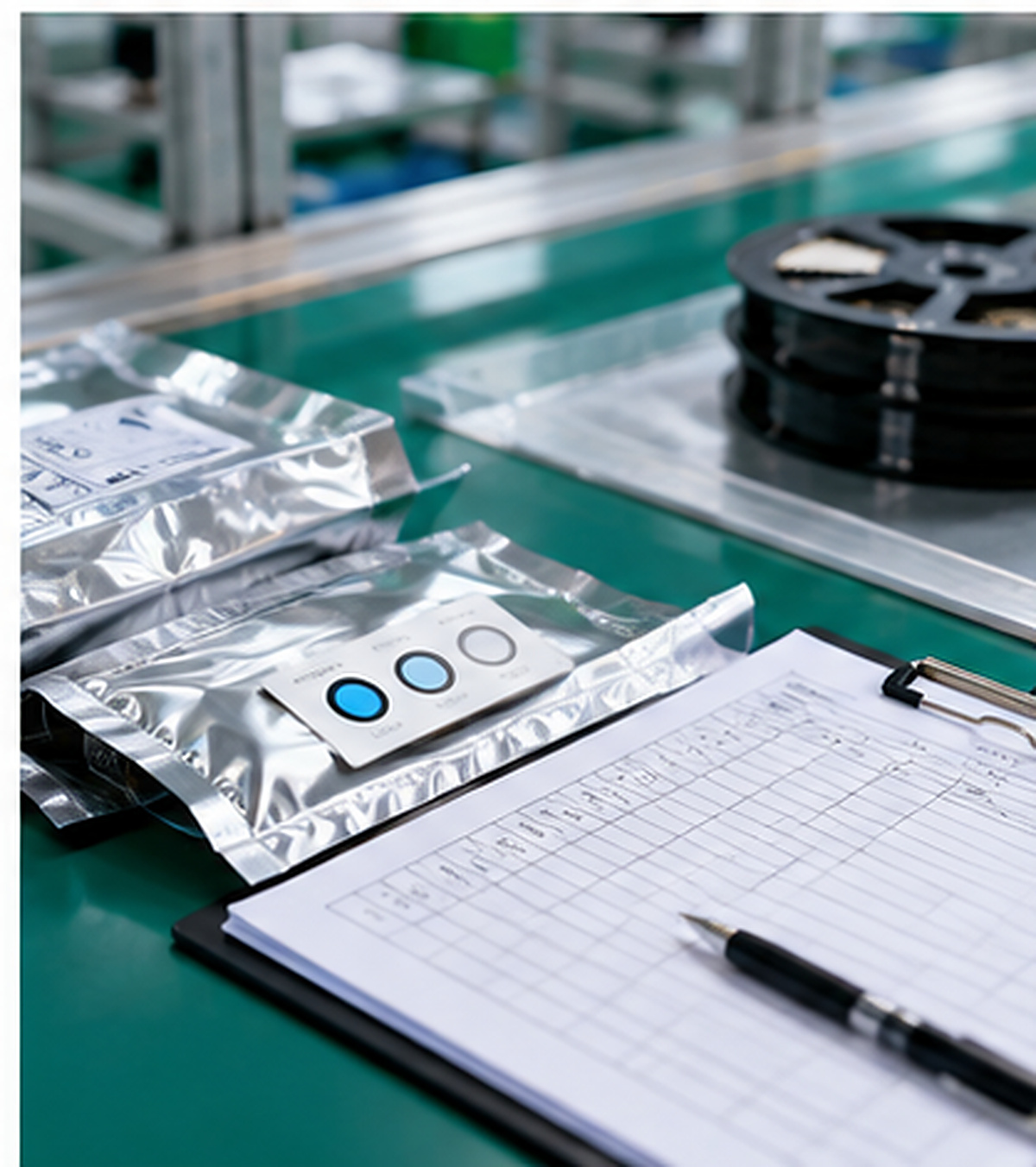
- The humidity indicator card shows whether the pack has stayed dry in transit and in storage, and it is the first thing to read when a pack is opened.
- The desiccant quantity belongs to the pack size, so repacking a partial reel into a smaller bag without fresh desiccant rebuilds the risk.
- Opening time, ambient condition and reel identity belong on the traveller with the parts, because the clock is only useful if it is written down.
For surface-mount display programmes, the same discipline appears in SMD 7 segment display design guidance as one of the assembly checks that belongs in the layout release, alongside footprint and pad review.
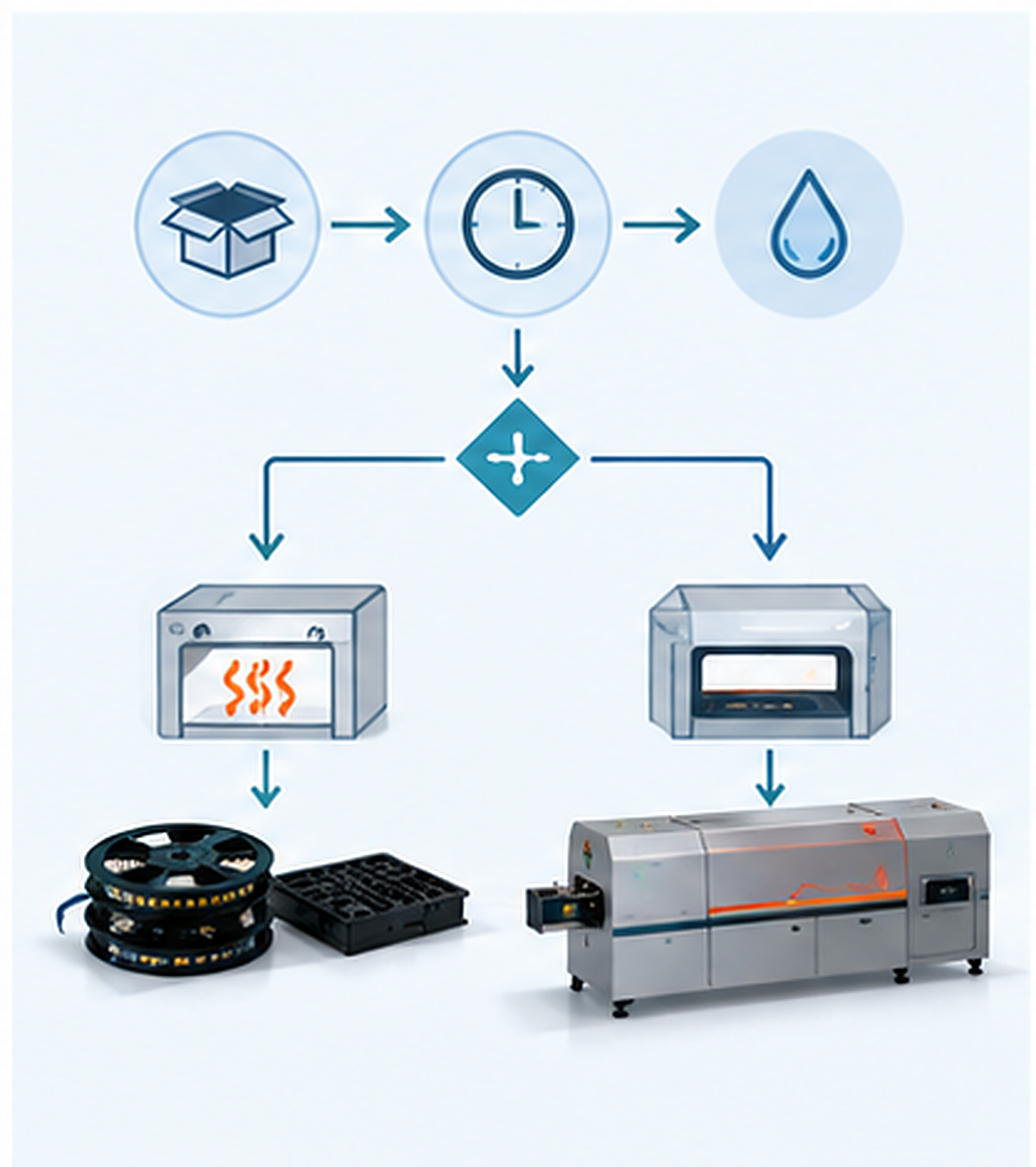
Baking: When It Is Required
Baking is the recovery step, and it is required whenever the parts have been outside the bag for longer than the quoted floor life or whenever the indicator card shows that the pack was compromised. It is also required after any excursion the line cannot document.
The decision has three parts. Confirm the bake temperature and duration for the package, because a temperature chosen for the board can exceed what the packaging tolerates. Remove the parts from tape or reels where the carrier material cannot take the heat. And record the bake against the lot, because a bake that is not logged cannot be distinguished from a part that simply ran out of floor life.
Baking has a cost beyond oven time. Repeated cycles consume the floor life that remains and stress the package, so the aim is to keep the parts dry in the first place rather than to bake routinely. That is why Packaging, Assembly & Reliability planning treats storage control as a design decision for the line rather than as a housekeeping rule.
Writing MSL Requirements Into Assembly Documentation
Moisture control survives only if it is written where the operator works. The work instruction should state the level and the floor life for each package on the board, the ambient condition they were calculated at, the logging method for bag opening and the bake condition that applies if the window is exceeded.
Three verifications close the loop. Incoming inspection should confirm that the pack arrived sealed, dry and correctly labelled. The line should be able to show the current accumulated time for every open reel. And after a normal production reflow, a sample check by cross section or acoustic scan confirms that the package survived the cycle, which is the only evidence that the handling rules were actually followed.
Where a part arrives without a stated level, the safe route is to treat it as the most restrictive case and confirm the level with the supplier, because an assumed level creates a gap that only appears at reflow. If you need the handling limits for a specific package before release, the SMD 7 segment displays page and our engineering team can confirm what applies to the part you are qualifying, and the same questions belong in incoming inspection so that the check does not depend on one person remembering it.
Frequently Asked Questions
How to evaluate LED moisture sensitivity level MSL for an OEM design?
Start from the level quoted for the package and the floor life it allows in your factory environment. Then confirm that storage, dry-pack and reflow steps can hold that window on a normal shift.
Which parameters matter most for LED moisture sensitivity level MSL?
Body material, body thickness and reflow peak temperature matter most, because together they decide how much moisture the part can hold and how violently it releases. Floor life and factory humidity then decide how quickly the part stops being safe to reflow.
How does LED moisture sensitivity level MSL affect LED performance?
Moisture damage appears as a physical defect such as delamination or a lifted bond rather than as a soft optical shift. A part that has absorbed too much moisture can pass electrical test at room temperature and still fail during the reflow that follows.
How should engineers validate LED moisture sensitivity level MSL before production?
Validate by controlling the real line: log when each dry pack is opened, keep the parts inside floor life and record any bake before reflow. Then confirm the result with a cross section or an acoustic scan after a normal production reflow.
Do all LED packages need the same handling?
No, the required window depends on the package construction and on the level the supplier assigns to it. A part approved at one level should not be handled like a different package on the same board without checking its own datasheet.
Conclusion: Handling Rules That Survive Production
Moisture control is one of the few reliability topics where the entire risk can be removed by a clock and a log. Read the level, know the floor life, keep the pack sealed until it is needed, bake only when the window is exceeded and record what happened. That sequence prevents the defect before it is created rather than detecting it afterwards.
It also connects to the wider parts of LED thermal design and LED reliability engineering, because moisture damage changes the thermal path inside the package as it changes the mechanical structure. Treat the handling rule as a process control with an owner, review it whenever a package changes, and the assembly step stops being a source of unexplained failures.
If you are qualifying a package and need the storage, baking and reflow limits confirmed before the line is set up, send the part details and process conditions through the inquiry page.
Photometric vs Radiometric LED Measurement: Lumens, Candela and Watts
LED ESD Protection Handling: Sources of Damage, Controls and Verification


