LED ESD Protection Handling: Sources of Damage, Controls and Verification

Quick Answer: Why ESD Damage Escapes Inspection
Electrostatic discharge can damage an LED without destroying it. A severe event may open or short a junction immediately, but a moderate event more often creates a latent weakness that survives final test and fails later under thermal or electrical stress.
Because the failure is delayed, an electrical test at the end of the line cannot be used as proof that handling was safe. The control has to exist upstream, in the environment and the procedures, and the evidence has to be recorded there.
The Four Exposure Paths
Start by mapping where charge can reach the device. Engineers who map the exposure paths first usually find that the largest risk is not the operator at the bench but an unprotected step in transfer or packing.
| Exposure path | Typical trigger | Control that addresses it |
|---|---|---|
| People | Body charge transferred through fingers or tools | Wrist or heel grounding with a verified continuity check at the start of shift |
| Surfaces and tools | Insulating benches, ordinary tape, plastic trays | Dissipative work surfaces, dissipative tools and controlled tape use |
| Machines and test | Sheet feeding, belts, handlers, ungrounded fixtures | Equipment bonding, ionisation at critical zones and documented test points |
| Packaging and transport | Sliding, unprotected bags, mixed materials in one tote | Shielding or dissipative packaging specified per component class |
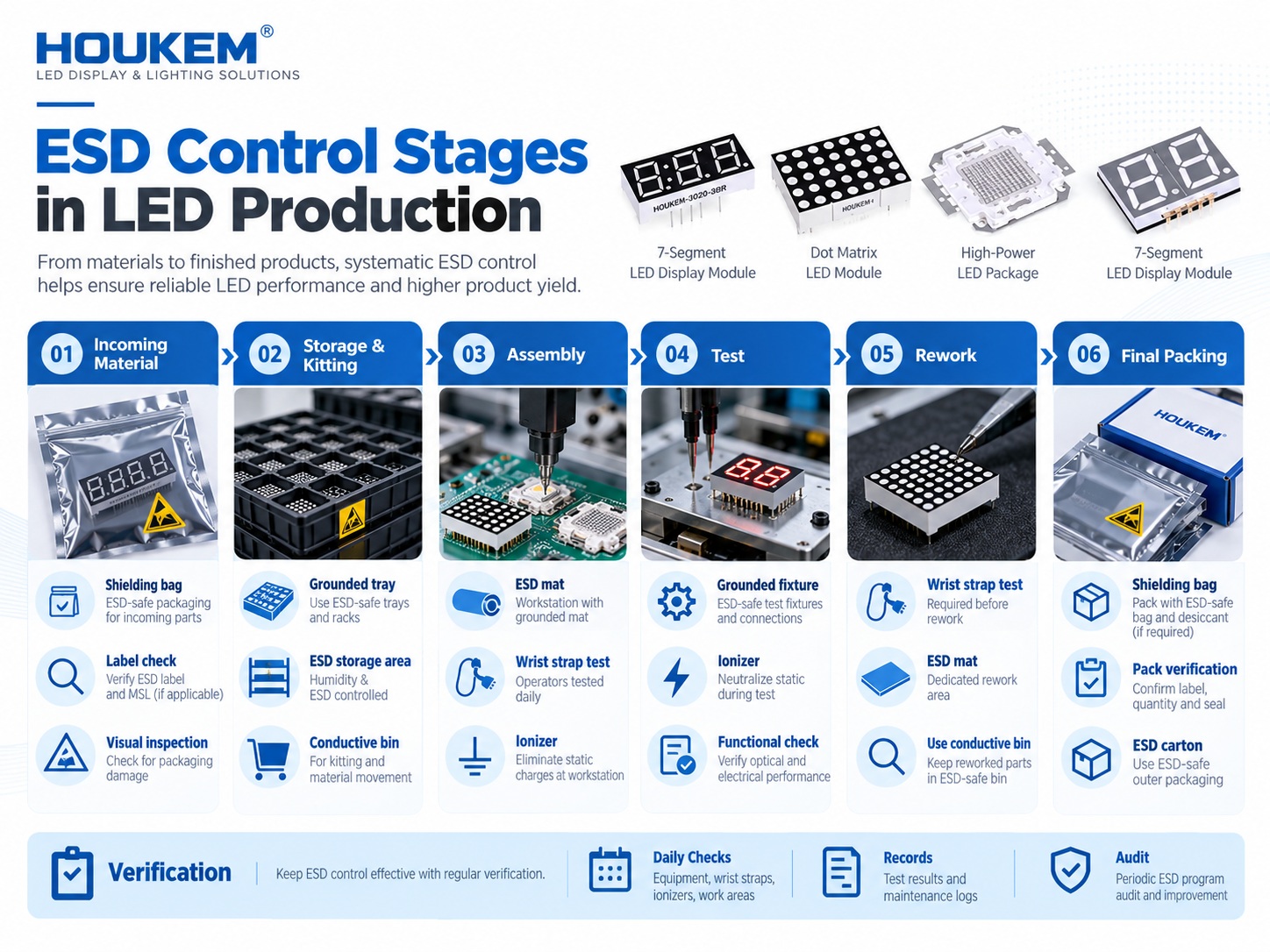
The table also shows why an ESD control program that covers only the assembly bench leaves the largest gap open. Transfer and packing steps sit between the areas where procedures are usually written.
Production Controls That Actually Hold
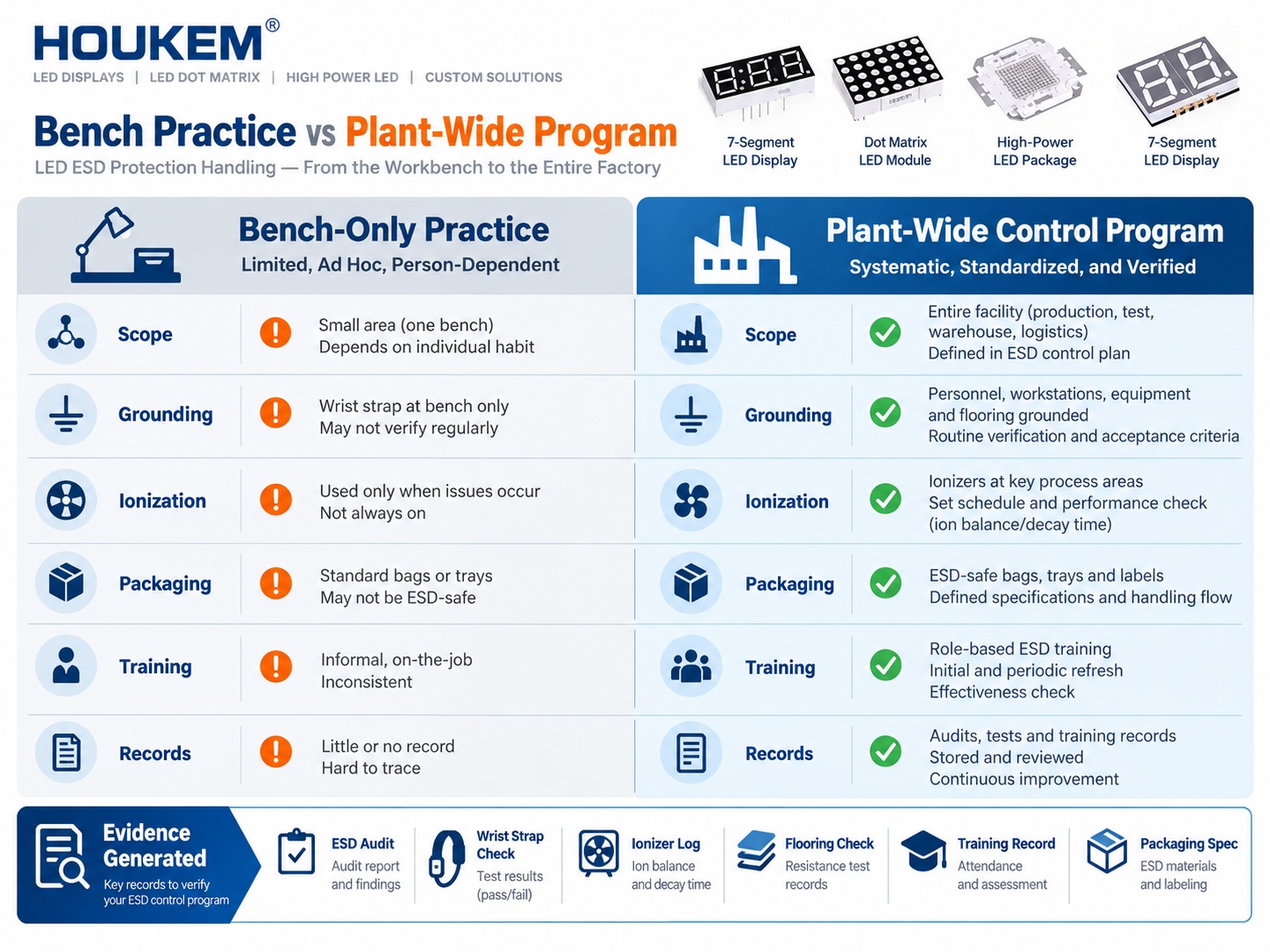
A control program holds when it is built into the flow rather than added to the training pack. The stages below are the ones that normally decide the outcome for LED components and displays.
Incoming and material transfer
Cells and finished emitters should stay in their protective packaging until the point of use. When material is split into line-side quantities, the split containers must be part of the control program, because repacking into an ordinary tray is a common entry point for damage.
Assembly and board handling
Board handling is where polarity mistakes and electrostatic events tend to arrive together. Confirming device orientation before power is applied reduces rework, and rework is one of the highest-risk operations in the whole flow. Checking emitter orientation against the package marking is covered in our guide to SMD LED anode and cathode identification.
Test, rework and final packing
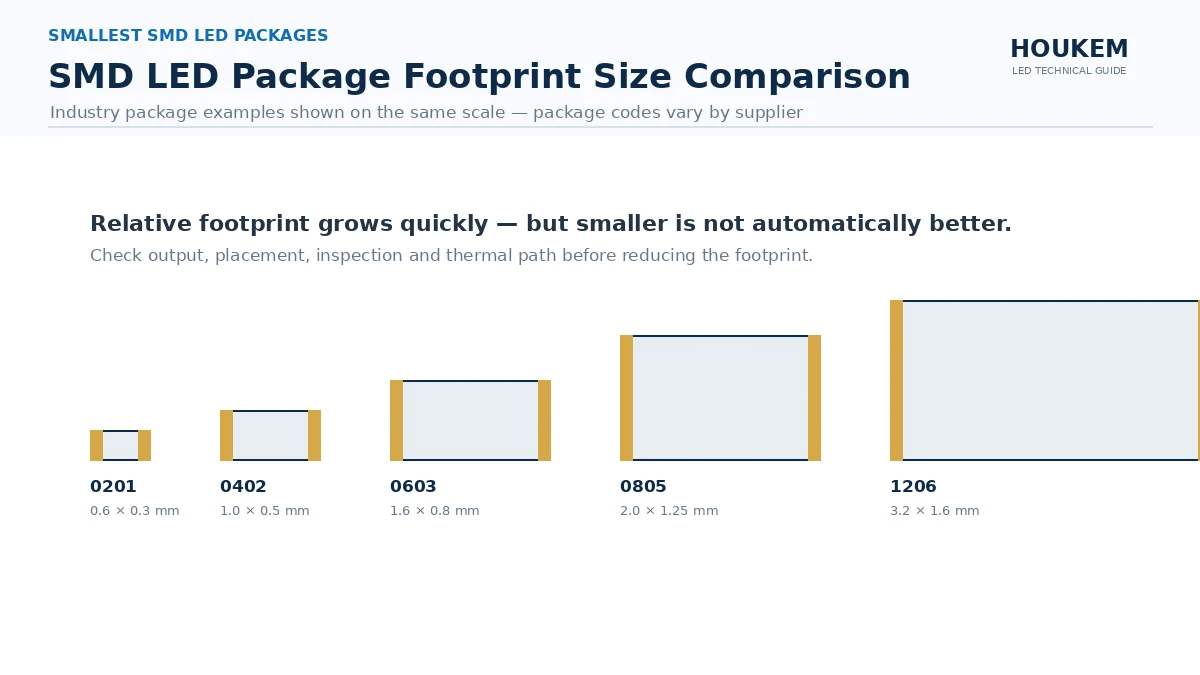
Test fixtures should be bonded and verified like any other equipment. Rework should be treated as a controlled operation with its own station, tools and record. Final packing closes the loop, and for small packages the handling risk rises as the package area falls, which is one reason package choice and handling procedure are decided together in our overview of smallest SMD LED packages.
Where ESD Control Programs Break Down
Programs usually fail in three places. The first is a spot-check mindset, where grounding is verified once during commissioning and not at the start of every shift. The second is scope, where the program covers assembly but not goods-in, testing or repair. The third is records, where the audit trail stops at a training sheet and cannot be linked to an actual production lot.
Records matter because they are the only way to separate a handling problem from a device or design problem when a field failure appears. Connecting handling records to the delivered lot is part of the same traceability discipline described in our guide to LED lot traceability, and the thermal side of the same reliability story is covered in LED thermal management.
Handling Requirements Written Into a Supply Specification
ESD control sits inside the wider discipline of LED reliability engineering, and it is unusual in that almost every control is decided by the production environment rather than by the component itself. Packaging, Assembly & Reliability requirements are normally written by the supplier, yet they only stay in place when the buyer's specification asks for them and reviews them at intervals.
For an OEM project, the practical output of an ESD review is a short requirement list that both sides can verify. State the component sensitivity class the supplier must respect, the packaging that must be used for delivery, the handling controls expected during any value-added operation, and the record that must accompany a suspect lot.
Keep the list short enough to be audited. A requirement that names a control, an owner and a record is verifiable; a requirement that asks for an ESD-conscious culture is not.
Frequently Asked Questions
What should OEM buyers require for LED ESD protection handling?
Require the component sensitivity class, the protective packaging for delivery and the handling controls used for any value-added step. Ask for these as written requirements so they can be audited rather than assumed.
Which documents or evidence matter for LED ESD protection handling?
Useful evidence includes the grounding verification record, the packaging specification and the handling procedure for rework. When a suspect lot appears, the record that links handling conditions to that lot is the most valuable document of all.
How should a supplier and buyer define acceptance for LED ESD protection handling?
Define acceptance as a verified control plus a retained record, checked at a stated frequency. That turns an invisible risk into something that can be audited and improved.
What should be checked before approving LED ESD protection handling procedures?
Walk the physical route the parts actually take and confirm that every step on that route is covered by a control. Then confirm that the records produced at each step are retrievable for a specific lot.
Can a final electrical test prove that no ESD damage occurred?
No, because moderate discharge events often create latent damage that passes test and appears later. Final test verifies function at that moment, not the integrity of the handling environment.
Conclusion: Building ESD Control Into the Production Flow
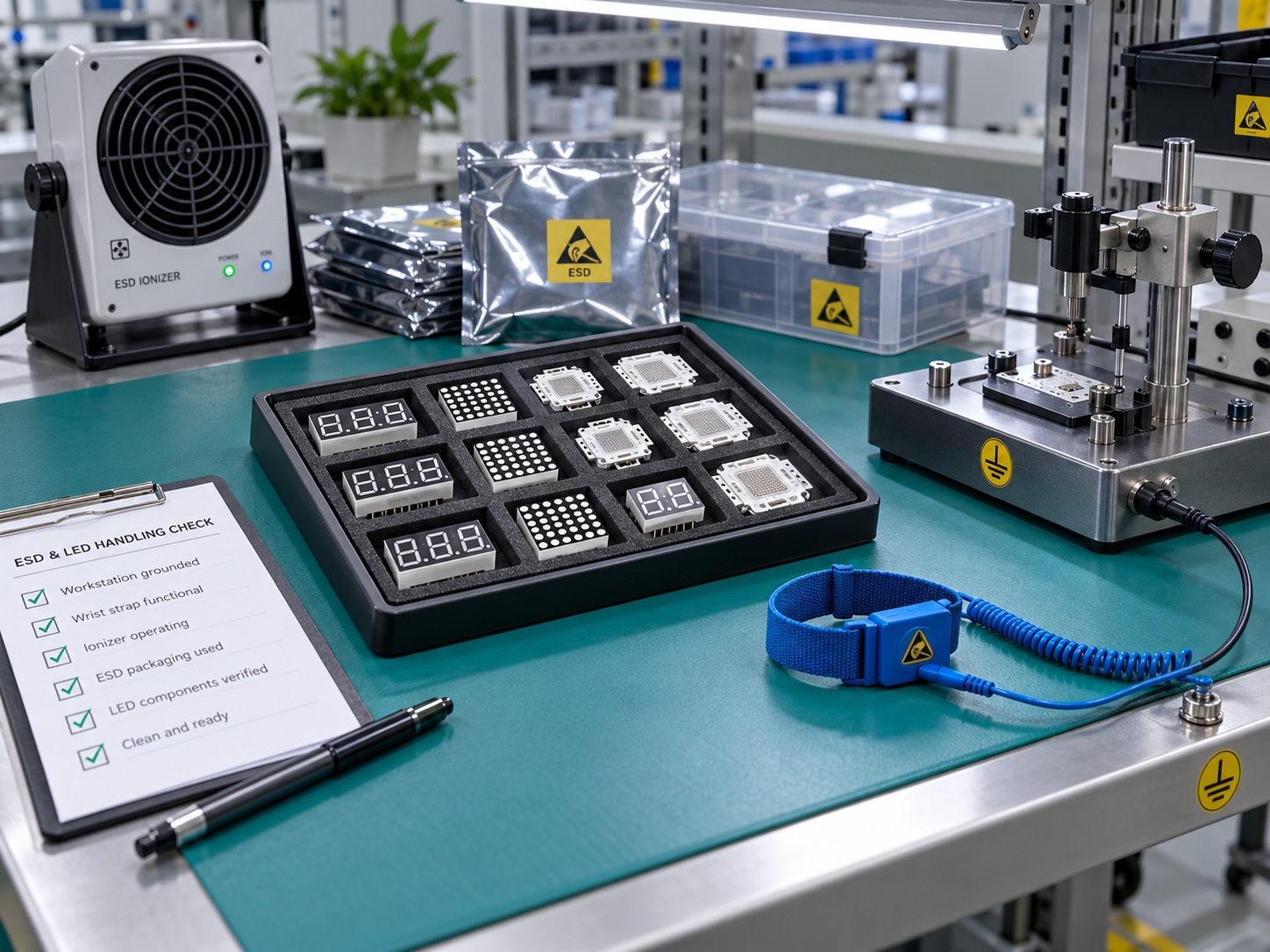
LED ESD protection handling works when it is designed into the route the parts travel: incoming, transfer, assembly, test, rework and packing. Map the exposure paths, place a control at each one, and record the verification so a delivered lot can be reconstructed later. The goal is not a perfect measurement but a flow in which no step is unprotected and no step is unrecorded.
If you are planning an OEM LED project and want handling, packaging and reliability requirements agreed alongside the optical and electrical specification, send the application details to our team through the inquiry page.
LED Series vs Parallel Wiring: Current, Voltage and Reliability Trade-Offs