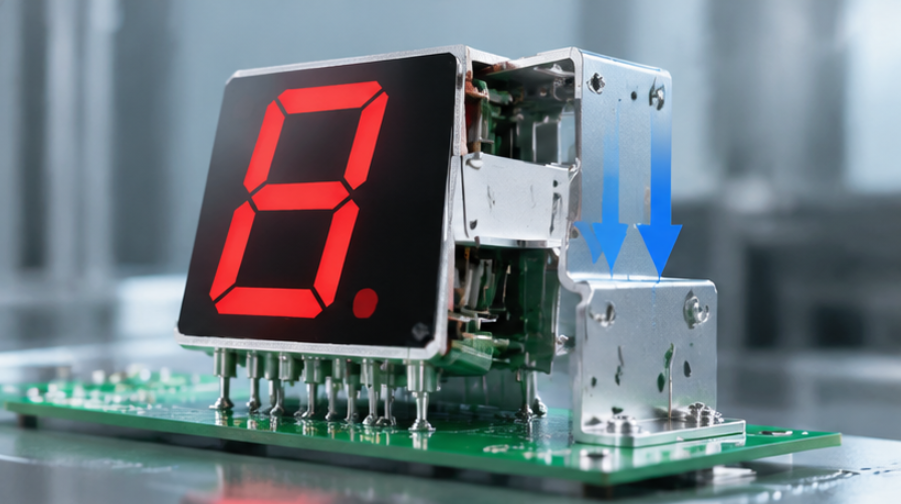
LED Sulfur Corrosion: Why Silver Surfaces Darken and Output Falls
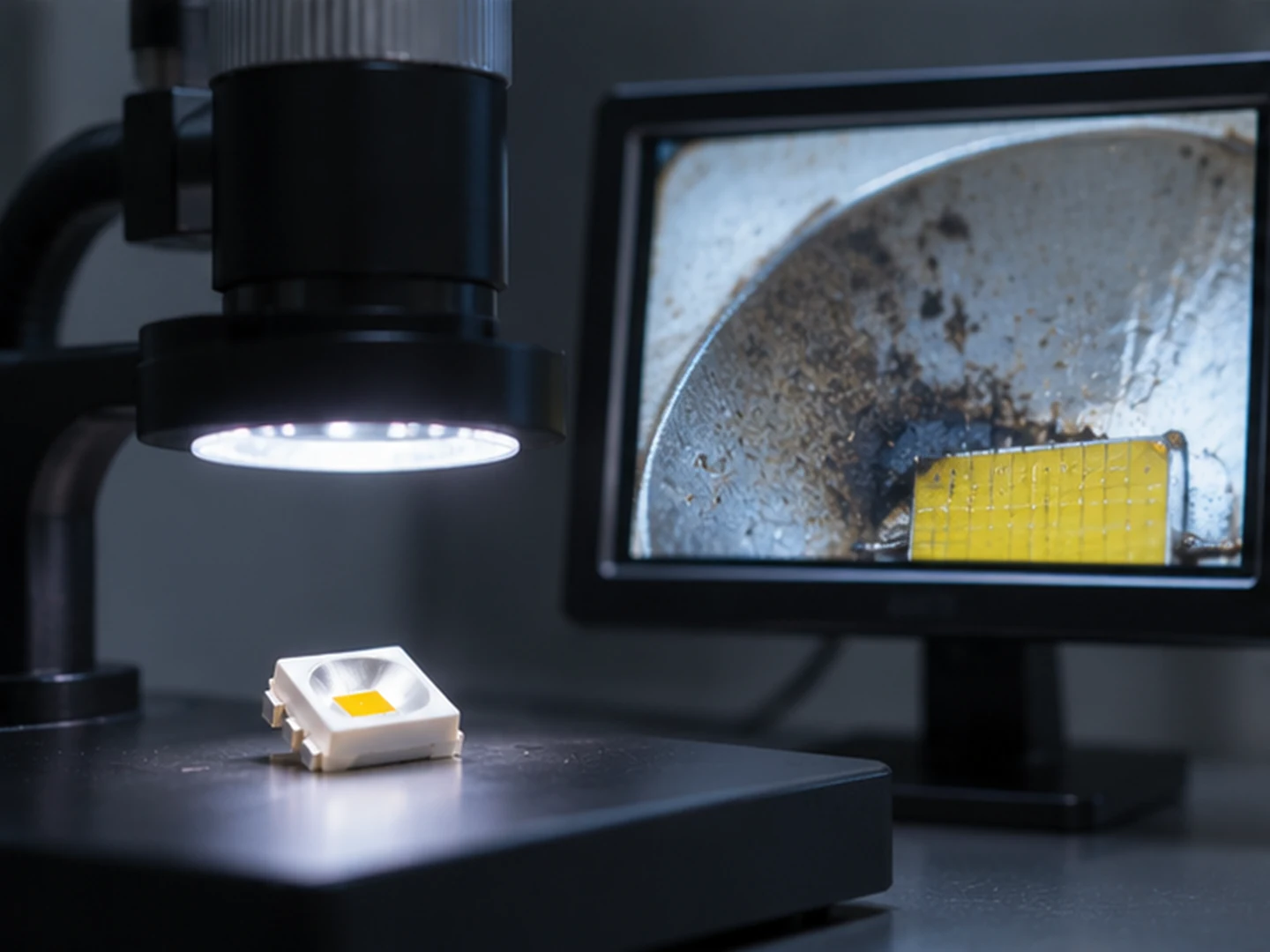
Quick Answer: Darkening That Follows a Chemical Path
LED sulfur corrosion is a chemical reaction between sulfur-bearing compounds and the silver plating or silver alloy inside an LED package. The reaction forms silver sulfide, a dark insulating film that grows wherever sulfur reaches metal. Unlike electrical overstress, which damages a device suddenly, sulfurization is gradual, environment-driven and often reversible in its early stages only by removing the source.
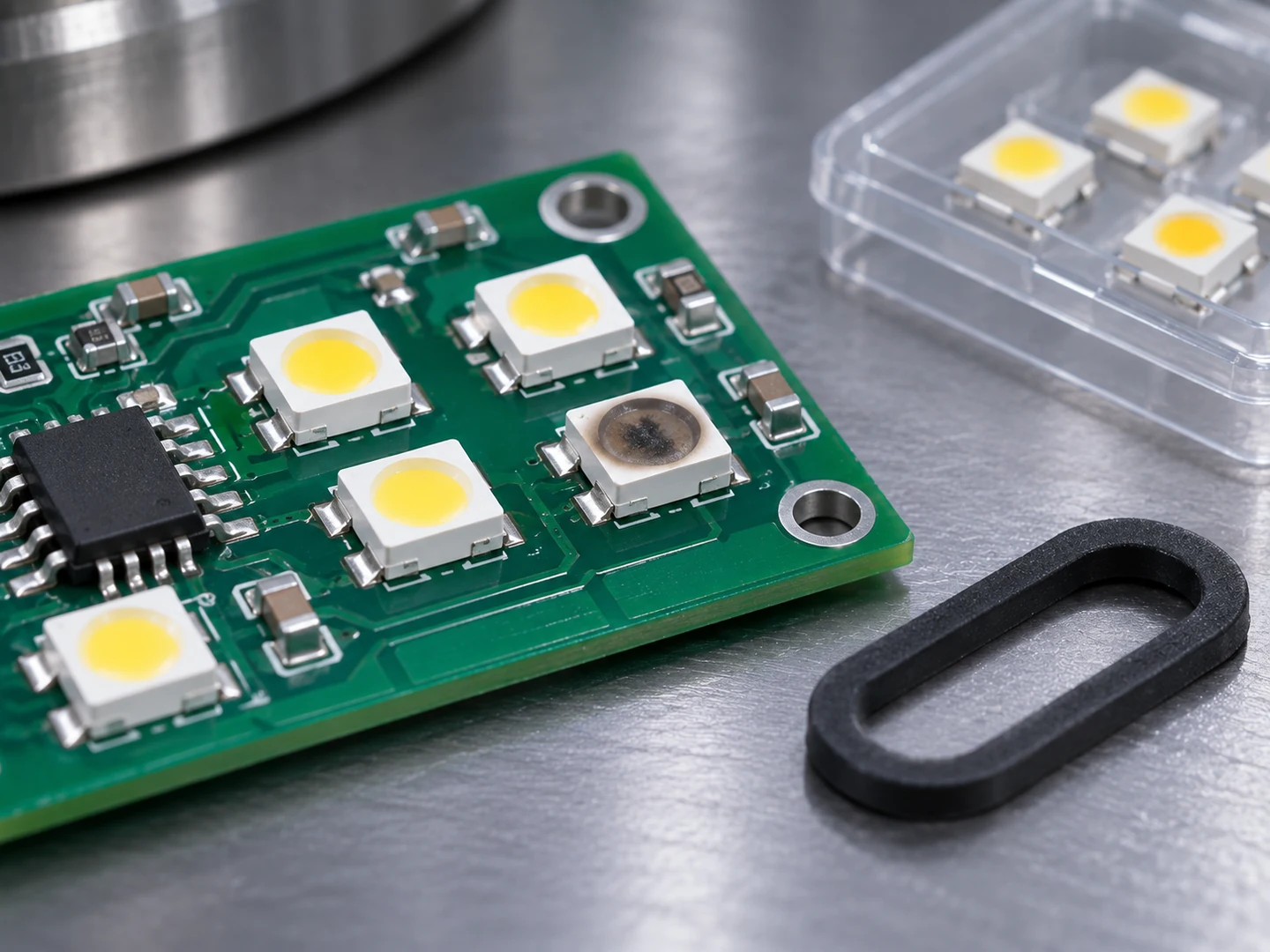
Where Sulfur Comes From in Real Products
Sulfur rarely enters a product through the LED itself. It arrives from the environment around it. The recurring sources are worth listing because a fix that misses the source will fail again:
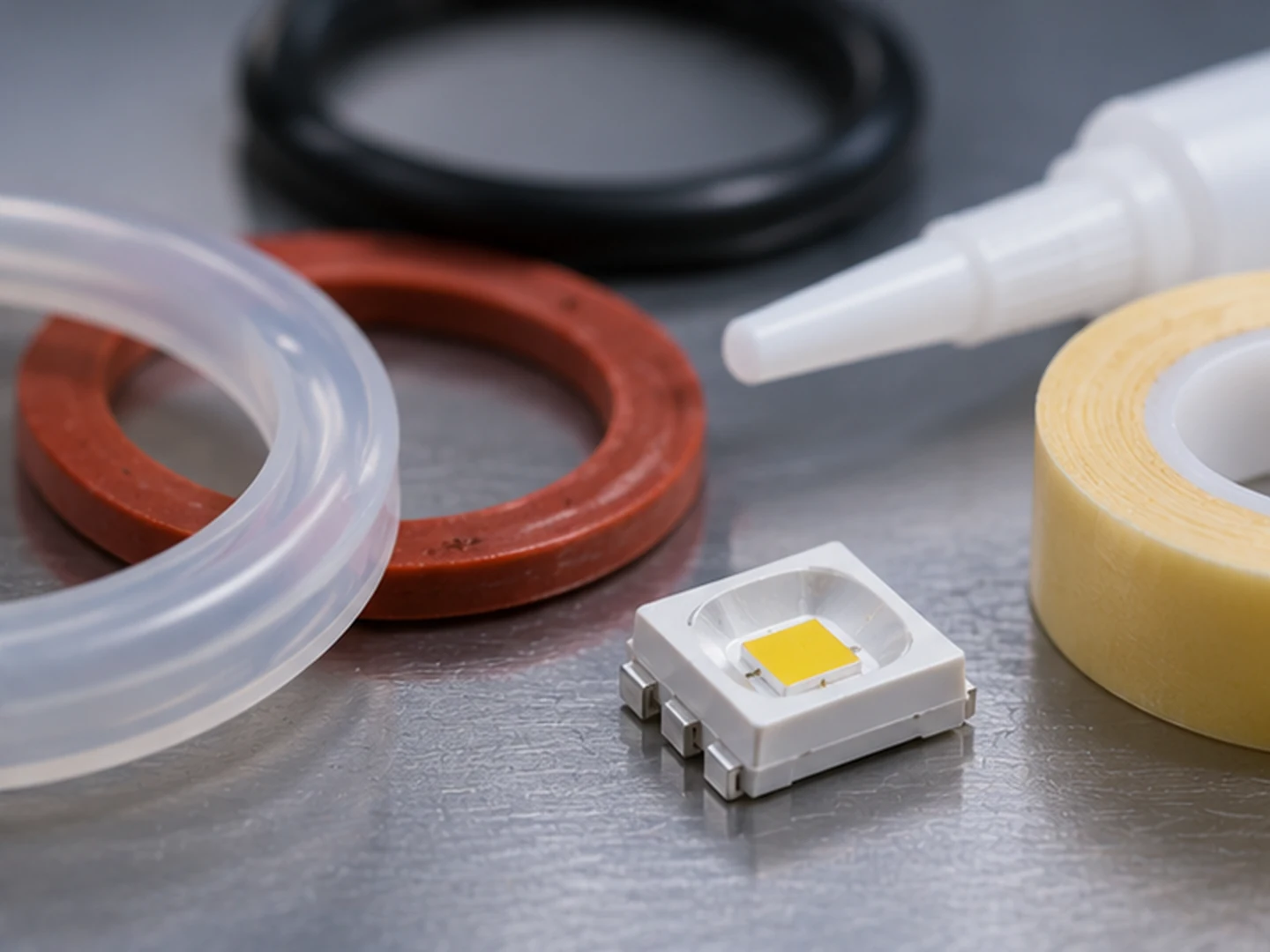
- Elastic gaskets, O-rings and rubber seals made from vulcanized rubber, which release sulfur compounds as they age.
- Adhesives, potting compounds and conformal coatings that were not specified as sulfur-free.
- Corrugated cardboard, some paper labels and certain packaging materials used near the display window.
- Industrial air containing sulfur dioxide, especially near combustion processes, sewage treatment or hot springs.
- Machine oils and cutting fluids tracked into final assembly areas.
The common engineering mistake is treating the LED as the failure and ignoring the gasket two centimetres away. If a seal or elastomer sits over or beside the LED window, it belongs on the suspect list from day one.
Why Silver-Containing Packages Are the Vulnerable Ones
Many LED packages use silver plating on the lead frame, silver-filled die attach adhesive, or reflective silver layers around the chip because silver reflects light efficiently. The same metal is chemically reactive. Sulfur attacks silver and forms silver sulfide, which is dark yellow first and nearly black as the film thickens. Three consequences follow, and they compound each other. Reflected light drops, so luminous output falls. The conductive silver path can become resistive or open, so electrical behaviour drifts. Finally, the dark film absorbs heat, which accelerates every other ageing mechanism in the package.
This is why LED silver corrosion is distinctive: it darkens reflective surfaces inside the package rather than burning out the chip. A driven device can still electrically function while its light output collapses, which puzzles teams that only measure forward voltage. Understanding LED sulfurization as a reflector-and-path problem, not a die problem, directs the investigation toward materials and sealing instead of driver settings.
Visible and Optical Symptoms of Sulfur Attack
The signature symptom of a sulfur corrosion LED failure is localized darkening. A ring appears around the emissive area, the reflector cup greys, or an entire element in a display turns brown-black while its neighbours stay bright. The darkening pattern follows the path sulfur travelled, so it often starts at one edge of the package nearest the gasket or vent path and spreads inward. Output loss usually precedes visible darkening, because a thin silver sulfide film already absorbs and scatters light before it looks dramatic to the eye.
Teams that ask why an LED package turns black under normal drive current should treat the question as a materials question first. Measure the forward voltage and current draw, and if the electrical parameters look normal while brightness keeps falling, chemistry moves to the top of the suspect list.
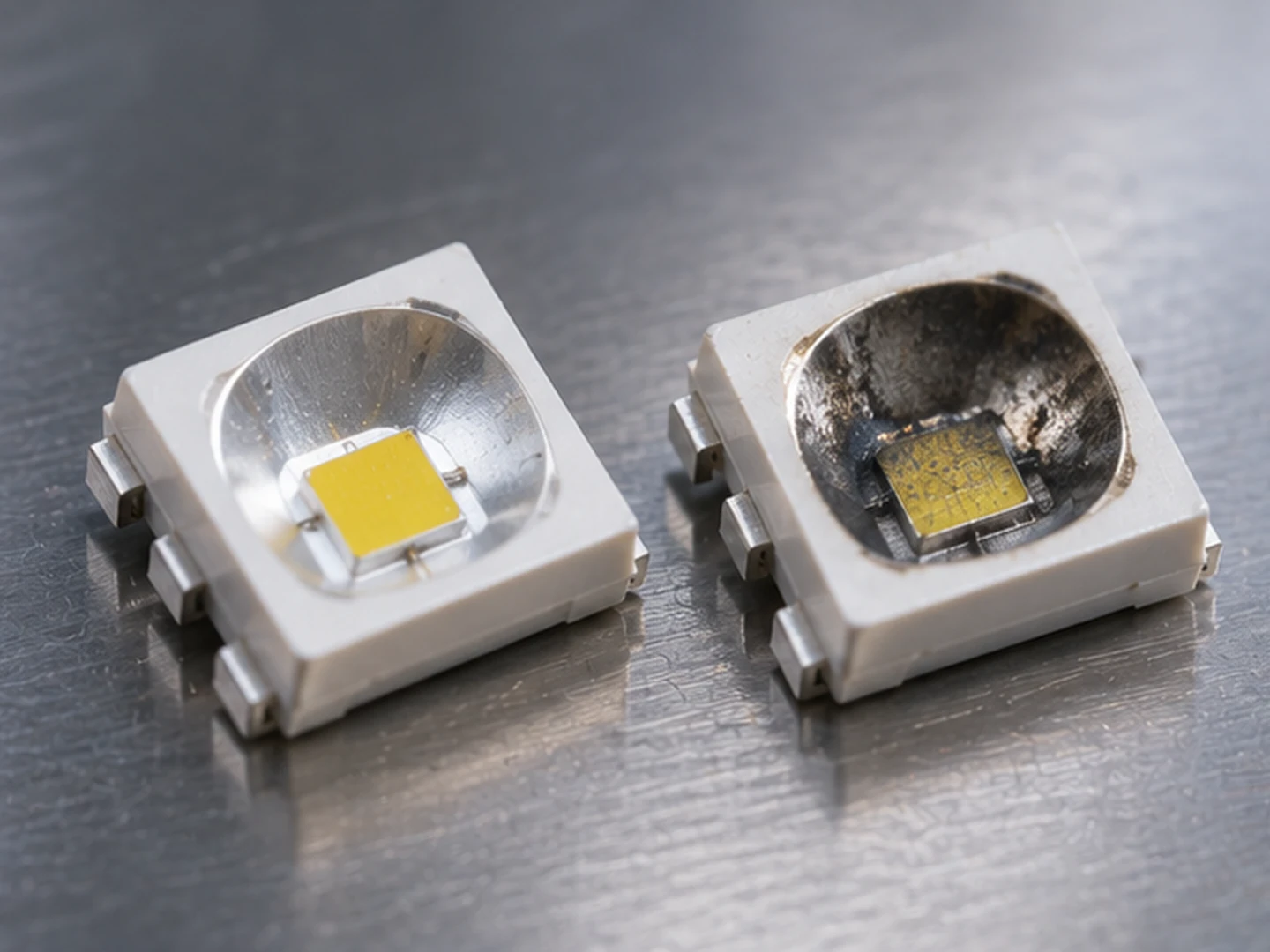
Inspection and Confirmation Steps
Confirmation follows the same discipline as any failure analysis: separate observation from conclusion. A practical sequence looks like this:
| Step | What You Do | What It Tells You |
|---|---|---|
| Optical microscopy | Photograph the darkened package at low and high magnification | Pattern and location of darkening; edge-inward growth suggests environmental entry |
| Electrical verification | Measure forward voltage and current at fixed drive | Distinguishes reflector loss from junction damage |
| Environmental review | List gaskets, adhesives, coatings and packaging near the LED | Identifies probable sulfur sources for removal |
| Control comparison | Compare with an unpowered spare from the same lot | Separates field exposure from build variation |
Laboratory confirmation, such as energy-dispersive X-ray analysis on the dark film, is the definitive step, and it is what a supplier will request if an RMA follows. Preserving suspect units and their surrounding materials intact protects that evidence. If the units came from production, the golden sample retained at approval gives you a known-good visual baseline.
How to Prevent LED Sulfurization
Prevention works on two fronts: keep sulfur away from the package and slow whatever reaches it. On the source side, specify sulfur-free or low-sulfur elastomers, adhesives and coatings wherever they sit near an LED window, and review packaging materials for the finished assembly. On the package side, choose LED constructions whose encapsulation and sealing are appropriate for the exposure level, and ask suppliers directly which package families they recommend for sulfur-rich environments.
Incoming verification matters as well. A structured LED incoming inspection routine that includes visual checks of reflector surfaces catches early darkening before it ships. For long-life products, plan a periodic brightness audit so a slow decline is detected while it is still cheap to fix, and connect the findings to the reliability factors that govern the rest of the design. When the finding does affect a released design, route the change through your quality control process so the material substitution is documented rather than informal.
Frequently Asked Questions
Why LED package turns black after months in the field?
The usual cause is sulfur reaching silver surfaces inside the package and forming dark silver sulfide. The reaction is gradual and environment-driven, so electrical parameters often stay normal while light output falls.
Is LED blackening always caused by sulfur exposure?
No, because overheating, contaminated encapsulant and severe moisture ingress can also darken a package. The distinguishing feature of sulfur attack is localized darkening that follows a path from the package edge inward.
How to prevent LED sulfurization in sealed assemblies?
Specify sulfur-free gaskets, adhesives and coatings near the LED window, and review packaging materials for sulfur content. Confirm the LED package family is rated for the exposure level before approving the drawing.
Can darkened LEDs recover their original brightness?
Only in the earliest stages, and only if the sulfur source is removed immediately. Once silver sulfide has formed, the film must be removed physically or the package replaced, because the reaction is not chemically reversible in the field.
Does sulfur attack affect forward voltage readings?
It can, in later stages, when the conductive silver path becomes resistive or open. Early failures usually show normal electrical parameters with falling light output, which is why optical checks belong in the inspection plan.
Which departments should own sulfur prevention?
Materials engineering should own the specification of elastomers and adhesives, incoming quality should own verification, and design engineering should own package selection. Sharing one suspect-material list across all three keeps the fix from being undone by a later substitution.
Conclusion: Treat Darkening as a Materials Problem
Sulfur corrosion is preventable, but only when the investigation treats the LED, the seal next to it and the specification behind them as one system. Identify the sulfur source, confirm the mechanism with preserved evidence, and close the loop with material substitutions that are documented and verified. If you are evaluating LED packages for a sulfur-exposed environment, our engineering team can discuss package families, sealing options and inspection practices for your application through the inquiry page.