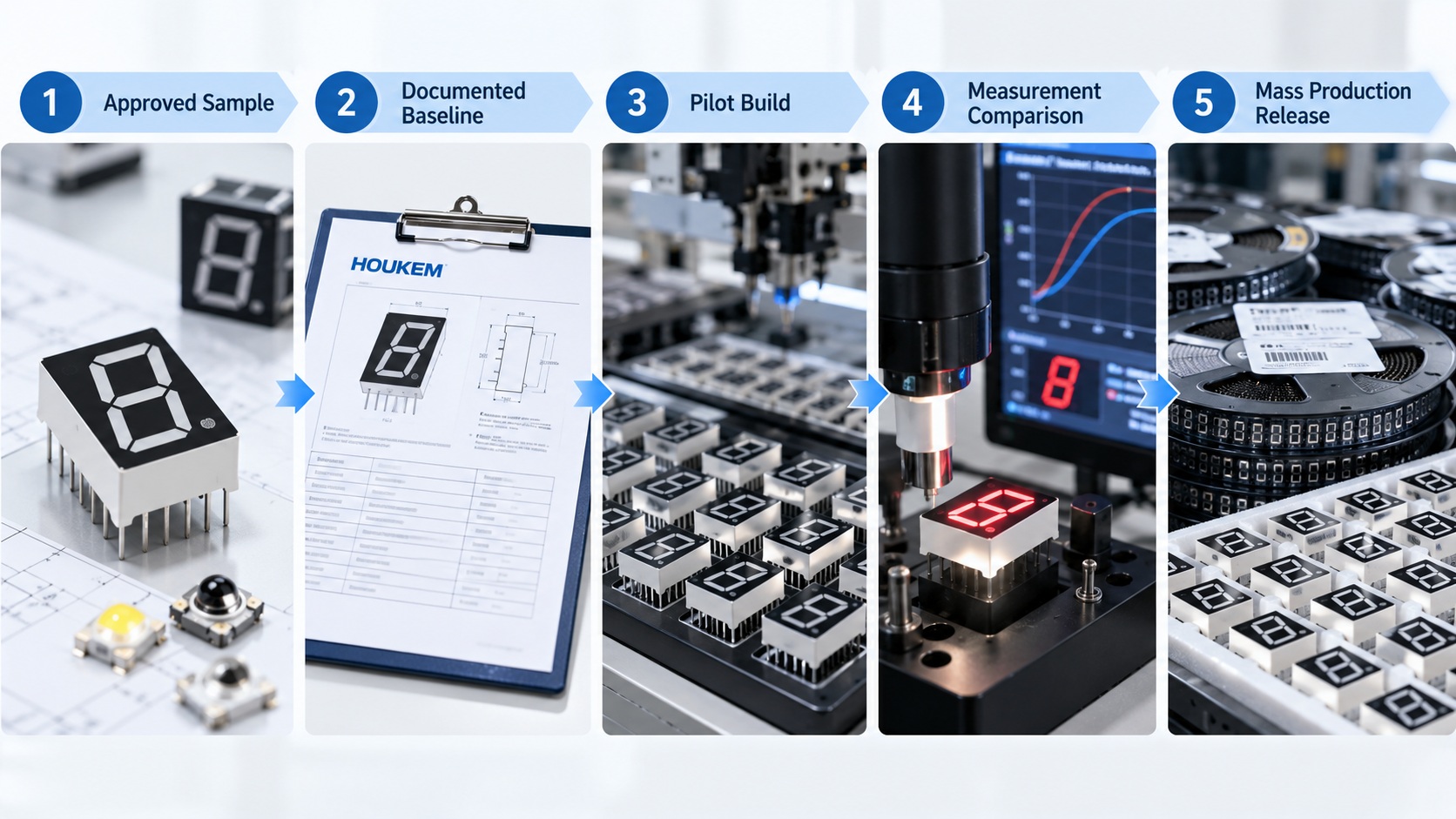
LED Display Lifespan: Key Reliability Factors for OEM Applications

A display may work correctly during initial testing but experience brightness reduction, color inconsistency or segment failure after thousands of hours of operation if the component selection and application conditions are not properly considered.
The actual LED Display Lifespan is influenced by several factors, including LED chip quality, operating current, temperature conditions, material selection, driving method and manufacturing consistency.
For industrial equipment, digital meters and control panels that operate continuously, choosing a reliable LED display is not only about the initial purchase price. Long-term stability and consistent performance are equally important.
In general, a reliable LED display requires proper electrical design, effective thermal management, high-quality components and strict manufacturing control. OEM buyers should evaluate these factors before approving samples and starting mass production.
This article explains the main LED Display Lifetime Factors that affect long-term performance and how manufacturers can select a reliable display solution for OEM applications.
How Long Does an LED Display Usually Last?
The lifetime of an LED display is typically measured by how long it can maintain acceptable brightness and performance under normal operating conditions.
Many LED displays are designed for long service periods, but the actual lifetime depends on the environment where the product is used.
For example, a display installed in:
- A laboratory instrument
- An industrial control cabinet
- A factory machine
- Outdoor equipment
- A continuously running measurement device
may experience different aging conditions.
The rated lifetime provided by a manufacturer is usually based on specific testing conditions. In real applications, factors such as temperature, current level and operating hours can significantly affect performance.
When evaluating LED Display Lifetime, OEM engineers should consider:
- Expected daily operating time
- Working temperature
- Brightness requirement
- Electrical driving conditions
- Installation environment
- Product maintenance expectations
A display designed for a consumer device may not meet the reliability requirements of industrial equipment, even if the basic specifications appear similar.

What Factors Affect LED Display Lifespan?
The lifetime of an LED display is not determined by one single specification. It is the result of multiple factors working together.
The most important LED Display Lifetime Factors include:
- LED chip quality
- Driving current
- Thermal management
- Material reliability
- Manufacturing process
- Environmental conditions
- Quality inspection procedures
For OEM projects, reliability should be evaluated from both the component level and the final product application.
A high-quality LED module installed in an unsuitable environment may still experience early degradation. Likewise, good product design combined with poor-quality components may lead to inconsistent performance.
LED Chip Quality Determines Long-Term Performance
The LED chip is the core element responsible for light output and efficiency.
High-quality LED chips generally provide:
- More stable brightness
- Better color consistency
- Lower degradation over time
- Improved energy efficiency
However, the LED chip itself is only one part of the reliability equation.
The complete display manufacturing process also affects long-term performance, including:
- Die bonding quality
- Wire bonding reliability
- Encapsulation materials
- PCB quality
- Soldering process
- Optical inspection
For OEM customers, inconsistent manufacturing can create problems such as:
- Different brightness between display segments
- Color variation between production batches
- Early failure of individual segments
Therefore, supplier manufacturing capability is an important consideration when evaluating LED Display Reliability.
How Operating Current Affects LED Display Reliability
Operating current is one of the most important electrical factors affecting LED lifetime.
Increasing current can improve brightness, but excessive current also generates additional heat inside the LED package.
Long-term operation at high current may accelerate:
- LED brightness degradation
- Color shift
- Internal material aging
- Component stress
For many applications, maximum brightness is unnecessary.
A better approach is selecting the appropriate brightness level based on:
- Viewing distance
- Ambient lighting
- Front panel design
- Operating environment
Engineers should carefully review:
- Forward current
- Peak current
- Duty cycle
- Multiplexing conditions
- Power consumption
before finalizing the display specification.
A properly controlled current level can help maintain stable brightness throughout the product lifecycle.

Temperature Management Is Critical for Industrial LED Displays
Temperature is one of the biggest factors affecting Industrial LED Display Reliability.
Heat accelerates the aging process of electronic components and can influence:
- LED brightness output
- Color stability
- Internal connections
- Solder reliability
Industrial applications often create more challenging conditions because displays may operate:
- Inside closed cabinets
- Near power components
- In high-temperature factories
- Continuously for many hours
When selecting an LED display, OEM engineers should consider:
- Operating temperature range
- Heat dissipation design
- PCB layout
- Enclosure ventilation
- Installation location
A display that performs well in room-temperature testing may require additional evaluation when installed inside actual equipment.
Brightness Degradation and Color Stability During Long-Term Use
One of the most common signs of LED aging is gradual brightness reduction.
Over time, users may notice:
- Lower brightness output
- Uneven segment illumination
- Color changes
- Reduced contrast
This process is known as brightness degradation.
The speed of degradation depends on:
- LED chip quality
- Current level
- Temperature
- Working hours
- Product design
For digital meters and industrial control panels, maintaining consistent readability is usually more important than achieving extremely high brightness.
A reliable LED display should provide:
- Stable brightness
- Uniform segment output
- Consistent color appearance
- Clear visibility throughout the expected service life
Material Quality and Manufacturing Process Influence Reliability
The reliability of an LED display depends not only on the LED chip but also on the materials and production process.
Important components include:
- LED package materials
- PCB substrate quality
- Connector reliability
- Solder joints
- Protective materials
Poor material selection may result in:
- Moisture-related failures
- Electrical instability
- Mechanical damage
- Reduced lifetime
For OEM applications, production consistency is especially important because thousands or millions of units may be manufactured over several years.
A reliable supplier should have:
- Stable production processes
- Quality inspection standards
- Traceable manufacturing procedures
- Consistent product performance
How LED Display Reliability Is Tested Before Mass Production
Professional LED display manufacturers use different testing methods to verify product reliability.
LED Display Aging Test
An aging test operates displays for extended periods to identify potential problems before shipment.
It helps detect:
- Early component failures
- Brightness instability
- Segment problems
- Electrical abnormalities
Temperature Testing
Temperature tests evaluate whether the display can maintain performance under different conditions.
Typical checks include:
- High-temperature operation
- Low-temperature operation
- Brightness stability
- Electrical performance
Electrical Testing
Electrical inspection verifies:
- Forward voltage
- Current characteristics
- Segment operation
- Polarity
- Circuit consistency
Optical Inspection
Optical testing evaluates:
- Brightness uniformity
- Color consistency
- Segment appearance
- Viewing performance
For OEM buyers, understanding the supplier’s testing process is an important part of evaluating overall OEM LED Display Quality.
How OEM Buyers Should Evaluate LED Display Quality
Choosing an LED display supplier requires more than comparing product prices.
Before approving a supplier, OEM buyers should review:
Product Specifications
Important parameters include:
- Rated lifespan
- Operating temperature
- Forward voltage
- Current requirements
- Brightness
- Viewing angle
Sample Testing
Samples should be tested under real application conditions.
Recommended evaluation includes:
- Installation compatibility
- Display readability
- Long-term operation
- Temperature performance
- Brightness stability
Supplier Capability
A reliable LED Display Manufacturer should provide:
- Stable production capacity
- Quality control procedures
- Technical support
- Customization capability
- Long-term supply ability
For products with long market cycles, supplier reliability is as important as the component itself.
Standard vs Custom LED Display Reliability Considerations
Standard LED displays are usually the preferred option when existing models meet product requirements.
Advantages include:
- Lower development cost
- Faster production preparation
- Proven reliability history
- Easier replacement
However, some OEM products require custom solutions.
A custom LED display may be needed for:
- Special dimensions
- Unique symbols
- Different pin layouts
- Specific brightness requirements
- Special operating environments
During customization, reliability should be considered from the beginning.
The manufacturer should evaluate:
- Material selection
- Electrical specifications
- Thermal conditions
- Production process
- Expected operating environment
A successful custom solution should not only fit the product design but also maintain stable performance throughout its service life.
LED Display Reliability Checklist Before Ordering
Before selecting an LED display for OEM production, confirm the following:
| Factor | Why It Matters |
|---|---|
| Rated lifespan | Indicates expected operating duration |
| Operating temperature | Determines environmental suitability |
| Forward current | Influences heat and degradation |
| Brightness stability | Ensures long-term readability |
| LED chip quality | Affects performance consistency |
| Aging test results | Confirms reliability |
| Material quality | Supports durability |
| Supplier capability | Ensures long-term supply |
Final Recommendation
The real value of an LED display is not only measured by its brightness or initial performance. For OEM products, reliability, consistency and long-term availability are equally important.
A longer LED Display Lifespan depends on selecting the right component, controlling operating conditions and working with a manufacturer that understands quality requirements.
Before moving into mass production, OEM teams should evaluate:
- Display specifications
- Operating environment
- Thermal conditions
- Testing procedures
- Supplier manufacturing capability
Selecting a reliable LED display solution at the beginning of product development can reduce future maintenance issues and improve the overall product experience.
Need a Reliable LED Display Solution for Your OEM Project?
HOUKEM provides standard and custom LED display solutions for digital meters, industrial equipment, control panels and electronic OEM products.
Our team can recommend suitable display options based on your required size, brightness, operating environment and production requirements.
Contact HOUKEM to discuss your LED display project and develop a reliable solution for long-term applications.
FAQs About LED Display Lifespan and Reliability
What is the typical lifespan of an LED display?
The lifespan depends on LED quality, operating current, temperature, usage conditions and product design. Actual performance varies depending on the application environment.
What factors affect LED display lifespan the most?
The main factors include LED chip quality, current control, temperature management, material quality and manufacturing consistency.
Does higher brightness reduce LED display lifetime?
Operating at excessive brightness levels may increase current and heat, which can accelerate aging. Brightness should match the application requirements.
How can OEM buyers improve LED display reliability?
OEM buyers should select reliable suppliers, test samples under real conditions and confirm electrical, thermal and mechanical requirements before production.
What is an LED display aging test?
An aging test operates displays for an extended period to identify early failures and verify brightness and electrical stability.
Are custom LED displays suitable for industrial applications?
Yes. A properly designed custom LED display can provide reliable performance when specifications, materials and manufacturing processes are carefully controlled.
Why LED Display Selection Mistakes Become Expensive
Custom LED Display Solutions for OEM Projects: From Design to Production