Solar Simulator: Working Principle, Types and LED Solar Simulator Systems

A solar simulator is a laboratory light system designed to reproduce sunlight conditions for testing solar cells, photovoltaic modules, and advanced materials. In modern testing environments, both xenon-based systems and LED solar simulator systems are widely used, depending on accuracy requirements, stability, and application needs.
This guide explains how solar simulators work, how LED systems reproduce the AM1.5 solar spectrum, and what engineers should evaluate when selecting a system for research or production testing.
What Is a Solar Simulator and How It Works
A solar simulator is used to reproduce natural sunlight under controlled laboratory conditions. Instead of relying on outdoor sunlight, engineers use a calibrated light source to ensure consistent and repeatable testing.
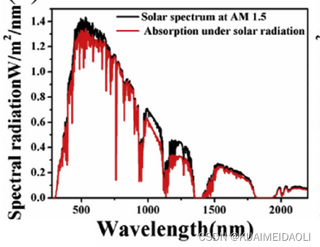
A typical system includes a light source, optical conditioning components, and calibration tools. The goal is to reproduce the AM1.5G solar spectrum defined in IEC standards so that photovoltaic devices can be evaluated under standardized conditions.
This allows engineers to compare solar cell efficiency, stability, and material performance in a controlled and repeatable way.

What Is an LED Solar Simulator
An LED solar simulator uses multiple narrow-band LEDs to reconstruct sunlight. Each LED contributes a specific wavelength range, and together they form a synthetic approximation of the solar spectrum.
Compared with traditional xenon systems, LED-based simulators provide:
- Independent control of spectral channels
- Higher long-term stability
- Lower heat generation on test samples
- Instant start and stop without warm-up time
These advantages make LED solar simulators increasingly popular in research laboratories and advanced photovoltaic development.
How LED Solar Simulator Systems Reproduce Sunlight
The AM1.5 solar spectrum covers ultraviolet, visible, and near-infrared regions. Since LEDs emit narrow spectral bands, multiple wavelengths must be combined to reconstruct sunlight.
Typical wavelength coverage includes:
- UV: 365–405 nm
- Blue: 405–470 nm
- Green: 500–570 nm
- Red: 590–660 nm
- Near-infrared: 700–1100 nm
Higher-precision systems require more wavelength channels to reduce spectral gaps. In engineering-grade systems, 12 to 16 channels are commonly used to achieve stable spectral matching.
Spectral Match and Class AAA Requirements
Solar simulators are classified according to IEC 60904-9 standards based on three performance criteria:
- Spectral match to AM1.5G
- Spatial uniformity across the test area
- Temporal stability over time
A Class AAA system must meet Class A requirements in all three categories simultaneously.
In practical terms, this ensures:
- Accurate spectral reproduction of sunlight
- Even illumination across the full test surface
- Stable output during measurement cycles
Even small deviations can significantly affect photovoltaic efficiency results, especially in research and certification environments.
LED Solar Simulator vs Xenon Solar Simulator
LED and xenon systems are both widely used in photovoltaic testing, but their characteristics differ significantly.
LED solar simulators offer:
- Long-term output stability
- Adjustable spectral composition
- Instant operation without warm-up
- Lower operating and maintenance cost
Xenon solar simulators offer:
- Broad continuous spectrum similar to natural sunlight
- Strong industry acceptance for certification testing
- Good spatial uniformity in traditional setups
In general, LED systems are preferred for research and multi-application laboratories, while xenon systems remain common in standardized certification workflows.
How Engineers Verify Solar Simulator Performance
In real laboratory environments, performance must always be validated through measurement rather than specifications alone.
Spectral verification is performed using a calibrated spectroradiometer to compare system output against AM1.5G reference data. This confirms whether the spectral distribution falls within acceptable limits.
Spatial uniformity is checked by measuring light intensity across multiple points on the test plane. This ensures consistent illumination across the sample area.
Temporal stability is evaluated by monitoring output over time under steady operating conditions. This confirms whether the system maintains consistent irradiance during testing.
These verification steps are essential for ensuring repeatable and reliable photovoltaic measurements.
Key Factors When Selecting a Solar Simulator
When choosing a solar simulator system, engineers typically evaluate:
- Required classification level (Class A, B, or AAA)
- Spectral accuracy and wavelength coverage
- Test area size and uniformity requirements
- Long-term stability and calibration frequency
- Maintenance cost and system lifetime
LED systems provide greater flexibility in spectral design, while xenon systems are often chosen for standardized certification environments.
Application Areas of Solar Simulators
Solar simulators are widely used in:
- Photovoltaic module efficiency testing
- Solar cell material research
- Perovskite and thin-film development
- Photochemical reaction studies
- Optical material aging tests
- Educational laboratory environments
Each application requires different levels of spectral accuracy and system stability.

FAQ – Solar Simulator Systems
1. What is the difference between LED and xenon solar simulators?
LED systems offer tunable spectra and higher stability, while xenon systems provide a continuous sunlight-like spectrum commonly used in certification testing.
2. Can LED solar simulators achieve Class AAA performance?
Yes, but only when equipped with sufficient wavelength channels, precise calibration, and strict control of spatial and temporal stability.
3. Why is spectral match important in solar testing?
Because even small spectral deviations can significantly affect measured photovoltaic efficiency and lead to inaccurate results.
4. How many LED channels are needed for accurate AM1.5 simulation?
Most engineering-grade systems require at least 12–16 wavelength channels for reliable spectral matching.
5. How often does a solar simulator need calibration?
Typically every 6–12 months, depending on usage intensity and system stability requirements.
Conclusion
Solar simulators are essential tools for photovoltaic testing and material research. LED solar simulator systems provide flexible spectral control, high stability, and long operational lifetime, making them increasingly important in modern R&D environments.
Understanding system classification, spectral matching, and verification methods allows engineers to select the right configuration for accurate and repeatable testing results.
Request a Custom LED Solar Simulator System
If your application requires a specific spectral configuration, test area design, or engineering-grade LED solar simulator system, HOUKEM can provide customized OEM solutions for research and industrial applications.
👉 Contact us today to discuss your LED solar simulator requirements and receive technical support from our engineering team.
Infrared Sensor Working Principle: Engineering Guide to Active IR, PIR, and Signal Processing
What Is COB LED? | Meaning, vs SMD, Applications for Industrial Lighting