


365nm vs 395nm vs 405nm UV LED Curing: How to Choose
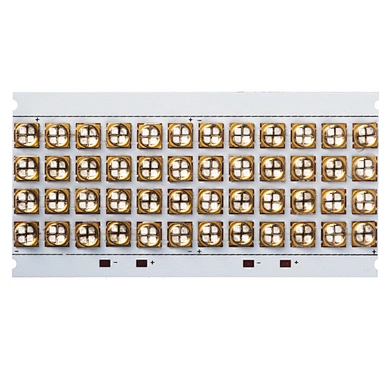
Introduction: How Does UV LED Curing Wavelength Affect Curing?
Choosing the right uv led curing wavelength is essential for achieving reliable curing results. Common wavelengths include 365nm, 385nm, 395nm, and 405nm, but there is no single wavelength that is best for every application.
In general, 365nm is often selected for precision bonding and applications requiring strong photoinitiator absorption, while 385nm and 395nm are widely used for general industrial curing, coatings, inks, and high-volume production. 405nm is commonly used with materials specifically formulated for longer UV wavelengths, including many 3D-printing resins.
However, wavelength alone does not determine curing performance. The photoinitiator absorption spectrum, UV irradiance, exposure time, material thickness, formulation, and required curing depth all affect the final result.
This uv curing wavelength guide compares 365nm, 385nm, 395nm, and 405nm and explains how to select the most suitable uv led curing wavelength for adhesives, coatings, inks, electronics, printing, and other industrial applications.
What Is UV LED Curing Wavelength?
The uv led curing wavelength is the UV wavelength emitted by an LED curing source to activate photoinitiators in UV-sensitive materials. When the emitted UV energy is absorbed by the photoinitiator, it initiates a chemical reaction that converts materials such as adhesives, inks, coatings, and resins from a liquid or semi-liquid state into a cured solid.
The effectiveness of a uv curing light wavelength depends on how well it matches the material's photoinitiator and how much usable UV energy reaches the material.
Key factors include:
- Photoinitiator absorption spectrum
- UV irradiance and energy dose
- Material formulation
- Curing thickness and depth
- Exposure time
- LED-to-material distance
Therefore, selecting a uv led wavelength range should always be based on the material and curing process rather than wavelength alone.

UV Spectrum Overview (UVA, UVB, UVC)
UV light is divided into three main categories:
UVA: 315–400nm
This is the most commonly used range for UV curing applications. It includes:
- 365nm uv led curing
- 385nm uv led curing
- 395nm uv led curing
Most industrial uv curing applications are based on UVA wavelengths because they provide stable curing performance for adhesives, inks, and coatings.
UVA: 405nm
Near-UV / violet region commonly used for photopolymer curing
UVB (280–320nm)
Used mainly for surface modification, disinfection, and special processes.
UVC (100–280nm)
Primarily used for sterilization and germicidal applications, not for curing.
365nm vs 385nm vs 395nm vs 405nm: What Is the Difference?
The main difference between 365nm, 385nm, 395nm, and 405nm UV LED curing wavelengths is how efficiently each wavelength interacts with the photoinitiator and material being cured. A longer wavelength is not automatically better or worse; the correct choice depends on the formulation and curing process.
| UV LED Wavelength | Typical Characteristics | Common Applications | Suitable For |
|---|---|---|---|
| 365nm | Strong absorption for some photoinitiators; useful for precision curing | Optical bonding, electronics, adhesives, epoxy | Precision and selected deeper-curing applications |
| 385nm | Balanced wavelength for many industrial formulations | Adhesives, coatings, electronics | General industrial curing |
| 395nm | Widely available and effective for many commercial formulations | Printing, coatings, inks, PCB applications | High-volume production |
| 405nm | Longer wavelength; effective with compatible photoinitiators | SLA/DLP 3D printing, specialty resins | Materials formulated for 405nm |
365nm UV LED Curing
365nm uv led curing is commonly used when the material or photoinitiator is highly responsive to shorter UVA wavelengths. It is often considered for optical bonding, precision electronics, specialty adhesives, and selected epoxy applications.
385nm UV LED Curing
385nm provides a useful middle ground between shorter and longer UV wavelengths. It is used in many industrial curing applications where the material formulation is optimized for this wavelength.
395nm UV LED Curing
395nm uv led curing is widely used in industrial production because many commercial UV formulations are designed to respond effectively at this wavelength. Common applications include inks, coatings, printing, PCB protection, and other high-volume processes.
For high-power curing applications, HOUKEM also offers a 100W 390–395nm UV LED array for industrial UV curing systems.
405nm UV Curing
405nm uv curing is widely associated with photopolymerization processes such as SLA and DLP 3D printing. It can also be used for specialty materials formulated for longer UV wavelengths.
The most important point is that wavelength should be selected together with the material's photoinitiator, required curing depth, irradiance, and production conditions.
365nm vs 395nm UV LED Curing: Which Should You Choose?
The choice between 365nm vs 395nm uv led curing depends primarily on the material formulation and photoinitiator rather than wavelength alone.
When to Choose 365nm
365nm can be a suitable choice when the photoinitiator has strong absorption at this wavelength or when the application requires precise curing performance.
Common applications include:
-
Optical adhesive bonding
-
Precision electronics assembly
-
Selected epoxy and resin applications
-
Lens and optical component bonding
-
Specialty adhesive curing
When to Choose 395nm
395nm is widely used for industrial production because many UV inks, coatings, adhesives, and other formulations are designed to cure efficiently at this wavelength.
Typical applications include:
-
UV printing
-
Industrial coatings
-
PCB protection
-
Conformal coatings
-
High-volume manufacturing
Is 365nm Better Than 395nm?
Not necessarily. 365nm is not automatically better than 395nm, and 395nm is not automatically faster or deeper-curing. The actual curing result depends on the photoinitiator absorption spectrum, irradiance, energy dose, material thickness, and exposure time.
For this reason, the best approach is to match the uv curing wavelength to the formulation and then validate the curing process under actual production conditions.
Why Photoinitiator Absorption Matters More Than UV Wavelength
A UV LED curing system does not cure a material simply because it produces UV light. The curing reaction starts when the material's photoinitiator absorbs sufficient UV energy.
Every photoinitiator has its own absorption characteristics. If the selected UV LED wavelength does not overlap effectively with that absorption range, the curing process may become slower, incomplete, or inconsistent.
For example, a material formulated around a 365nm-sensitive photoinitiator may not cure efficiently under a 395nm LED source. Likewise, switching from 395nm to 365nm does not automatically improve curing if the formulation is optimized for a longer wavelength.
When selecting a uv led curing wavelength, check:
-
Photoinitiator absorption spectrum – Confirm which wavelengths the formulation responds to.
-
UV irradiance – Make sure sufficient optical power reaches the material.
-
Energy dose – Consider both irradiance and exposure time.
-
Material thickness – Thicker materials may require different process conditions.
-
Production speed – High-speed lines may require higher irradiance or optimized exposure.
-
LED distance and optics – Light distribution affects the amount of UV energy delivered to the curing surface.
This is why a professional uv curing wavelength guide should consider material chemistry and process conditions together rather than recommending a wavelength based only on curing depth or speed.

405nm UV Curing Applications
405nm is a longer UVA wavelength used for specific applications.
It is commonly used in:
- 3D printing (SLA/DLP systems)
- Low-sensitivity photopolymers
- Surface-level curing processes
While not as widely used as 365nm or 395nm, 405nm uv curing plays an important role in additive manufacturing and specialty materials.
How to Choose the Right UV LED Curing Wavelength
Choosing the right uv led curing wavelength requires more than comparing 365nm, 385nm, 395nm, and 405nm. The wavelength should be matched to the material, photoinitiator, curing depth, irradiance, and production requirements.
1. Check the Material and Photoinitiator
Start with the technical data provided by the adhesive, coating, ink, or resin manufacturer. Identify the photoinitiator and its effective absorption range.
2. Define the Required Curing Depth
Consider how much material needs to be fully cured.
For thick or optically challenging materials, do not assume that a longer or shorter wavelength will automatically provide better penetration. Material absorption and formulation have a major influence on effective curing depth.
3. Check UV Irradiance and Energy Dose
Wavelength is only one part of the curing process. A suitable wavelength with insufficient irradiance may still produce incomplete curing.
For production applications, evaluate both irradiance and total UV energy dose.
4. Consider Production Speed
High-speed production lines may require higher irradiance, optimized optics, or multiple LED curing modules. The selected uv led curing system should be designed around the required cycle time.
5. Consider the Application
Different industries have different requirements:
-
Optical bonding: often uses 365nm or other formulation-specific wavelengths
-
Electronics: may use 365nm, 385nm, or 395nm depending on the adhesive
-
Printing: commonly uses 395nm or other wavelengths matched to the ink
-
Coatings: 385nm and 395nm are frequently considered
-
3D printing: 405nm is widely used with compatible photopolymers
6. Validate the Wavelength in the Real Process
Before selecting a production-scale uv curing system, test the actual material under representative conditions. Check surface cure, through-cure, adhesion, hardness, tackiness, temperature, and production cycle time.
A successful UV curing process is the result of matching the wavelength, formulation, optical power, and process conditions—not simply choosing the highest or lowest wavelength.
First Principle: Photoinitiator Matters More Than Wavelength
UV curing depends on photoinitiators (PI) inside the material.
Each photoinitiator has a specific absorption peak:
- If PI peaks at 365nm → 395nm may under-cure
- If PI peaks at 395nm → 365nm may reduce efficiency
A mismatch between wavelength and photoinitiator is one of the most common causes of curing failure in industrial production.
Always confirm the photoinitiator absorption curve before selecting a uv curing system.
UV LED vs Traditional Mercury UV Lamps
Traditional mercury lamps emit a broad spectrum, while UV LED systems provide a narrow and controlled wavelength output.
| Feature | Mercury Lamp | UV LED |
|---|---|---|
| Spectrum | Broad | Narrow |
| Wavelength control | Limited | Precise |
| Warm-up time | Required | Instant |
| Energy efficiency | Lower | Higher |
| Environmental impact | Contains mercury | Mercury-free |
In modern production, UV LED systems are increasingly replacing mercury lamps due to better efficiency and wavelength control.
For a more detailed comparison, see our UV LED vs mercury lamp guide for industrial curing.
Can UV LED Replace Mercury UV Lamps?
UV LED systems can replace mercury UV lamps in many curing applications, but the change should not be treated as a simple one-to-one wavelength substitution.
Mercury lamps produce a broad spectral output, while UV LEDs typically provide a much narrower wavelength band. Therefore, the material formulation, photoinitiator response, irradiance, dose, and curing distance should be evaluated before converting an existing process.
For manufacturers moving from mercury lamps to a uv led curing system, process validation is recommended to confirm curing speed, depth, adhesion, hardness, and overall production performance.
Common Mistakes in UV Wavelength Selection
Using 395nm for deep epoxy curing
May result in incomplete curing at the bottom layer.
Using 365nm for fast ink curing
May reduce production speed without benefit.
Ignoring photoinitiator data
One of the most critical causes of process failure.
Assuming all UV systems are interchangeable
LED and mercury systems behave differently due to spectral distribution.
Choosing wavelength without checking irradiance
Assuming wavelength alone determines curing depth

Key Takeaways
-
365nm, 385nm, 395nm, and 405nm are all used for different UV curing applications.
-
There is no universal best uv led curing wavelength.
-
365nm is commonly considered for precision bonding and selected specialty applications.
-
385nm and 395nm are widely used in industrial curing applications.
-
405nm is commonly used with compatible photopolymers, including many 3D-printing materials.
-
Photoinitiator absorption is one of the most important factors when selecting a UV curing wavelength.
-
UV irradiance, energy dose, material thickness, formulation, and exposure time also affect curing performance.
-
The right uv led curing system should be selected based on the complete curing process rather than wavelength alone.
FAQ
What is the best UV LED curing wavelength?
There is no single best uv led curing wavelength for every application. The correct wavelength depends on the material, photoinitiator absorption spectrum, UV irradiance, curing depth, and production requirements.
What is the difference between 365nm and 395nm UV LED curing?
365nm and 395nm UV LEDs produce different spectral outputs and may interact differently with photoinitiators. 365nm is commonly considered for precision bonding and selected specialty materials, while 395nm is widely used for inks, coatings, printing, and high-volume industrial curing. The material formulation should determine the final choice.
Is 365nm better than 395nm for UV adhesive curing?
Not necessarily. The better wavelength is the one that matches the adhesive's photoinitiator and provides sufficient UV energy for the required cure. Always check the adhesive manufacturer's technical data before selecting a curing source.
Which UV LED wavelength is best for deep curing?
There is no universal wavelength that guarantees deeper curing. Effective curing depth depends on wavelength, material absorption, photoinitiator chemistry, formulation, irradiance, and optical conditions. The material's absorption and photoinitiator data should be evaluated first.
Is 395nm good for industrial UV curing?
Yes. 395nm uv led curing is widely used in industrial applications such as printing, coatings, inks, PCB protection, and other high-volume production processes. Its suitability depends on the formulation and required curing conditions.
Can UV LED replace mercury lamps?
UV LEDs can replace mercury lamps in many applications, but compatibility must be validated. Because UV LEDs typically provide a narrower spectral output, the material's photoinitiator response and required curing conditions should be checked before conversion.
Conclusion
Selecting the right uv led curing wavelength is not simply a choice between 365nm, 385nm, 395nm, and 405nm. The best wavelength is the one that works efficiently with the material's photoinitiator and meets the required curing depth, irradiance, production speed, and process conditions.
For many industrial applications, 365nm is considered for precision and specialty curing, while 385nm and 395nm are widely used for industrial adhesives, inks, coatings, and production lines. 405nm is commonly selected for compatible photopolymers and 3D-printing applications.
Before investing in a uv led curing system, confirm the material's photoinitiator absorption range and validate the selected wavelength under actual production conditions. This approach can help improve curing consistency, production efficiency, and overall system performance.
Need Help Selecting a UV LED Curing System?
Choosing between 365nm, 385nm, 395nm, and 405nm depends on your material, photoinitiator, curing thickness, irradiance, and production requirements.
HOUKEM provides UV LED solutions for industrial curing applications and can help evaluate the appropriate uv led curing wavelength for your process.
When contacting us, share your:
-
Material or adhesive type
-
Photoinitiator information, if available
-
Required curing thickness
-
Production speed or cycle time
-
Existing UV curing equipment
-
Preferred wavelength or application
Our team can recommend a suitable UV LED wavelength and curing configuration for your application.
UV LED Curing Applications: A Guide to Industrial Curing Systems
UV LED Applications, Challenges & Industrial Uses | UVC Sterilization Guide


