Why LEDs Require Constant Current Control

For LED engineers and system designers, understanding constant current LED drivers is essential for stable operation, accurate LED current regulation, and preventing LED failure due to voltage instability.
This article explains why LEDs require constant current control instead of constant voltage, and how LED forward current directly impacts brightness, efficiency, and thermal performance.
Why LEDs Need Constant Current Control
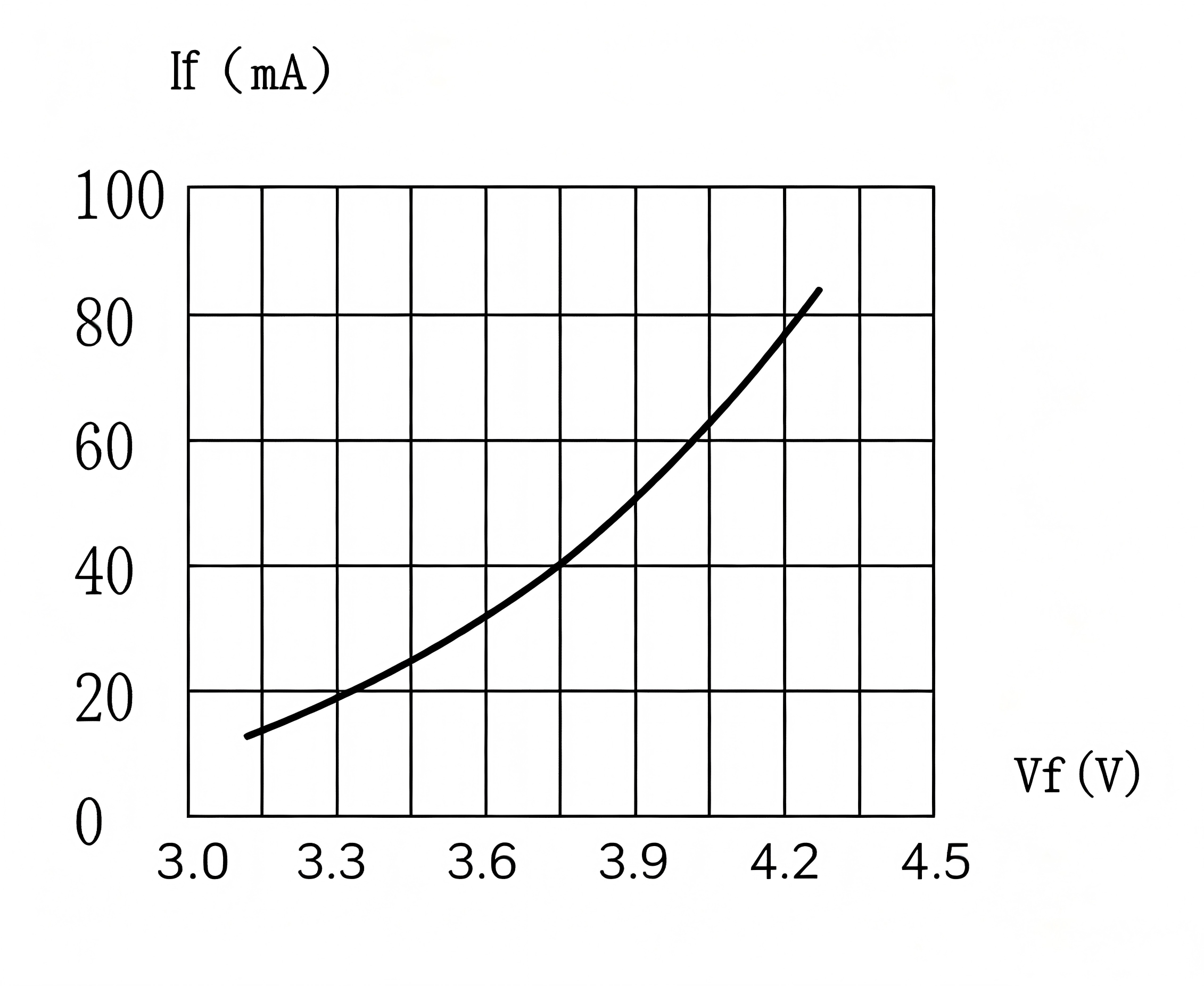
An LED is a diode with a steep exponential I–V curve. This means a very small change in voltage leads to a large change in current.
Unlike resistive loads, LEDs do not naturally “limit” current. Instead, current must be actively controlled.
This is why LED forward current control is the key parameter that determines brightness, efficiency, and lifetime.
Brightness is directly proportional to forward current, but excessive current quickly leads to overheating and degradation.

LED Constant Current vs Constant Voltage Explained
The difference between LED constant current vs voltage driving is fundamental to LED system design.
A constant voltage power supply keeps voltage fixed, but LED current varies depending on temperature and manufacturing tolerances.
A constant current LED driver, however, automatically adjusts output voltage to maintain a fixed current.
| Driving Method | Behavior | Risk Level | Suitability |
|---|---|---|---|
| Constant Voltage | Voltage fixed, current varies | High risk | Low-power or resistor-limited systems |
| Constant Current | Current fixed, voltage adjusts | Low risk | Professional LED systems |
A constant voltage approach often leads to instability because LED forward voltage (Vf) is not fixed and changes with temperature.
LED I-V Characteristics and Current Instability
LEDs behave like nonlinear semiconductor devices. Once forward voltage is reached, current rises sharply.
Even a small increase of 0.1–0.2V can double LED current.
This is the core reason why LED current regulation circuits are required in practical designs.
Example behavior:
- At room temperature: stable current at rated voltage
- Slight voltage increase: current rises rapidly
- Result: brightness increases briefly, then thermal stress begins
This is why LED operating current is the key parameter controlling both brightness and efficiency. Unlike voltage, LED current vs voltage behavior is highly nonlinear and unstable without proper regulation.
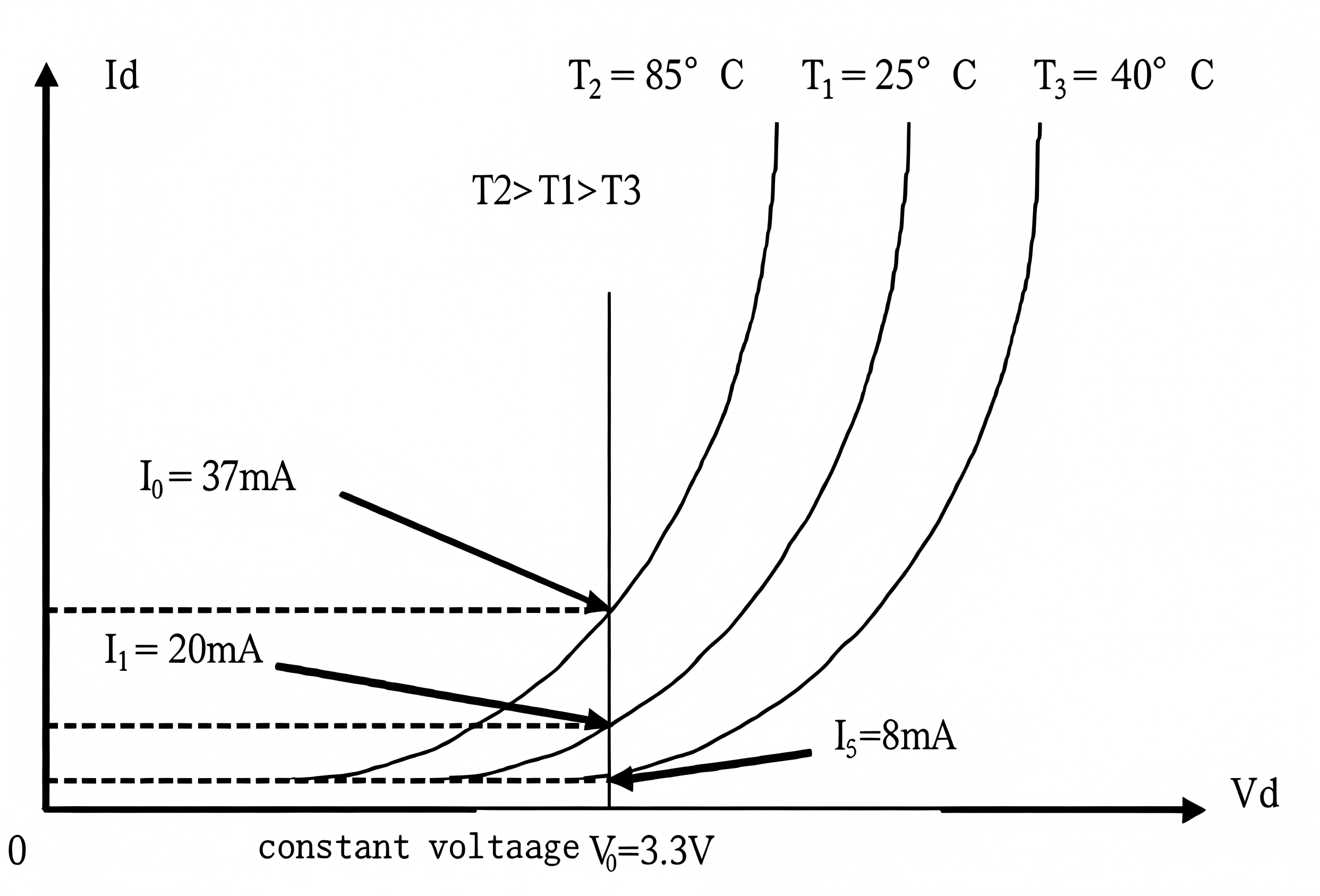
Thermal Runaway and LED Failure Due to Voltage
One of the most critical risks in LED design is thermal runaway.
As temperature increases:
- LED forward voltage decreases (~ -2mV/°C)
- Current increases if voltage is fixed
- Increased current generates more heat
- Cycle repeats until failure
This is a direct example of LED failure due to voltage instability.
Once this loop starts, LEDs can degrade within minutes or hours depending on power level.
A constant current driver prevents this by removing voltage dependency from the system. Without constant current LED driver control, LED forward voltage temperature coefficient can cause rapid current increase and permanent device failure.
Why Resistors Cannot Replace Current Regulation
A common misconception is that a series resistor can replace a constant current driver.
While resistors can limit current, they cannot stabilize it under temperature changes.
Problems include:
- Poor efficiency (large power loss as heat)
- Weak temperature compensation
- Inconsistent brightness
- No protection against thermal drift
For high-power systems, resistor-based designs become impractical and inefficient.
This is why modern systems rely on dedicated LED current regulation circuits instead.
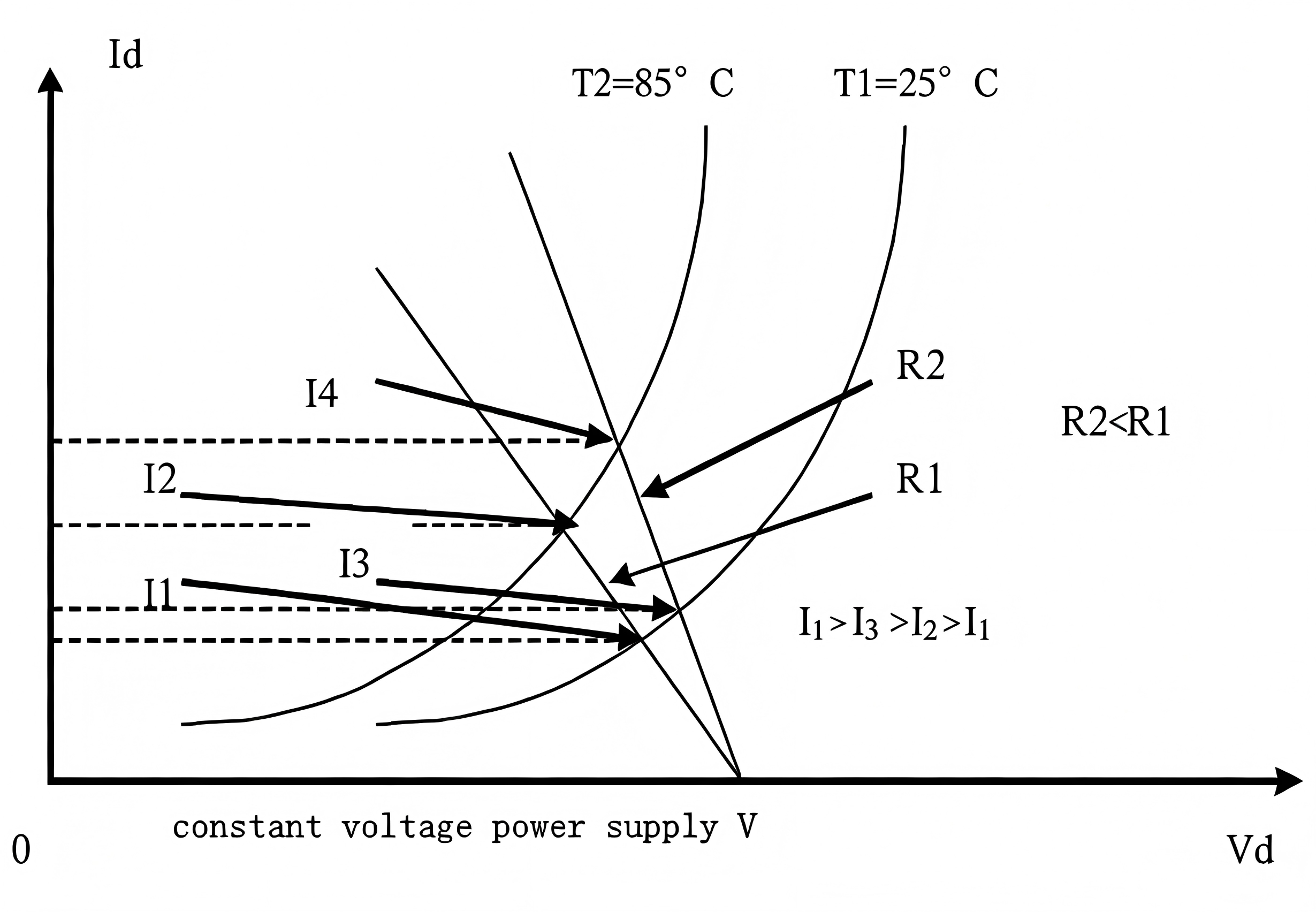
Constant Current LED Driver Design Principles
A proper constant current LED driver maintains fixed current regardless of:
- Input voltage variation
- LED forward voltage changes
- Temperature fluctuations
Key design parameters include:
- Current accuracy (±1% to ±5%)
- Ripple control (<10% recommended)
- Thermal protection
- Voltage compliance range
- Dimming compatibility
Good design ensures consistent brightness and long-term reliability.
LED Driver Topologies Overview
Different applications require different driver architectures.
Linear Drivers
Simple and low-noise, but inefficient when input voltage is much higher than LED voltage.
Best for:
- Low power systems (<5W)
- Noise-sensitive circuits
- Minimal cost applications
Switching Drivers (Buck / Boost / Buck-Boost)
More efficient and widely used in professional LED systems.
- Buck: Vin > Vf (most common)
- Boost: Vin < Vf
- Buck-Boost: flexible input range
These are the standard choice for modern LED power systems.

LED Thermal Runaway Prevention Methods
Preventing thermal runaway is a key design goal in LED systems.
Effective strategies include:
- Using constant current drivers instead of voltage supplies
- Controlling junction temperature with heat sinks
- Minimizing current ripple
- Ensuring proper PCB thermal design
- Avoiding overdriving LEDs beyond rated current
Among all methods, constant current control remains the most important.
LED Power Supply Selection Guidelines
Choosing between constant current and constant voltage depends on application:
| Application | Recommended Approach |
|---|---|
| LED strips (basic) | Constant voltage + resistors |
| High-power LEDs | Constant current driver |
| Industrial lighting | Constant current switching driver |
| Precision systems | Low-ripple constant current |
For most engineering applications, constant current is the default requirement.

LED Current Regulation in Real Applications
In real-world systems, LED current regulation explanation comes down to one principle:
Maintain constant current → maintain stable brightness → ensure predictable lifetime.
Without current regulation:
- Brightness fluctuates
- Thermal stress increases
- Lifetime becomes unpredictable
With proper regulation:
- Stable optical output
- Controlled heat dissipation
- Reliable long-term performance
LED LED Constant Current vs Constant Voltage: Key Takeaway
The fundamental engineering rule is simple:
LEDs are current-driven devices, not voltage-driven devices.
This is why constant current LED drivers are the standard in all professional LED applications.
Voltage-only driving can only work safely when current is strictly limited by external components—and even then, performance is unstable.

FAQ – LED Constant Current Drivers
Why do LEDs need constant current?
Because LED brightness depends directly on current, and voltage changes can cause large current swings.
What happens if I use constant voltage for LEDs?
Current becomes unstable, leading to overheating, brightness variation, and early failure.
Is a resistor enough for LED current control?
Only for very low-power applications. It cannot compensate for temperature changes.
What is the main advantage of constant current drivers?
Stable current regardless of voltage or temperature changes.
Can LEDs be damaged by voltage?
Yes. Small voltage increases can cause large current spikes, leading to thermal runaway.
What is LED operating current?
LED operating current is the actual current flowing through the LED during operation, which directly determines brightness and thermal behavior.
Why can’t LEDs be controlled by voltage?
Because LED voltage vs current characteristics are nonlinear, even small voltage changes can cause large current fluctuations and lead to thermal runaway.
Conclusion
Understanding constant current LED driver design is essential for any reliable LED system. Compared with constant voltage systems, current-regulated designs provide better stability, efficiency, and lifetime performance.
Whether you are designing lighting systems, industrial modules, or high-power LED applications, proper current regulation is the foundation of long-term reliability.
CTA
Need help selecting the right LED driver for your project or optimizing your LED system design?
👉 Contact HOUKEM’s engineering team for application support and custom LED driver solutions.
How to Choose the Right 7-Segment LED Display Module