


UV LED Applications, Challenges & Industrial Uses | UVC Sterilization Guide

What Are UV LEDs?
UV LED (Ultraviolet Light Emitting Diode) is a semiconductor light source that emits ultraviolet light in the UVA (315–400nm), UVB (280–315nm), or UVC (200–280nm) spectrum. Unlike traditional mercury vapor lamps, UV LEDs offer instant on/off, mercury‑free operation, and compact form factors.
For B2B buyers and system integrators, the term industrial UV LED typically refers to high‑power UVA modules for curing or medium‑power UVC modules for disinfection — two very different markets with different engineering priorities.
If you are searching for UV‑C LED sterilization solutions, the key metric is dose (mJ/cm²) , not just peak power.
UV LED Wavelength Types: UVA, UVB, UVC
| Type | Wavelength | Typical Use | Typical Dose / Intensity |
|---|---|---|---|
| UVA | 315–400nm | Curing, printing, counterfeit detection | 1–10 W/cm² (high power density) |
| UVB | 280–315nm | Medical phototherapy, vitamin D synthesis | 5–100 mJ/cm² |
| UVC | 200–280nm | Sterilization, disinfection | 20–100 mJ/cm² (log reduction depends on pathogen) |
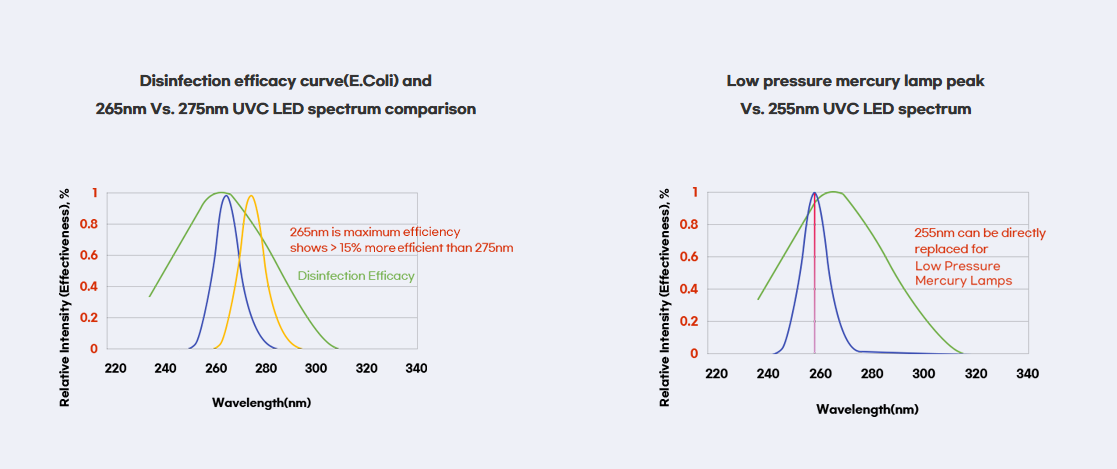
UVC LEDs (typically 260–280nm) are the focus of most industrial disinfection applications because their peak germicidal effectiveness aligns with DNA absorption (~265nm).
UV LED Applications in Industry (With Realistic Context)
Unlike generic lists, here are specific, quantifiable applications:
-
Inline water disinfection – Flow rates from 2–20 GPM (7–75 LPM), 40–60 mJ/cm² for 4‑log reduction of E. coli and Legionella
-
HVAC coil and air disinfection – Continuous irradiation of cooling coils to prevent mold, UL 8802 compliant systems
-
Surface disinfection conveyors – Food processing, pharmaceutical packaging, 50–100 mJ/cm² at line speed
-
UV curing for inks & adhesives – UVA at 365nm or 395nm, 4–20 W/cm² for instant polymerization
-
Medical instrument sterilization – External surfaces of non‑implantable devices
-
Ballast water treatment – Marine industry, high‑flow UVC systems
For each case, the optical design (reflector, quartz window, flow cell geometry) is as important as the LED itself.
UV LED vs Traditional Mercury Lamps: Comparison Table
| Feature | UV LED | Low/Medium Pressure Mercury Lamp |
|---|---|---|
| Warm‑up time | Instant (<1µs) | 3–10 minutes |
| Lifetime (L70) | 10,000–20,000 hours | 8,000–12,000 hours |
| Wall‑plug efficiency | 5–15% (UVC), 30–50% (UVA) | 30–40% (but degrades) |
| On/off cycling | No impact | Reduces lifetime |
| Mercury content | None | Hazardous waste |
| Form factor | Compact, PCB‑mountable | Bulky, requires reflector |
| Dimming / control | Easy (PWM, 0–10V) | Difficult (limited) |
| Target applications | Portable, low‑power, frequent cycling | High‑flow, continuous, legacy systems |
Verdict for OEM buyers: UV LED is not always a direct drop‑in replacement, but for systems that cycle frequently or require compact design, it is rapidly displacing mercury lamps.
Key Engineering Parameters for Industrial UV LED Buyers
When sourcing UV LEDs for integration, request these specifications:
-
Peak wavelength (nm) and tolerance – e.g., 275nm ±5nm
-
Radiant flux (mW) at rated current
-
Irradiance (mW/cm²) at a given distance
-
Viewing angle (typ. 60–150°)
-
Thermal resistance (Rth, °C/W) – critical for UVC because efficiency drops with temperature
-
L70 / L50 lifetime data (per LM‑80 or equivalent)
-
ESD sensitivity (UV LEDs are typically more ESD‑sensitive than visible LEDs)
Also confirm driver compatibility: UV LEDs often require constant current with tighter voltage regulation because Vf drifts more with temperature.
UV LED Challenges and Design Considerations
Despite rapid improvement, UV LED technology still has real‑world limitations:
-
Lower wall‑plug efficiency than visible LEDs – UVC LEDs typically achieve only 5–10%, meaning significant waste heat
-
Aggressive thermal management required – Tc (case temperature) should be kept below 50–60°C for acceptable lifetime
-
Performance degradation over time – UVC LEDs degrade faster than UVA or visible LEDs; 10,000–20,000 hours is realistic
-
Higher upfront cost – 0.50–0.50–3.00 per mW of UVC radiant flux (vs mercury lamps at 0.05–0.05–0.20 per mW)
-
Optical material limitations – Standard PMMA and polycarbonate degrade under UV; use quartz or UV‑grade fused silica
Common design mistake to avoid: Placing UVC LEDs in an unventilated, hot enclosure without active cooling. This rapidly reduces both instantaneous output and lifetime.
Safety & Compliance for Industrial UV LED Systems (EU/US Focus)
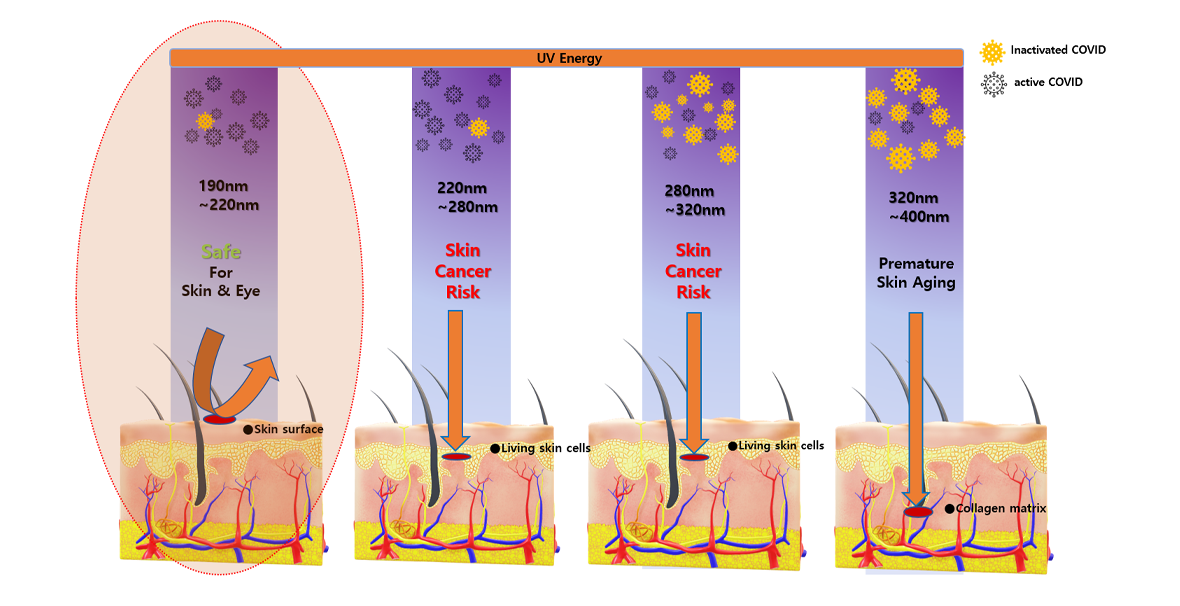
UV LEDs — especially UVC — are hazardous to eyes and skin. Industrial systems must include:
-
Interlocked enclosures that shut off when opened
-
UV‑blocking viewing windows (rated for the specific wavelength)
-
Labeling per IEC 62471 (photobiological safety)
-
Compliance marks: UL 8802 (air disinfection), NSF/ANSI 55 (water), CE/RoHS
Distributors and integrators in the EU/US will ask for these certifications before placing a purchase order.
FAQ: UV LED for Industrial & B2B Applications
1. How effective are UVC LEDs for disinfection?
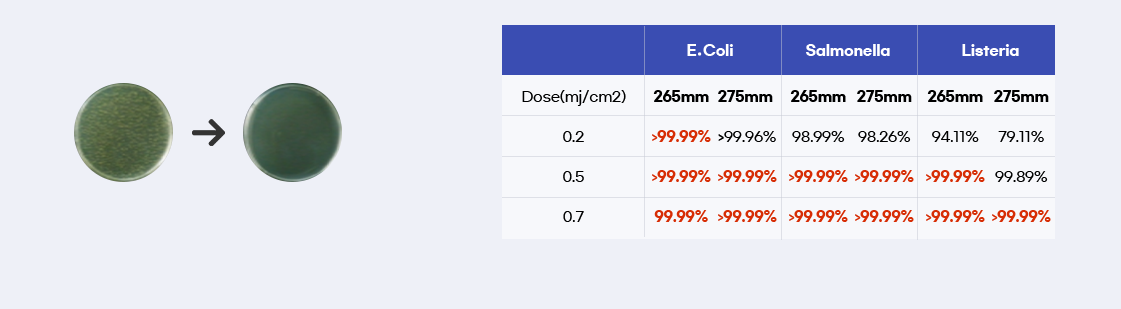
At 40 mJ/cm², UVC LEDs (260–280nm) achieve >99.99% reduction of E. coli, Salmonella, and Legionella. Higher doses (60–100 mJ/cm²) are needed for spores like C. difficile.
2. What is the typical lifetime of a UVC LED?
Under proper thermal management (Tc ≤50°C), L70 is typically 10,000–20,000 hours. Running at higher current or temperature drastically reduces lifetime.
3. Can UVC LEDs replace mercury lamps directly?
Not 1:1. You need to redesign optics (mercury lamps are omnidirectional; LEDs are directional) and thermal management (LEDs concentrate heat in a small area).
4. Are UV LEDs dangerous to humans?
Yes. UVC can cause corneal burns (photokeratitis) and skin erythema. Industrial systems must use enclosed designs with safety interlocks.
5. What is the wall‑plug efficiency of UVC LEDs?
Currently 5–10% for commercial 265–280nm UVC LEDs. UVA LEDs (365–395nm) achieve 30–50%. Mercury lamps start higher but degrade faster with cycling.
6. Do UVC LEDs generate ozone?
Generally no. Ozone production requires wavelengths below 240nm. Most UVC LEDs operate at 260–280nm, which does not produce meaningful ozone.
7. What drivers work with UV LEDs?
Constant‑current LED drivers. Note that UV LED forward voltage (Vf) changes more with temperature than visible LEDs — use a driver with adequate voltage headroom.
8. Are UV LEDs environmentally friendly?
Yes for disposal (no mercury), but the manufacturing energy footprint is currently higher than for mercury lamps. The lifecycle trade‑off favors UV LED when frequent cycling or compact size matters.

Why UV LED Technology Is Growing Rapidly
UV LED adoption is accelerating in industrial and medical sectors because of:
-
Mercury regulation (Minamata Convention, EU RoHS exemptions are narrowing)
-
Instant operation (no warm‑up, ideal for on‑demand systems)
-
Compact integration (embedded into water faucets, portable sterilizers, small curing stations)
-
Lower maintenance (no lamp replacement every 1–2 years)
However, it is not a universal replacement. For very high flow rates (>500 GPM) or continuous 24/7 operation, mercury lamps may still be cost‑effective — but the gap is closing each year.
Conclusion
UV LED technology has matured into a practical solution for water disinfection, air treatment, surface sterilization, and UV curing. While challenges remain in efficiency, thermal management, and upfront cost, its mercury‑free operation, instant control, and compact form factor make it a leading choice for new industrial designs.
For B2B buyers: always request LM‑80 style lifetime data, validate thermal designs with your actual duty cycle, and ensure compliance with regional safety standards (IEC 62471, UL 8802, NSF/ANSI 55).
Looking for a reliable UV LED solution for your project?
Contact us for technical support, datasheets, and OEM/ODM customization options for industrial UV LED systems.
365nm vs 395nm vs 405nm UV LED Curing: How to Choose
UV LED Light vs UV Lamp: Which Is Better for Disinfection? (2025 Comparison)


