How to Choose the Right 7-Segment LED Display Module

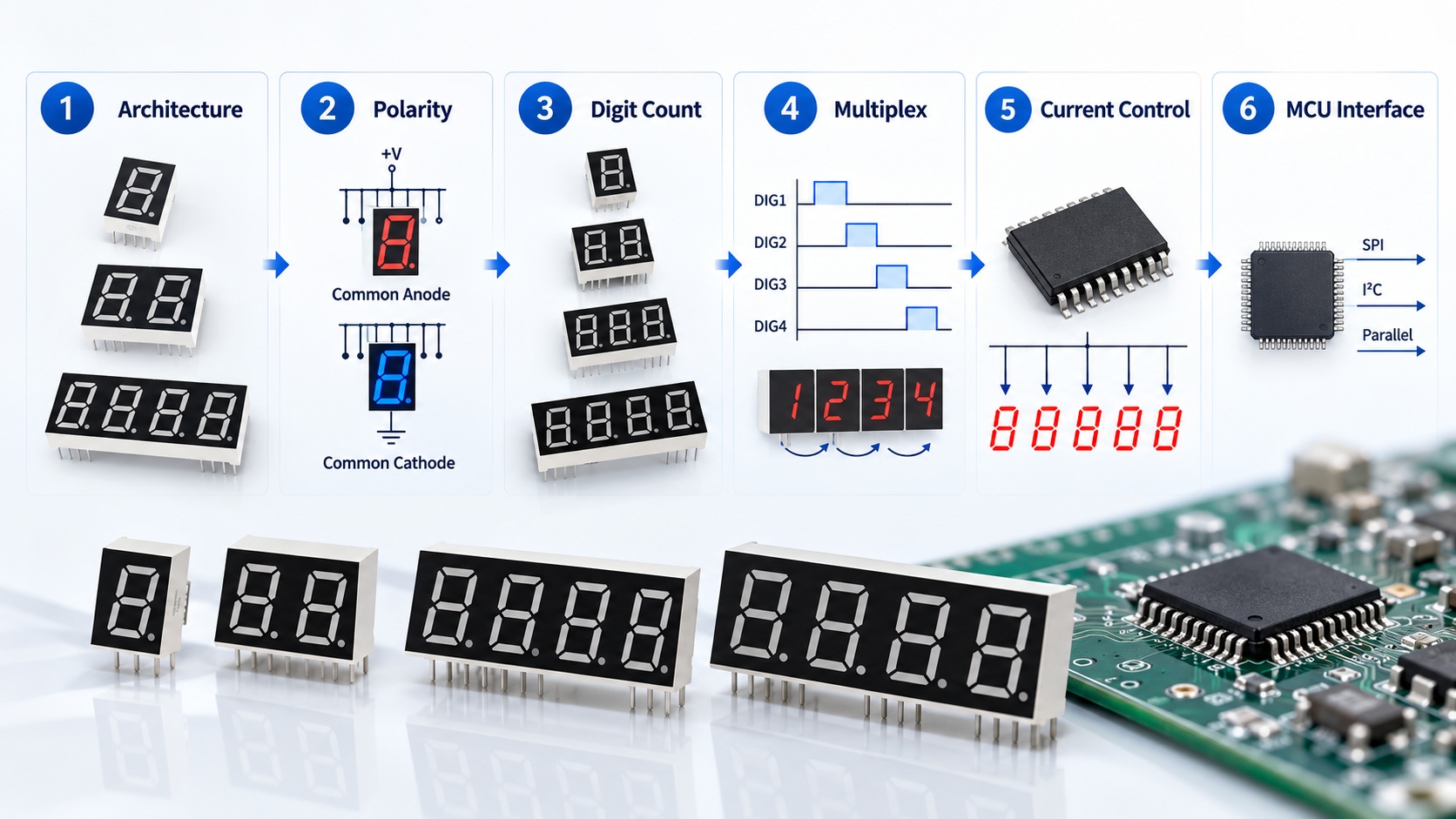
Selecting the right 7 segment LED display module is a critical step in developing reliable industrial equipment, embedded systems, and OEM electronic products. The correct choice directly affects readability, power consumption, circuit stability, and long-term product performance.
This guide explains the key technical parameters, LED display module selection guide, wiring methods, pinout considerations, and sourcing factors for engineering and procurement teams.
What Is a 7-Segment LED Display Module?
A 7 segment LED display module is a numeric display device made of seven individually controlled LED segments (A–G), often with an additional decimal point (DP). It is widely used in industrial meters, counters, timers, and embedded control panels.
Compared with a single LED solution, a 7 segment LED display module integrates multiple segments into a PCB-ready structure, making it easier to design, assemble, and scale in production.
Types of 7-Segment Display Modules
Understanding 7 segment display module types helps engineers select the correct structure for different applications.
Single-Digit vs Multi-Digit Modules
- Single-digit modules are suitable for simple status or value display
- Multi-digit modules (2–6 digits) are used in meters, counters, and industrial systems
SMD vs DIP Structure
A SMD 7 segment LED display is widely used in modern PCB designs due to its compact size and suitability for automated SMT production. DIP versions are more commonly used in prototyping or environments requiring stronger mechanical durability.
Application-Based Variations
Different module types are designed based on brightness, size, and viewing angle requirements for industrial or embedded systems.
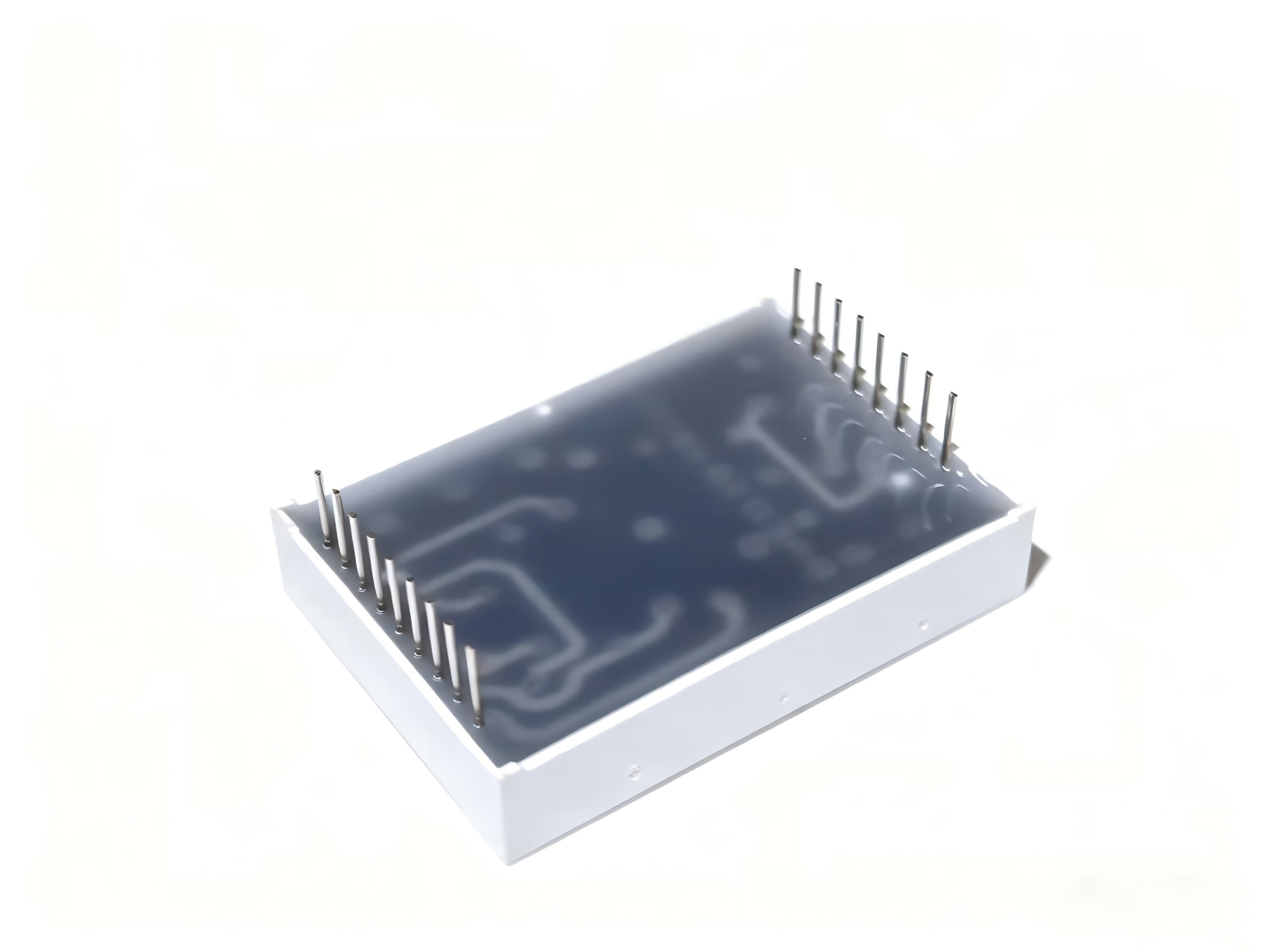
Key Selection Factors
When choosing a 7 segment LED display module, engineers should evaluate several important parameters:
1. Digit Size and Quantity
One common design question is: how many digits 7 segment display module do I need?
- 1–2 digits: simple indicators
- 3–4 digits: most industrial meters
- 5–6+ digits: counters or precision instruments
For compact products, a small size 7 segment LED display module for embedded systems is often preferred.
2. Brightness and Visibility
Industrial environments require higher brightness to ensure readability under strong ambient light conditions.
3. Electrical Compatibility
Voltage, current, and logic levels must match your control system to ensure stable operation and avoid damage.
4. PCB Design Considerations
Engineers often search for how to choose 7 segment LED display module for PCB design because footprint compatibility directly impacts layout success and manufacturing cost.
Common Anode vs Common Cathode
One of the most important design decisions is common anode vs cathode 7 segment display selection.
- Common anode: all anodes connected together, active-low driving
- Common cathode: all cathodes connected together, active-high driving
In most modern MCU-based systems, common cathode is preferred due to simpler logic integration.
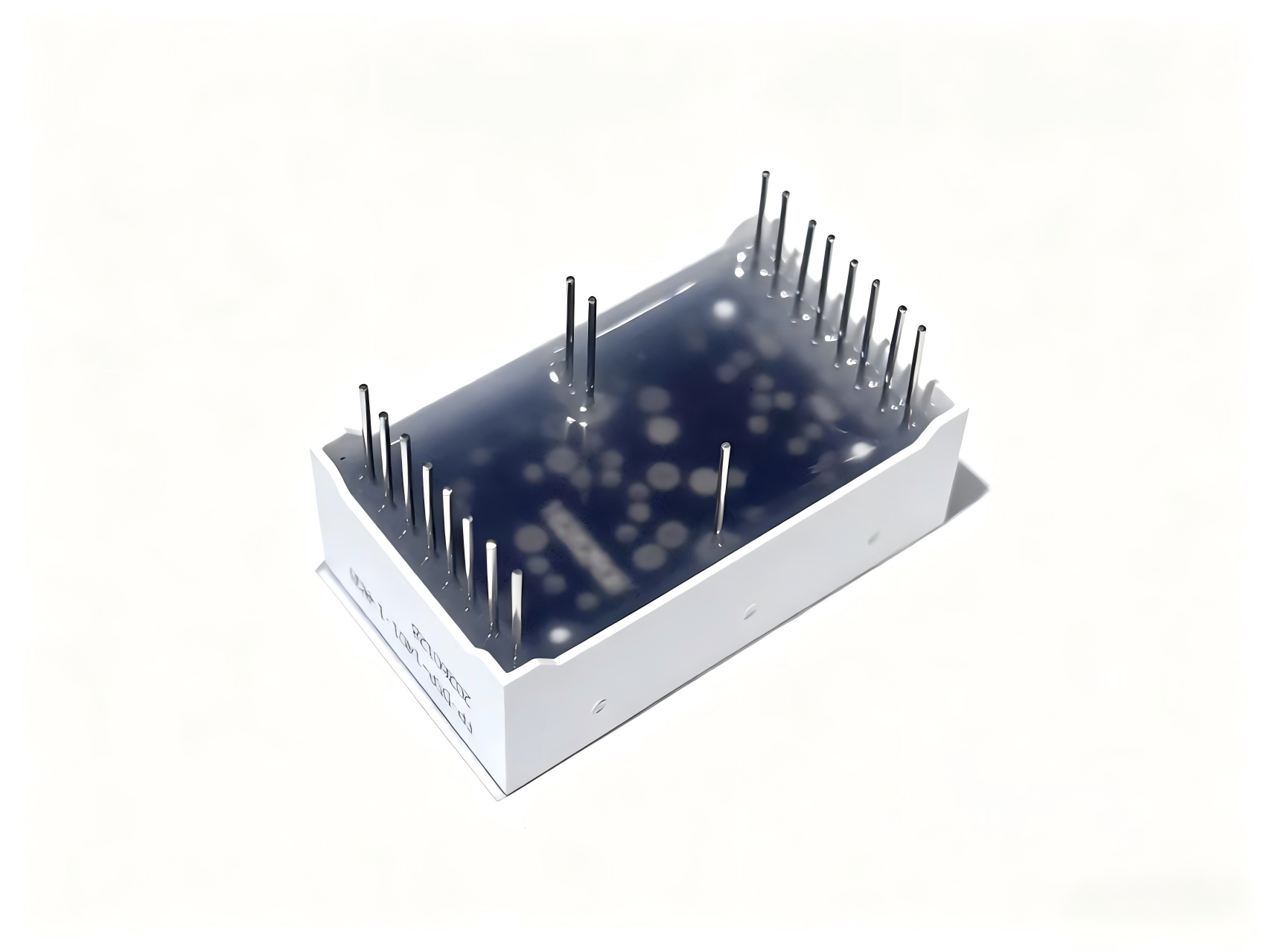
Pinout and Wiring Basics
Understanding the 7 segment display pinout is essential for correct circuit implementation.
A typical 7 segment LED display module pinout diagram includes:
- Segment pins A–G
- Decimal point (DP)
- Common anode or cathode pins
Incorrect pin mapping is one of the most common causes of prototype failure, so always verify the manufacturer datasheet before PCB design.
How to Drive a 7-Segment LED Display Module
There are two common driving methods:
1. Direct MCU Drive
Each segment is controlled directly by GPIO pins. This method is suitable for simple designs but consumes many I/O resources.
2. Driver IC Solution
For larger displays, ICs such as multiplexing drivers are commonly used. This reduces MCU pin usage and improves stability.
Many engineers search for how to drive 7 segment LED display module with MCU when designing embedded systems.
Resistor Calculation and Protection
Proper current limiting is essential to ensure LED reliability.
The resistor value can be calculated using:
R = (V_supply − V_forward) / I_forward
This ensures correct brightness and prevents overcurrent damage.
Engineers often refer to resistor for 7 segment LED display module calculation during circuit design to ensure stable operation.

Industrial Applications
A 7 segment LED display module is widely used in:
- Industrial automation equipment
- Embedded system interfaces
- Power meters and measurement devices
- Control panels and counters
- Consumer electronics
For industrial applications, engineers typically choose durable and high-brightness modules to ensure long-term reliability.
Supplier Selection for OEM Projects
Beyond technical parameters, sourcing is a key part of the decision-making process.
Many buyers search for:
- custom 7 segment LED display module manufacturer China
- industrial LED display module supplier
- OEM 7 segment display module factory
- bulk 7 segment LED display module price
When selecting a supplier, consider:
- OEM customization capability
- Stable production capacity
- Quality control systems
- Certification support (RoHS, REACH, etc.)
- Consistent lead time for mass production
FAQ
Q1: How do I choose between common anode and common cathode?
Common cathode is generally preferred for modern MCU-based designs such as Arduino, STM32, and ESP32 because it uses simpler high-level logic. Common anode is often used in multiplexed or transistor-driven circuits.
Q2: What is the difference between SMD and DIP 7 segment LED display modules?
SMD modules are designed for automated SMT production and compact PCB layouts, making them ideal for mass production. DIP modules are easier for prototyping and offer stronger mechanical stability.
Q3: How many digits do I need for my application?
Most industrial meters use 3–4 digits. Embedded systems typically use 1–2 digits, while counters or measurement devices may require 5–6 digits depending on display range.
Q4: Can I drive a 7 segment LED display module directly from an MCU?
Yes, but it is only recommended for small displays. For multi-digit modules, a driver IC such as a multiplexing controller is preferred to reduce GPIO usage and improve stability.
Q5: What is the typical forward voltage of a segment?
For red LEDs, the forward voltage is usually 1.8V–2.2V. Always confirm with the datasheet before final circuit design.
Q6: What certifications should I request from a supplier?
For industrial and export markets, request RoHS, REACH, ISO9001, and optionally UL or CE depending on product application.
Conclusion
Choosing the right 7 segment LED display module requires balancing electrical design, mechanical constraints, and application requirements. Engineers should carefully evaluate display type, pinout, driving method, and supplier capability before finalizing a design.
The right selection improves system stability, reduces redesign risk, and ensures reliable long-term performance in industrial and embedded applications.
🤝 OEM Support
We provide OEM and customization support for 7 segment LED display modules, including size, color, voltage, digit configuration, and PCB integration.
If you need datasheets, samples, or technical consultation for your project, feel free to contact our engineering team for support.
Mini 7 Segment Displays in Industrial Equipment: A Complete Selection Guide
Why LEDs Require Constant Current Control