


HOUKEM Digital Numeric LED Display Series
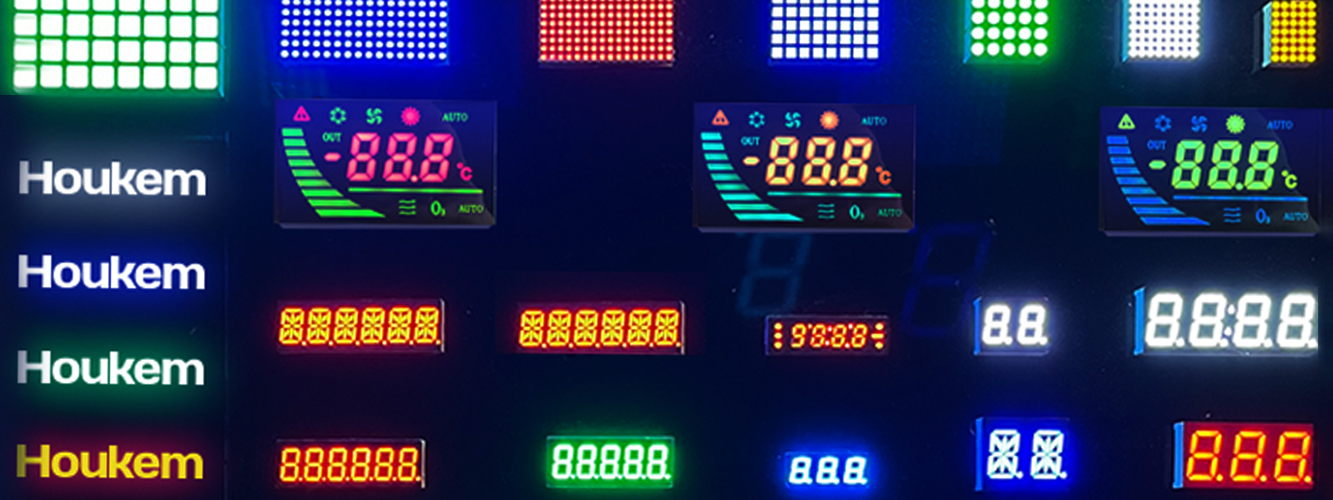
HOUKEM provides digital numeric LED display solutions in different digit sizes, colors, configurations, and electrical types. Our 7 segment LED display series is designed for applications that require clear visual indication, reliable operation, and flexible integration into electronic systems.
This guide explains how a digital numeric LED display works, the difference between common anode and common cathode configurations, available display options, key specifications, typical applications, and how to select the right display for your project.
What Is a Digital Numeric LED Display?
A digital numeric LED display is an LED-based component used to display numerical information and, depending on its segment configuration, selected letters or symbols. Unlike a traditional LCD, an LED display produces visible light directly through LED chips, allowing the displayed information to remain clear in a wide range of electronic applications.
One of the most common designs is the 7 segment LED display. It consists of seven individual LED segments arranged in an “8” pattern. Each segment can be controlled independently to create different numbers.
Many models also include a decimal point, commonly identified as DP. With seven segments labeled A, B, C, D, E, F, and G plus a decimal point, a single display digit can present numbers from 0 to 9 and selected characters.
Digital numeric LED displays are widely used because they combine a compact package with clear numeric visibility and straightforward electronic control.
How Does a 7 Segment LED Display Work?
A 7 segment LED display works by turning individual LED segments on or off according to the character that needs to be shown.
For example, displaying the number “8” requires all seven segments to illuminate, while displaying “1” only requires the appropriate segments on the right side of the display.
The segments are normally identified as:
-
A — top segment
-
B — upper-right segment
-
C — lower-right segment
-
D — bottom segment
-
E — lower-left segment
-
F — upper-left segment
-
G — middle segment
-
DP — decimal point
Each segment contains LED chips that emit light when current passes through them. The display is connected to a controller or driver circuit that determines which segments should illuminate.
The electrical configuration of a 7 segment LED display is commonly divided into two types: common anode and common cathode. Selecting the correct configuration is important because it must match the driving circuit of the target electronic device.
Common Anode vs. Common Cathode LED Displays
The main difference between common anode and common cathode LED displays is how the individual LED segments are electrically connected.
In a common anode configuration, the anodes of the LED segments are connected to a common positive terminal. The individual cathodes are controlled separately to illuminate the required segments.
In a common cathode configuration, the cathodes of the LED segments are connected to a common negative terminal, while the individual anodes are controlled separately.
| Feature | Common Anode | Common Cathode |
|---|---|---|
| Common connection | Positive | Negative |
| Individual segment connection | Cathode | Anode |
| Circuit integration | Depends on driver design | Depends on driver design |
| Typical application | Digital control systems | Digital control systems |
| Main selection factor | Must match the controller | Must match the controller |
Neither configuration is universally suitable for every application. The correct choice depends on the circuit architecture, driver IC, microcontroller, and electrical requirements of the target equipment.
Key Benefits of Digital Numeric LED Displays
Low Power Consumption
Digital numeric LED displays can provide efficient visual indication for electronic equipment that operates continuously. A low power LED display can be particularly useful in meters, control panels, timers, and other devices where energy consumption is an important design consideration.
Actual power consumption depends on factors such as LED chip characteristics, forward current, display size, color, number of illuminated segments, and driving method.
Clear Numeric Visibility
LED technology provides direct light emission, allowing numeric information to remain clearly visible in many indoor electronic applications. Different colors, digit sizes, and brightness levels can be selected according to the requirements of the final product.
For equipment that needs quick visual feedback, a clear numeric display can make readings easier to identify and interpret.
Long Operating Life
LED components are designed for long-term operation when used within their specified electrical and environmental conditions. Proper control of forward current, voltage, temperature, and operating conditions can help maintain stable performance over the service life of the equipment.
The actual lifetime of a digital numeric LED display depends on the specific product design and operating environment.
Compact Electronic Integration
7 segment LED displays can provide numeric information without requiring a large display area. Their compact structure makes them suitable for electronic instruments, meters, control systems, and consumer appliances where PCB space is limited.
Digital Numeric LED Display Types
Different equipment requires different display configurations. HOUKEM's digital numeric LED display series can be selected according to digit configuration, size, color, electrical characteristics, and application requirements.
7 Segment LED Displays
7 segment LED displays are commonly used for numerical information and simple characters. They are available in different digit sizes and configurations for electronic instruments, meters, timers, clocks, and control equipment.
The basic structure includes seven LED segments, with some models also providing a decimal point.
Single-Digit LED Displays
A single-digit LED display is designed to show one numerical character. It can be used independently or combined with additional digits to create a larger numeric display.
Single-digit products are suitable for applications where a simple numeric indicator is required.
Multi-Digit LED Displays
Multi-digit LED displays combine multiple numerical positions in one display solution. Depending on the model, configurations can include two, three, four, five, six, or other digit arrangements.
Multi-digit displays are commonly used in digital meters, counters, timers, measuring equipment, industrial instruments, and electronic control panels.
Display Colors and Optical Options
The display color is another important consideration when selecting a digital LED display. Different applications may require different colors for visibility, product design, or functional identification.
Depending on the specific HOUKEM product model, available LED colors may include:
-
Red
-
Green
-
Blue
-
Yellow
-
White
-
Dual-color options
-
Other customized configurations
Brightness and optical performance should be evaluated together with the viewing distance, ambient lighting, display size, and operating environment.
For OEM and electronic equipment manufacturers, selecting the appropriate color and brightness can help ensure that displayed information is easy to identify during normal operation.
Digital Numeric LED Display Specifications
When selecting a digital numeric LED display, buyers and engineers should review more than the appearance of the component. Electrical and mechanical specifications must also match the target device.
Important specifications may include:
| Specification | Consideration |
|---|---|
| Display type | 7 segment LED display |
| Digit configuration | Single or multi-digit |
| Segment configuration | 7 segment with optional decimal point |
| Display color | Red, green, blue, yellow, white, etc. depending on model |
| Circuit type | Common anode or common cathode |
| Forward voltage | Must match the driving circuit |
| Forward current | Must remain within the specified rating |
| Digit size | Selected according to viewing distance and enclosure design |
| Pin configuration | Must match the PCB layout |
| Package dimensions | Must fit the available installation space |
| Application environment | Consider temperature, humidity, and operating conditions |
For a specific project, engineers should confirm the complete datasheet of the selected model before finalizing the PCB and driver circuit.
Applications of Digital Numeric LED Displays
Digital numeric LED displays are used across many electronic products because they provide a simple and recognizable method of presenting numerical information.
Industrial Equipment
In industrial equipment, LED numeric displays can be used to indicate operating values, settings, counters, temperatures, speeds, or other numerical information.
Their compact structure makes them suitable for control panels and industrial instruments.
Digital Meters and Instruments
Digital meters require clear numerical indication for displaying measurements. 7 segment LED displays can be integrated into measuring instruments, electrical meters, testing equipment, and monitoring devices.
Household Appliances
Digital LED displays are commonly used in household appliances to show settings, time, temperature, operating modes, and other numerical information.
Applications may include control interfaces for appliances and electronic devices where a compact numeric indicator is required.
Timers and Clocks
Timers, counters, clocks, and similar electronic products can use multi-digit LED displays to present time or numerical values.
The combination of multiple digits allows manufacturers to create clear and easy-to-read interfaces.
Control Panels
Control panels often require compact indicators for showing selected values or operating conditions. A digital numeric LED display can be integrated with buttons, switches, controllers, and other electronic components.
How to Choose a Digital Numeric LED Display
Choosing the right display requires matching the component with both the electrical system and the physical design of the final product.
1. Determine the Required Digit Size
Consider the viewing distance and available installation space. A larger digit can improve readability from a greater distance, while a smaller display may be more suitable for compact electronic equipment.
2. Select the Number of Digits
Determine whether the application requires a single-digit display or multiple digits. The required number of digits should be based on the information that the final device needs to show.
3. Choose the Display Color
Select the LED color according to visibility requirements, product design, and functional identification.
4. Check Common Anode or Common Cathode
Confirm whether the control circuit requires a common anode or common cathode configuration before placing an order. Using the wrong configuration can prevent the display from working correctly with the intended driver circuit.
5. Confirm Electrical Specifications
Forward voltage, forward current, power requirements, and driving conditions should be checked against the target circuit.
6. Check Mechanical Dimensions and Pin Configuration
The display must fit the PCB, enclosure, and installation position. Pin spacing and configuration should also be compatible with the customer's PCB design.
7. Consider the Application Environment
Temperature, humidity, operating time, viewing conditions, and other environmental factors should be considered when selecting a suitable LED display.
Why Choose HOUKEM Digital LED Displays?
HOUKEM focuses on LED display components for electronic applications, providing digital numeric LED display solutions for different product and engineering requirements.
Our product range covers different display sizes, digit configurations, colors, and electrical configurations. For OEM and electronic equipment manufacturers, selecting the right display requires matching the component specifications with the application, circuit, PCB, and installation requirements.
If you are developing a new electronic product or replacing an existing numeric display, providing the required digit size, color, electrical configuration, package dimensions, and target quantity can help identify a suitable solution more efficiently.
Frequently Asked Questions
What is a digital numeric LED display?
A digital numeric LED display is an electronic component that uses LEDs to display numbers and, depending on the design, selected letters or symbols. A 7 segment LED display is one of the most common types.
How does a 7 segment LED display work?
A 7 segment LED display contains seven individually controlled LED segments arranged in an “8” pattern. Different combinations of illuminated segments create numbers from 0 to 9 and selected characters.
What is the difference between common anode and common cathode?
A common anode display connects the LED segment anodes to a shared positive terminal, while a common cathode display connects the segment cathodes to a shared negative terminal. The correct type depends on the driving circuit.
Where are digital numeric LED displays used?
Digital numeric LED displays are commonly used in industrial instruments, digital meters, timers, clocks, household appliances, control panels, measuring equipment, and other electronic devices.
How do I choose the right 7 segment LED display?
Start by confirming the required digit size, number of digits, display color, common anode or common cathode configuration, forward voltage, current, package dimensions, and pin configuration. The selected display should match both the electrical and mechanical requirements of the target device.
Request a Digital Numeric LED Display Solution
Looking for a specific digital numeric LED display for your electronic product? Contact HOUKEM with your required digit size, display color, number of digits, common anode or common cathode configuration, electrical specifications, and target quantity.
Our team can help you identify a suitable 7 segment LED display for your application and provide the relevant product information for evaluation.
LED and LCD Screen Comparison: In-depth Analysis Of The Key Differences Between The Two Types Screens
Illuminating the Future, the Professional Choice — Exploring Houkem's LED Manufacturing Marvel

