LED and LCD Screen Comparison: In-depth Analysis Of The Key Differences Between The Two Types Screens
In Modern Society, Screen Technology Is Already Everywhere, And Almost All Electronic Devices Cannot Do Without The Support Of Screens. From Mobile Phones, TVs To Computer Monitors, Advertising Screens, Display Effects Are Crucial To The Device's User Experience. LCD (Liquid Crystal Display) And LED (Light Emitting Diode) Are The Two Main Display Technologies On The Market. Although They Are Often Compared, There Are Obvious Differences In Their Working Principles, Performance Characteristics And Applicable Scenarios. In-depth Analysis Of LCD And LED Screens From All Aspects Will Help You Fully Understand Their Pros And Cons And The Applicable Environment.
Technical Details Of LCD Screen Technology
Since Its Inception In The 1970s, LCD (Liquid Crystal Display) Technology Has Quickly Become One Of The Mainstream Technologies In The Display Field Due To Its Advantages Of Lightness, Low Energy Consumption And High Resolution. Its Core Principle Is To Change The Arrangement Method Of Liquid Crystal Molecules Under The Action Of Electric Field To Adjust the Transmittance OF Light, Thereby Forming A Display Screen. The LCD Itself Does Not Emit Light, But Relies On A Backlight Source (Such As A CCFL Lamp Or LED Backlight) To Power The Necessary Brightness.
Advantages Of LCD Screens
1. High Definition And Color Reduction: Modern LCD Technology Can Accurately Control The Arrangement Of Liquid Crystal Molecules, Providing High Resolution And Excellent Color Performance. Whether It Is Text Details Or Image Restoration, LCD Can Display Clear And Realistic Picture Effects To Meet Most Daily Application Needs.
2. Energy-saving And Efficient: Compared With Old CRT Monitors, LCD Screens Greatly Reduce Power Consumption. The Image Is Displayed Through The Light Transmittance OfThe Liquid Crystal Molecules, And There Is No Need To Rely On Electron Beams Like CRTs, Thus Saving A Lot Of Energy.
3. Fast Response Time: The LCD Screen Is Usually Responding Quickly And Can Complete Screen Updates At The Millisecond Level. Therefore, It Is Suitable For The Display Of high-speed Dynamic Images, Such As Video Playback, Game Screen, etc., Which Can Reduce Shadowing And Blurring And Improve Viewing Experience.
Disadvantages of LCD screens
1. Inadequate Black Performance: Because LCD Screens Rely On Backlights, The Display Of Black Areas Usually Cannot Achieve A Complete Dark Effect. When Displaying Black, The Black Area Often Appears Gray Or Light Leakage Occurs, Affecting The Contrast And Depth Of The Pictures.
2. Brightness And Contrast Are Limited: Although LCD Screens Have Strong Color Restoration Capabilities, LCD Performance May Be Inferior To Other Technologies (Such As OLED) Under Some Extreme Brightness Or Contrast Conditions. In Strong Lighting, LCD Screens May Struggle To Display Sufficient Brightness Or Contrast.
Analysis Of LED Screen Technology
LED (Light Emitting Diode) Screen Is A Technology That Uses Light Emitting Diodes (LEDs) As Display Units. Unlike LCDs, LED Displays Can Be A Display Matrix Composed Of Separate LED Light Beads (Such As Outdoor Advertising Screens), Or A Variant Of An LCD Screen That Uses LED Backlights To Improve Brightness And Contrast. Therefore, LED Screens Are Essentially An Improved Form Of LCD Technology.
Advantages Of LED Screens
1. High Brightness And High Contrast: LED Screens Have Extremely High Brightness And Contrast Performance, Especially Suitable For Strong Light Or Outdoor Environments. In Advertising Screens, Large Stadium Display Screens, etc., The LED Screen Displays Excellently And Can Provide Clear And Bright Pictures In Any Environment Of Work.
2. Energy Saving And Environmental Protection: Although The Initial Cost Of LED Screens Is Expensive, Because LED Technology Itself Has High Energy Efficiency, Its Energy Consumption Is Much Lower Tthan That Of Traditional Display Technology After Long-term Use. The High Energy Efficiency Of LED Screens Can Effectively Reduce Energy Consumption And Reduce Operating Costs.
3. Widely Adaptability: LED Screens Can Also Work Stably In Extreme Environments. Whether In High Temperature, Low Temperature Or Humid Environments, LED Screens Can Ensure Good Display Effects, So They Are Widely Used In Outdoor Advertising Screens, On-board Displays And Other Scenarios.
4. Flexible Design: LED Screens Have Great Flexibility In Design, And Different Sizes And Shapes Can Be Customized According To Application To Meet The Needs Of Various Occasions. From Flat To Curved Surface, It Can Even Be Made Into A Movable LED Display, Greatly Enriching The Application Form Of The Display.
Disadvantages Of LED Screens
1. High Manufacturing Cost: Although LED Technology Has Many Advantages, Its High Resolution And Large-size Screen Manufacturing Cost Is High, Which May Become An Obstacle To Popularization. Especially In Projects With Limited Budgets, The Use Of LED Screens May Be Limited.
2. Poor Grayscale Performance: In Low-brightness Environments, The Grayscale Performance Of LED Screens May Not Be As Good As That Of LCD Screens, Especially In Color Transitions And Details, Which May Cause Distortion Or Unnatural Conditions.
3. The Heat Dissipation Problem: The LED Screen Needs High Brightness To Maintain The Display Effect, Which Will Generate A Lot Of Heat During Operation. If The Heat Dissipation Design Is Insufficient, It May Affect The Stability Of The Screen And Even Shorten Its Service Life.
Summarize:
Choosing To Use An LED Or LCD Screen Depends On The Product And Cost Budget Of Your Actual Application.
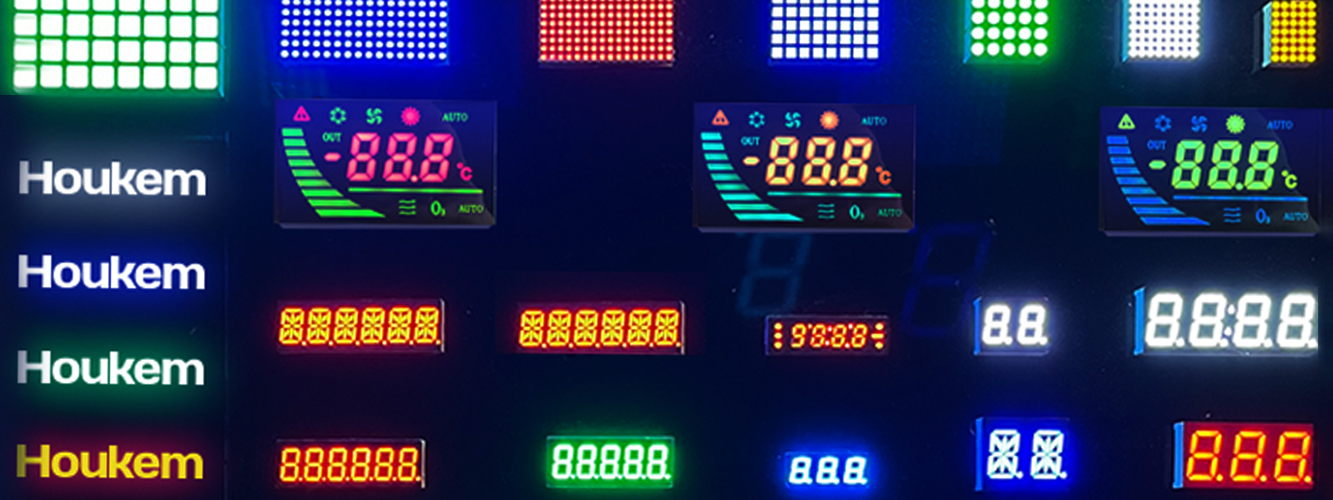
HOUKEM Digital Numeric LED Display Series