


How LED Binning Works: Brightness, Color and Consistency

This article explains how LED binning works, what bin structures look like, and what to ask suppliers so production stays consistent from the first prototype to the ten-thousandth unit.
Quick Answer
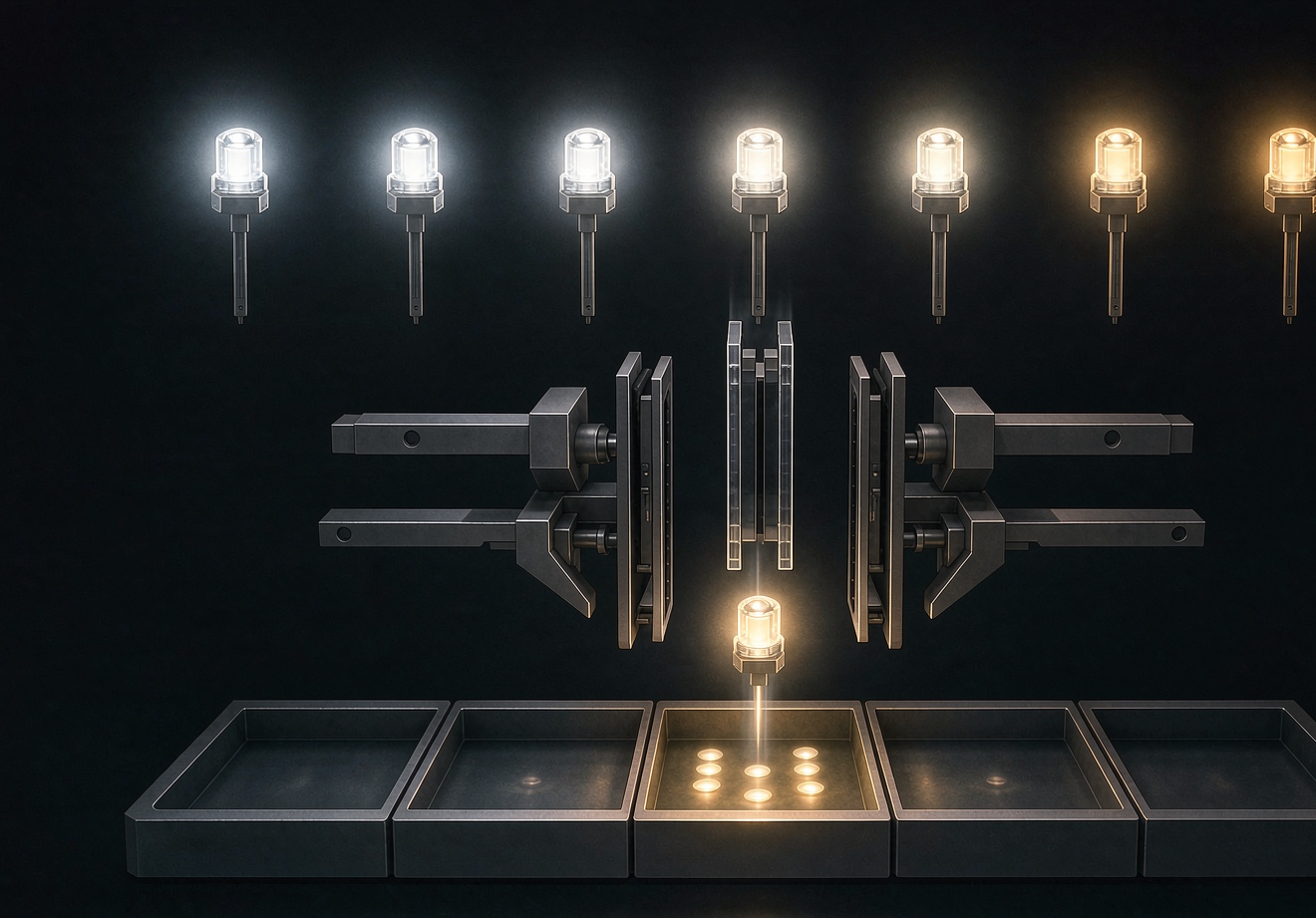
LED binning is the post-production sorting of LEDs into groups (bins) defined by measured characteristics — most importantly luminous flux (brightness), forward voltage, and color coordinates or wavelength. Because semiconductor growth and packaging processes produce natural variation, no two LEDs are identical; binning guarantees instead that each delivered group falls inside an agreed narrow range. When you specify or purchase LEDs, the bin structure — not just the model number — determines the brightness and color consistency of your product.
Why Binning Exists: Variation Is Built In
LED output depends on the epitaxial wafer the die was grown on, the position of the die on that wafer, and the packaging steps that follow. Even within a single wafer, brightness and dominant wavelength drift from region to region. After assembly, the spread is real but manageable — if it is measured and sorted.
Instead of promising impossible uniformity, manufacturers measure every part (or a defined sampling of parts) and place each into bins whose boundaries are tighter than the natural spread. The customer then selects the bin or bins that fit the application's tolerance for variation.
The Three Main Binning Axes
Luminous flux (brightness)
Flux bins group LEDs by total light output at a defined current and temperature. A flux bin code tells you the minimum and maximum output the part will show within that bin. Products that must look evenly bright — displays, backlit panels, signage — need tight flux bins or the eye will spot the difference between adjacent units.
Color (chromaticity or wavelength)
For white LEDs, color bins are defined on a chromaticity scale, grouping parts by the exact shade of white they emit, from cool to warm and along the subtle tint variations within each shade. For colored LEDs, bins are typically defined by dominant wavelength. Color binning is the strictest need in applications where units sit side by side, because human vision is remarkably sensitive to color differences between neighboring light sources.
Forward voltage
Voltage bins group parts by their forward voltage at a test current. This matters less for appearance and more for electrical design: parallel strings, multiplexed displays and driver selection all behave better when the voltage spread across the population is bounded.
How a Bin Structure Is Specified
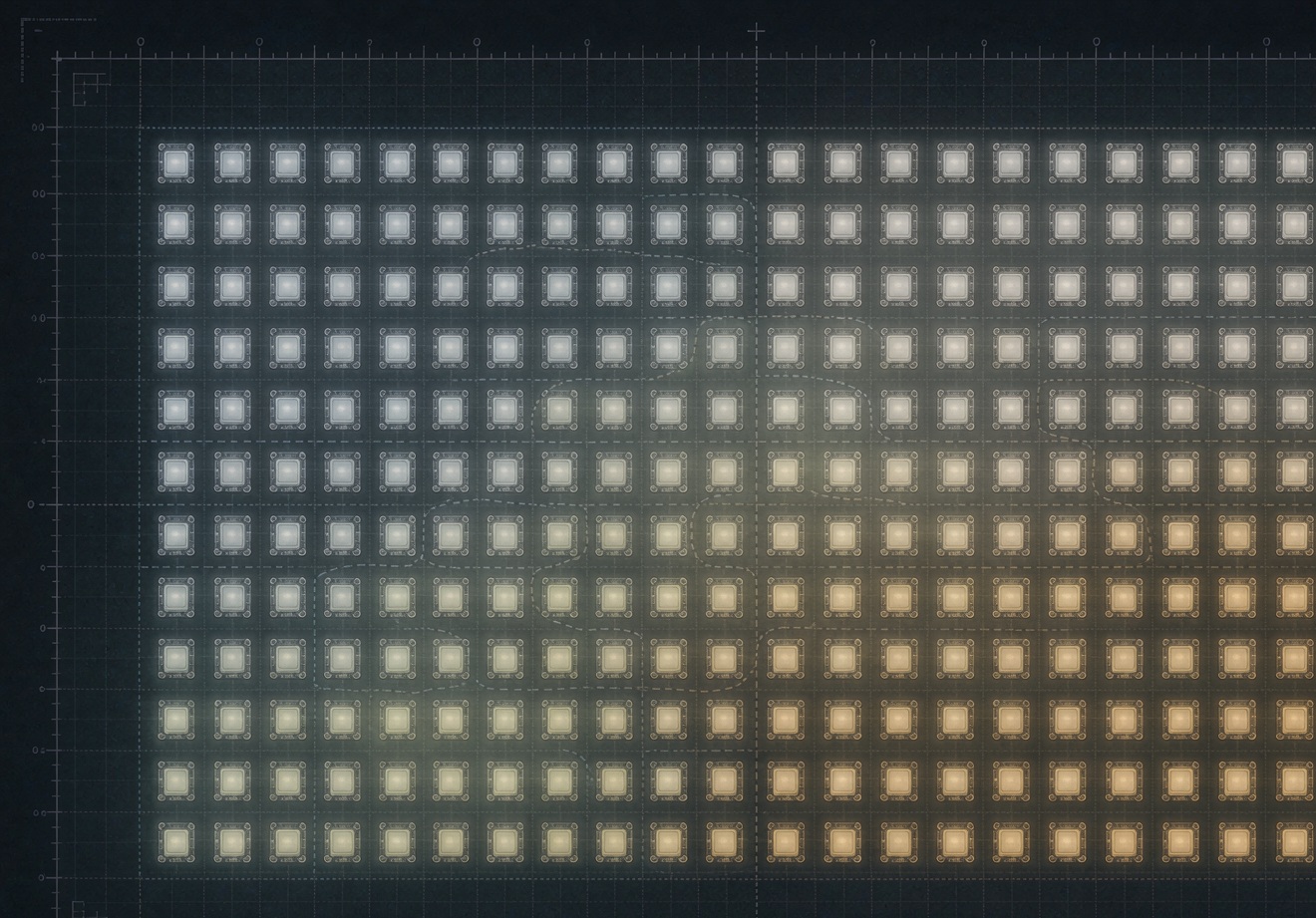
A bin structure is the complete map of bins a product family is sorted into — a grid over flux, color and voltage ranges, each bin carrying a code. Two practical points matter to buyers. First, the same LED model can be sold from different bin structures, so a bin code only means something within the structure it belongs to. Second, some standard bin boundaries are wide enough that adjacent bins remain visibly different; premium applications may need subbin selection or tighter custom bins, which affects price and availability.
What Binning Means for Your Consistency
- Single-bin orders. Restricting an order to one bin maximizes uniformity, but narrows supply and raises cost if that bin runs short.
- Multi-bin orders. Accepting two or three adjacent bins improves availability and price, at the cost of visible variation unless your design tolerates it.
- Batch discipline. Assigning each production run a single bin — even from a multi-bin contract — keeps every unit within a run identical.
- Inventory rotation. Mixing leftover bins across reorders is the classic cause of visible mismatch between production batches.
What to Ask an LED Supplier About Binning
Before committing volume, ask which bin structure applies to your part, which bins are included in the quotation, how bin mix is controlled across repeat orders, and what happens when a bin is temporarily unavailable — substitution without notice is how consistency programs fail. For displays and other side-by-side applications, ask specifically how color and flux consistency across an assembled unit is guaranteed, because assembled-system consistency can involve a further matching step beyond individual component bins.
HOUKEM manufactures LED displays and components with multiple color options and supports OEM/ODM customization in which brightness, color and appearance expectations are confirmed through approved specifications and samples. For projects where visual consistency is critical, binning and matching expectations should be written into the order specification alongside the golden sample and drawing revision, so every repeat shipment is measured against the same agreed standard rather than a memory of the first delivery.
Frequently Asked Questions
Why do LEDs from the same model look different?
Wafer growth and packaging introduce natural variation in brightness and color that no process eliminates. Binning measures and sorts that variation into defined ranges so delivered parts match an agreed window.
Does a higher bin always mean better quality?
A higher flux bin means more light output, not better reliability or lifetime; bins describe measured characteristics, not durability. Quality is judged across all specification parameters, including the consistency of binning over time.
Can I order LEDs from a single bin?
Yes, and it is the standard way to maximize visual uniformity, though it narrows supply and can raise price. Many projects combine single-bin orders with batch discipline to balance consistency and availability.
What is the difference between color binning and wavelength binning?
Color binning sorts white LEDs by chromaticity coordinates on a standardized diagram, while wavelength binning sorts colored LEDs by dominant wavelength. Both exist to keep side-by-side units visually matched.
How do I keep consistency across repeat orders?
Fix the bin structure and included bins in the order specification, require notification before any bin substitution, and keep production runs single-batch where possible. Linking bins to an approved golden sample makes every shipment verifiable against the same reference.

Conclusion
Binning turns unavoidable manufacturing variation into a manageable specification: measure, sort, and agree on the ranges your application can tolerate. The consistency of your finished product depends less on the LED model number than on the bin structure behind it and the discipline with which bins are held across reorders. Specify bins explicitly, tie them to your samples and order documents, and batch-to-batch surprises largely disappear.
If you are specifying LED displays or components where brightness and color consistency matter, review the HOUKEM product range and submit your requirements through the inquiry page. The engineering team can confirm applicable color and brightness options for your project and define the consistency expectations with you before production.
LED Forward Voltage Explained: What Engineers Need to Know


